


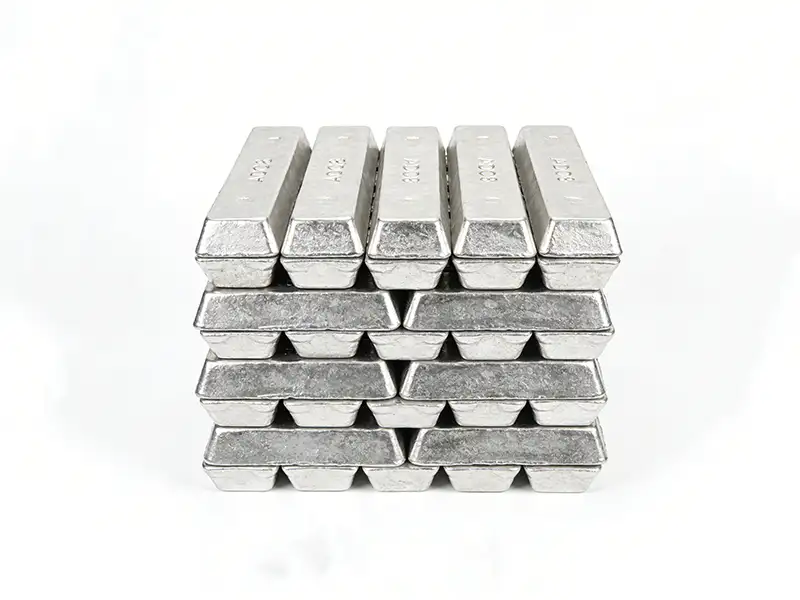
ADC8 die-casting aluminum alloy: aluminum-magnesium high elongation alloy, resolving its excellent plasticity, good corrosion resistance and welding performance.
Article Catalog[Hidden]
- Standards and grades for ADC8
- ADC8 Aluminum Alloy Composition Table (based on JIS H 5302 typical requirements)
- ADC8 Physical and Mechanical Properties Parameter Table (Die-Cast State, Typical Values)
- ADC8 Performance Enhancement Path and Technical Features
- ADC8 international grade
- ADC8 in the die casting industry
- ADC8 Aluminum Alloy Frequently Asked Questions
- 📊 Extended column: ADC8 vs. ADC6, ADC5 comparative analysis
As part of the Japanese Industrial Standards (JIS)Aluminum-magnesium high elongation die-casting aluminum alloyThe quintessential representative of theADC8 by means ofVery high elongation, excellent plasticity, good corrosion resistance and excellent weldabilityis known for. The alloy passesMagnesium (Mg) as the main alloying element, strictly control the content of silicon (Si) and copper (Cu) and other impuritiesThe top elongation and toughness among die-cast aluminum alloys is achieved while maintaining good overall mechanical properties, and is a key factor in the manufacture ofComplex die castings with high requirements for plasticity, impact resistance and corrosion resistance and requiring welded connections.It is an ideal material for automotive safety components, outdoor equipment, electronic housings, medical devices and other fields with unique application value.
Standards and grades for ADC8
- JIS Standard Grades: According to the Japanese Industrial Standard JIS H 5302, the grade is ADC8The “ADC” stands for “Aluminum Die Casting”. “ADC” stands for "Aluminum Die Casting" and "8" is the number of the alloy in the series with specific composition and properties.
- Core features:Medium Magnesium (3.0-5.01 TP3T) Provides solid solution strengthening and an excellent plastic base;Very low silicon content (≤0.5%) Ensures high elongation and good weldability;Strict control of copper (≤0.2%), iron (≤1.0%) and other impuritiesThe result is a high degree of toughness and corrosion resistance;Heat treatableThe strength can be further increased after T5 or T6 treatment, while maintaining high elongation.
ADC8 Aluminum Alloy Composition Table (based on JIS H 5302 typical requirements)
| elemental | Content range (wt%) | functional role |
|---|---|---|
| Magnesium (Mg) | 3.0-5.0 | core element.. Provides solid solution strengthening, forming a dense oxide film that is the basis for excellent plasticity and corrosion resistance. |
| Silicon (Si) | ≤ 0.5 | Tightly controlled impurities. Very low silicon content ensures high elongation and excellent weldability. |
| Copper (Cu) | ≤ 0.2 | Tightly controlled impurities. Low copper content ensures excellent corrosion resistance and toughness. |
| Iron (Fe) | ≤ 1.0 | Prevents die sticking during die casting, but needs to be strictly controlled to ensure toughness and corrosion resistance. |
| Manganese (Mn) | ≤ 0.3 | Neutralizes some of the harmful effects of iron and improves corrosion resistance. |
| Zinc (Zn) | ≤ 0.5 | Impurity elements. |
| Titanium (Ti) | 0.1-0.2 (can be added) | Grain refiner. |
| Aluminum (Al) | tolerance (i.e. allowed error) | High purity matrix. |
ADC8 Physical and Mechanical Properties Parameter Table (Die-Cast State, Typical Values)
| Performance indicators | Numerical range (die-cast state - F) | Comparative analysis (vs ADC6) | Core Advantages |
|---|---|---|---|
| intensity | 2.64-2.67 g/cm³ | Similar to ADC6 | - |
| Tensile strength (Rm) | 180-240 MPa | Slightly lower than ADC6 | Medium strength to meet the requirements of structural components where plasticity is preferred. |
| Yield strength (Rp0.2) | 80-120 MPa | Below ADC6 | The yield ratio is low and the plastic deformation capacity is high. |
| Elongation (A) | 8.0-15.0% | Significantly higher than ADC6 | Core Advantages: Highest elongation and excellent plasticity among die-cast aluminum alloys. |
| Brinell hardness (HB) | 45-55 | Below ADC6 | Lower hardness, good cutting and machinability. |
| corrosion resistance | talented | Equivalent to ADC6 | Core Advantages: High magnesium and low copper, resistant to seawater and industrial atmospheric corrosion. |
| weldability | surpassing | Equivalent to ADC6 | Core Advantages: Extremely low silicon content and very low tendency to weld hot cracks. |
| impact toughness | talented | Better than ADC6 | Strong ability to absorb impact energy, good impact resistance. |
| Casting mobility | moderate | Equivalent to ADC6 | The silicon content is very low and the fluidity is not as good as high silicon alloys. |
ADC8 Performance Enhancement Path and Technical Features
The ADC8 was designed with the concept of “Plasticity as the core, corrosion resistance and welding as the guarantee”:
- Very low silicon for high elongation: Silicon content of ≤0.5% is the key to obtaining high elongation in ADC8. Silicon forms brittle silicon particles in aluminum alloys, which can significantly reduce elongation.ADC8 keeps silicon at a very low level, making itElongation up to 8-15%It is one of the most plastic grades of die-cast aluminum alloys and is particularly suitable for parts subjected to shock loads and complex deformations.
- High magnesium provides corrosion resistance and base strength: Magnesium content of 3.0-5.01 TP3T, providing solid solution strengthening while forming a dense, stable surface oxide film.Significantly improved corrosion resistance. The solid solution strengthening of magnesium allows ADC8 to maintain high plasticity while still having sufficient strength (180-240 MPa) to meet structural component requirements.
- Strict miscellaneous control to ensure resilienceThe strict limits of copper ≤ 0.2% and iron ≤ 1.0% minimize the formation of hazardous intermetallic compounds, ensuring thatOptimal impact toughness and fatigue resistanceThe ADC8 is designed to perform well under dynamic loads.
- Excellent welding performance: Extremely low silicon and copper content makes itExtremely low tendency to weld hot crackingThe welding method can be used for joining and repairing, which is very suitable for complex structural parts that need to be welded and assembled. Small loss of performance in the heat-affected zone after welding.
- Heat treatment further strengthens: The ADC8 can be used byT5 (artificial aging) or T6 (solution + aging) heat treatmentFurther enhancement of strength. Typical process: solution treatment 400-450°C, aging 150-200°C. After heat treatment, tensile strength can be increased to 220-280 MPa, and elongation remains high at 5-10%.
ADC8Corresponding international grades
ADC8 as a high elongation aluminum-magnesium die casting alloy has a clear international counterpart:
| (an official) standard | grades | note |
|---|---|---|
| Japan JIS | ADC8 | - |
| ASTM, USA | A518.0 (Al-Mg system) | Consistent compositional system with similar magnesium content range |
| China GB | YL302 (YZAlMg5) high purity version | Composition close to ADC8 |
| EU EN | EN AC-51400 (AlMg5) | similar in composition |
| International ISO | AlMg5 | having a correspondence |
ADC8 in the die casting industry
based on itsHigh elongation, excellent corrosion resistance, excellent weldabilityThe unique combination of the ADC8 is mainly used in the following areas:
- Automotive safety components (core applications)
- Passive safety systems: Airbag housings, seatbelt retractor components, and crash-absorbing structural elements.
- Chassis & Suspension: Control arms, steering knuckles, suspension mounts (required to absorb impact energy).
- new energy vehicle: Battery pack crash structure, motor mount.
- Outdoor & Sports Equipment
- sports facility: Bicycle racks, ski bindings, mountaineering buckles, outdoor tool shells.
- Outdoor equipment: Structural parts for camping equipment, portable generator housings.
- Electronics and communications equipment
- precision instruments: Measuring equipment housings, optical instrument holders, and structural parts for medical equipment.
- communications equipment: Outdoor base station housing, antenna base (need to resist wind load impact).
- Marine and Offshore Engineering
- Marine components: Outboard housings, seawater pump housings, marine hardware (utilizing its high elongation to resist wave impact).
- medical equipment
- surgical instruments: Surgical robot joints, medical device housings (high toughness and no copper contamination required).
ADC8 Aluminum Alloy Frequently Asked Questions
Q1: What is the main difference between ADC8 and ADC6? How to select the type?
- Here's the core comparison:
- ADC8: Magnesium content 3.0-5.0%, silicon ≤ 0.5%.Higher elongation (8-15%), better plasticity, and better impact toughness., but at a slightly lower intensity.
- ADC6: Magnesium content 2.5-4.01 TP3T with added manganese (0.4-0.61 TP3T).Slightly higher strength and better resistance to stress corrosion, but the elongation (6-12%) is slightly lower than ADC8.
- selection:Plasticity, impact resistance preferred选ADC8;Balanced strength and corrosion resistance选ADC6.
Q2: Why does ADC8 have such high elongation?
- Three reasons:
- Very low silicon content (≤0.5%): Avoids cutting of the substrate by brittle silicon particles.
- High magnesium solid solution: Magnesium is completely solid-solved in the aluminum matrix, forming a uniform single-phase organization without brittle second phase.
- Strict impurity control: Low copper and iron reduce the formation of harmful intermetallic compounds.
Q3: What is the casting performance of ADC8? What do I need to pay attention to when designing?
- medium level. Silicon content is only ≤ 0.5%, the mobility is far inferior to high silicon alloy (such as ADC12). Attention is required when designing the casting system:
- Appropriately increase the gate size, increase the pouring temperature (680-720°C recommended) and mold temperature (200-250°C).
- Avoid excessively thin-walled structures (recommended minimum wall thickness ≥ 2.5 mm).
- Enhance the exhaust design to prevent porosity defects.
- Suitable for medium wall thickness castings with relatively simple shapes.
Q4: What are the soldering process requirements for ADC8?
- Excellent weldability, which can be used in a variety of ways:
- Argon arc welding (TIG/MIG): Use homogeneous welding wire (Al-Mg system, e.g. 5356), clean thoroughly before welding to remove oxide film.
- resistance spot welding: For thin plate connections with a wide window of welding parameters.
- laser welding: Suitable for precision welding with a small heat affected zone.
- Stress relief may be applied to important structural parts after welding, but the weld usually performs well.
Q5: Can ADC8 be heat treated? What is the effect?
- canADC8 can be further strengthened by heat treatment:
- T5 manual aging: 150-200°C × 4-8 hrs. to improve strength by 10-20% and elongation remains at 8-12%.
- T6 solid solution + aging: Solid solution at 400-450°C, water quenching, and re-aging. Higher strength (220-280 MPa) can be obtained with elongation reduced to 5-10%.
- The balance of strength and elongation after heat treatment is superior to most die cast alloys.
Q6: How is the corrosion resistance of ADC8? Does it need surface treatment?
- talented. The high magnesium content allows it to form a dense, stable oxide film on the surface of the aluminum matrix.Excellent resistance to seawater and industrial atmospheric corrosion.In most environments, no additional surface treatment is required. In most environments, no additional surface treatment can be done. If high decorative properties are required, anodic oxidation can be carried out to obtain a uniform, bright oxide film, but the hardness of the film is slightly lower than that of high-silicon alloys.
Q7: Can ADC8 be used to manufacture parts subjected to shock loads?
- well suitedADC8 is a die-cast aluminum alloy.One of the best grades for impact toughnessThe high elongation of the material makes it capable of absorbing a large amount of impact energy without brittle fracture, making it an ideal material for safety components, sports equipment, and outdoor equipment.
📊 Extended column: ADC8 vs. ADC6, ADC5 comparative analysis
| comparison dimension | ADC8 (Al-Mg high ductility) | ADC6 (Al-Mg-Mn) | ADC5 (Al-Mg high Mg) |
|---|---|---|---|
| Silicon (Si)% | ≤0.5 | ≤0.8 | ≤0.5 |
| Magnesium (Mg)% | 3.0-5.0 | 2.5-4.0 | 4.0-8.5 |
| Manganese (Mn)% | ≤0.3 | 0.4-0.6 | ≤0.3 |
| tensile strength | 180-240 MPa | 200-260 MPa | 180-240 MPa |
| elongation | 8.0-15.0% | 6.0-12.0% | 5.0-12.0% |
| yield strength | 80-120 MPa | 110-150 MPa | 90-130 MPa |
| impact toughness | excellent | talented | favorable |
| corrosion resistance | talented | Excellent (stress corrosion resistance) | talented |
| weldability | surpassing | talented | talented |
| Casting mobility | moderate | moderate | moderate |
| typical application | Safety components, sports equipment | Ship components, marine engineering | Heat sinks, electronic housings |
Selection Quick Guide:
- Select ADC8: When the part requiresHighest elongation, excellent impact resistanceWhen, for example, airbag housings, sports equipment, impact-resistant structural components.
- Select ADC6: RequiredTop corrosion resistance (especially against stress corrosion) balanced with good strengthWhen, for example, marine components, offshore platforms.
- Select ADC5: RequiredHigh thermal conductivity, good corrosion resistanceWhen, for example, heat sinks, electronic housings.