


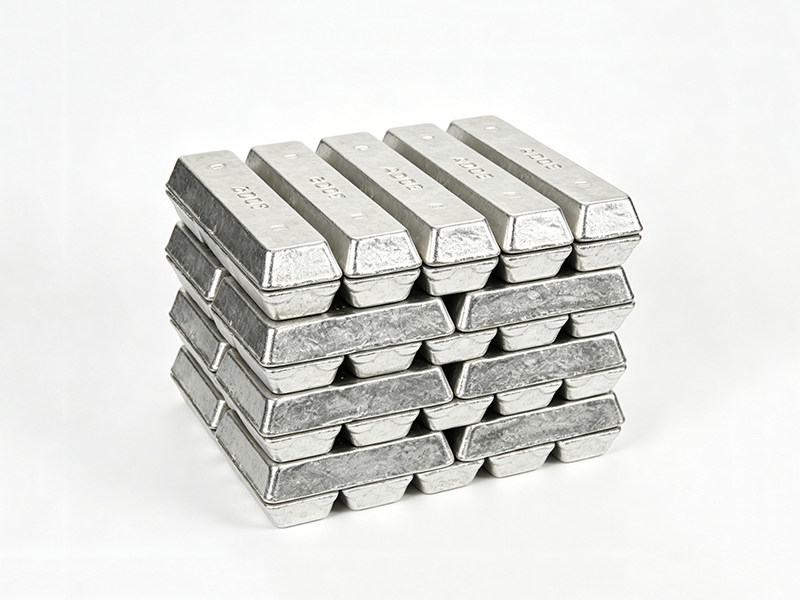
ADC10Z Die Cast Aluminum Alloy: A high silicon, high copper and zinc optimized alloy for high strength, excellent castability and cost effectiveness.
Article Catalog[Hidden]
- Standards and grades for ADC10Z
- ADC10Z Aluminum Alloy Composition Table (based on JIS H 5302 typical requirements)
- ADC10Z Physical and Mechanical Properties Parameter Table (die-cast state, typical values)
- Performance Enhancement Pathways and Technical Characteristics
- Corresponding international grades
- Application of ADC10Z in die casting industry
- ADC10Z Aluminum Alloy Frequently Asked Questions
- 📊 Extended column: ADC10Z vs. ADC10, ADC12 comparative analysis
As part of the Japanese Industrial Standards (JIS)High-silicon, high-copper die-cast aluminum alloyThe optimized and upgraded grades ofADC10Z by means ofHigh mechanical strength, excellent casting flow, good dimensional stability and outstanding cost-effectivenessand is well known. The alloy is a classic ADC10 alloyZinc optimized versionBy means of theOptimization of zinc (Zn) content while maintaining ADC10's high silicon and high copper composition systemIn addition, while maintaining the original high strength and high castability, it further improves the casting performance and cost structure, and it is the production ofHigh-volume, complex shape, high strength requirements and cost-sensitive general-purpose die castingsIt is the ideal material for the automobile, motorcycle, electrical and electronic, general machinery and other fields.
Standards and grades for ADC10Z
- JIS Standard Grades: According to the Japanese Industrial Standard JIS H 5302, the grade is ADC10ZADC“ stands for ”Aluminum Die Casting“. ”ADC“ stands for ”Aluminum Die Casting“ and ”10" is one of the most widely used general grades in this series. "Z" stands for optimized zinc (Zn) content.
- Core features:High silicon content (7.5-9.51 TP3T) Provides excellent casting fluidity and resistance to hot cracking;Medium copper content (2.0-4.01 TP3T) Provides significant solid solution strengthening;Optimized zinc content Further improvements in casting performance and cost effectiveness;Not heat treatableIt is an optimized version of ADC10, which improves process stability while maintaining performance.
ADC10Z Aluminum Alloy Composition Table (based on JIS H 5302 typical requirements)
| elemental | Content range (wt%) | Compare to ADC10 | functional role |
|---|---|---|---|
| Silicon (Si) | 7.5-9.5 | equal | Main alloying elements. Provides good casting fluidity, resistance to thermal cracking and airtightness. |
| Copper (Cu) | 2.0-4.0 | equal | Core Strengthening Elements. Formation of Al₂Cu reinforced phase significantly enhances cast strength and hardness. |
| Zinc (Zn) | ≤ 1.5 | ADC10: ≤1.0 | Optimization adjustment elements. Zinc content is appropriately relaxed to improve casting fluidity and reduce material costs. |
| Iron (Fe) | ≤ 1.3 | equal | Prevents mold sticking during die casting, but needs to be controlled to ensure mechanical properties. |
| Magnesium (Mg) | ≤ 0.3 | equal | Strictly controlled to maintain non-heat treatable properties. |
| Manganese (Mn) | ≤ 0.5 | equal | Neutralizes the harmful effects of iron. |
| Nickel (Ni) | ≤ 0.5 | equal | Available. |
| Aluminum (Al) | tolerance (i.e. allowed error) | - | Substrate material. |
ADC10Z Physical and Mechanical Properties Parameter Table (die-cast state, typical values)
| Performance indicators | ADC10Z Value Range | ADC10 Value Range | Comparative analysis and advantages |
|---|---|---|---|
| intensity | 2.68-2.71 g/cm³ | 2.68-2.71 g/cm³ | Similar. |
| Tensile strength (Rm) | 280-320 MPa | 280-320 MPa | The strength levels are comparable, maintaining the high strength characteristics of ADC10. |
| Yield strength (Rp0.2) | 150-180 MPa | 150-180 MPa | Good carrying capacity. |
| Elongation (A) | 1.5-3.0% | 1.5-3.0% | Plasticity is comparable. |
| Brinell hardness (HB) | 75-90 | 75-90 | Considerable hardness and good abrasion resistance. |
| Casting mobility | Excellent (slightly better than ADC10) | talented | Core Advantages: Optimized zinc content and slightly improved fluidity. |
| corrosion resistance | general | general | Higher copper content, average corrosion resistance, comparable to ADC10. |
| cost-effectiveness | better | favorable | Core Advantages: Zinc content is relaxed and feedstock costs are slightly lower. |
| machinability | general | general | Higher silicon content and medium tool wear. |
Performance Enhancement Pathways and Technical Characteristics
The ADC10Z is designed with the concept of “Maintain strength advantage, optimize cost and manufacturability”:
- Optimized adjustment of zinc content: Relaxation of the upper limit of zinc content from ≤1.0% in ADC10 to ≤1.5%, which is the core feature that distinguishes ADC10Z from ADC10. Appropriate relaxation of zinc contentHelps improve casting fluidity and reduce material costsIt also does not significantly affect the mechanical properties and corrosion resistance.
- Solid Solution Strengthening of Copper: A copper content of 2.0-4.01 TP3T is at the heart of the high strength gained by ADC10Z. Copper forms the Al₂Cu phase in aluminum, which significantly increases cast strength and hardness through solid solution strengthening. The higher the copper content, the higher the strength, but with a corresponding decrease in elongation and corrosion resistance.
- Processability of Silicon Guaranteed: Silicon content of 7.5-9.5% makes its fluidity among the best in die-casting aluminum alloys, low shrinkage, low tendency to thermal cracking, suitable for molding complex thin-walled structures. The presence of silicon also partially improves wear resistance.
- Not heat treatable: As with ADC10, ADC10Z does not contain sufficient age strengthening elements such as magnesium.Unable to improve strength by T5/T6 heat treatment. This makes it a simplified production process, cost-controlled and suitable for mass production.
- Cost Advantage: By optimizing the zinc content, ADC10Z maintains the high performance of ADC10 whileSlightly lower raw material costsIt is one of the most cost-effective materials for the die casting industry.
Corresponding international grades
The ADC10Z, as an optimized version of the ADC10, has an international counterpart:
| (an official) standard | grades | note |
|---|---|---|
| Japan JIS | ADC10Z | - |
| ASTM, USA | A380.0 | Close composition, but different control of zinc content |
| China GB | YL112 (YZAlSi9Cu4) analog | Composition close to ADC10, similar zinc control |
| EU EN | EN AC-46000 (AlSi9Cu3) | similar in composition |
| Korea KS | ADC10 analog | Zinc content range may vary slightly |
Application of ADC10Z in die casting industry
based on itsHigh strength, excellent castability, good cost-effectivenessfeatures, the ADC10Z is mainly used in the following areas:
- Automotive parts (largest application)
- Shell type: Transmission housing, clutch housing, oil pan, engine mounts.
- structural member: Steering gear housing, water pump housing, generator bracket.
- interior components: Door lock housings, seat adjuster parts.
- Motorcycles and General Dynamics
- Engine components: Cylinder head covers, crankcase covers, carburetor housings.
- transmission part: Transmission housing, sprocket cover.
- electrical and electronics
- Shell type: Motor housings, power supply housings, junction boxes, circuit breaker housings.
- Thermal components: LED heat sinks, power module housings (strength prioritized over thermal conductivity).
- General Machinery and Hardware
- Pump and valve housings: Oil pumps, water pumps, pneumatic valve bodies.
- power tool: Electric drill housings, angle grinder gearboxes.
- Furniture Hardware: Door handles, hinges, locks.
ADC10Z Aluminum Alloy Frequently Asked Questions
Q1: What is the main difference between ADC10Z and ADC10? How to select the model?
- Here's the core comparison:
- ADC10Z: The upper limit of zinc content is relaxed to ≤1.5%.Slightly improved casting liquidity and slightly lower costs, is an optimized version of ADC10.
- ADC10: Zinc content ≤1.0%.Stricter control of ingredientsThe performance stability is slightly better.
- In practice, the ADC10Z and ADC10 are often considered interchangeable. When selecting the model, if there are higher requirements for casting fluidity or the pursuit of cost-effective, you can choose ADC10Z; if there are strict standards for composition control, you can choose ADC10.
Q2: What is the difference between ADC10Z and ADC12? How to select the model?
- comparative analysis:
- ADC10Z: Silicon 7.5-9.5%, Copper 2.0-4.0%, Zinc ≤1.5%.High strength and good castability, is the universal option.
- ADC12: Silicon 9.6-12.0%, Copper 1.5-3.5%, Zinc ≤1.0%.Higher silicon content for better castabilityIt is the mainstream common grade in the current JIS standard.
- selection: The QuestOptimum castability and performance stabilitySelect ADC12; pursueHigh intensity and cost balanceSelect ADC10Z.
Q3: Why is ADC10Z not heat treated?
- because ofVery low magnesium content (≤0.3%)In the case of Mg₂Si, it is not possible to form sufficient Mg₂Si strengthening phases. Carrying out T6 solid solution treatment not only fails to enhance the strength significantly, but may also lead to blistering due to the expansion of internal pores. Therefore, the performance of ADC10Z is completely dependent on the as-cast organization, and the production process is simple and cost-controlled.
Q4: How is the corrosion resistance of ADC10Z? Does it need surface treatment?
- mediocre. Higher copper content (2.0-4.0%) makes it susceptible to galvanic corrosion in humid environments. For use outdoors or in wet environments, theSurface protection is mandatoryThe product can be used in a wide range of environments, such as painting, electrophoresis, anodic oxidation (with grayish film), etc. Indoor dry environment can not be treated.
Q5: What is the welding repair performance of ADC10Z?
- Lower middle. Higher copper content, welding thermal cracking tendency is more obvious. Argon arc welding filler welding, need to bePreheating (150-200°C)The choice of suitable aluminum-silicon-copper welding wire, post-welding forstress reliefThe following are some examples of the types of welds that should be used. For important load-bearing parts, filler welding should be avoided as much as possible.
Q6: What is the cutting and machinability of ADC10Z?
- general. Higher silicon content (7.5-9.51 TP3T) forms hard silicon particles that cause abrasive wear on the tool. Good results can be obtained using coated carbide tools with higher cutting speeds and moderate feeds.
📊 Extended column: ADC10Z vs. ADC10, ADC12 comparative analysis
| comparison dimension | ADC10Z (zinc optimized) | ADC10 (standard) | ADC12 (mainstream universal) |
|---|---|---|---|
| Silicon (Si)% | 7.5-9.5 | 7.5-9.5 | 9.6-12.0 |
| Copper (Cu)% | 2.0-4.0 | 2.0-4.0 | 1.5-3.5 |
| Zinc (Zn)% | ≤1.5 | ≤1.0 | ≤1.0 |
| tensile strength | 280-320 MPa | 280-320 MPa | 280-310 MPa |
| Casting mobility | Excellent (slightly better) | talented | excellent |
| (manufacturing, production etc) costs | slightly below | lower (one's head) | lower (one's head) |
| typical application | General-purpose housings, automotive parts | General-purpose housings, automotive parts | Complex thin-walled parts, electronic parts |
Selection Quick Guide:
- Select ADC10Z: The QuestHigh intensity balanced with cost-effectivenessThe casting is a general-purpose part that requires a certain degree of casting fluidity.
- Select ADC10: Applications with strict criteria for composition control and seeking performance stability.
- Select ADC12: The QuestOptimum castabilityThe most important thing is that the product can be used for complex thin-walled parts, or where better performance stability is required.