
Welcome to the official website of Ningbo Hexin! Tel: +86 18312962656 E-mail: hexinmosu@163.com

Aluminum Die Casting FactoryCreate the ultimate user experience with technology services
Global Service Hotline+86 18312962656

Die casting mold manufacturing

Die casting mold manufacturing is through precision machining and heat treatment process, the high performance mold steel manufacturing into able to withstand high pressure, high speed metal liquid impact and integrated complex core extraction and cooling system of hot work mold.

What is (High Pressure Die Casting, Gravity Casting, Low Pressure Casting) Pressure Mold Making?

High-pressure die casting, gravity casting and low-pressure casting pressure mold manufacturing is essentially the process of tailoring high-precision metal cavity tooling for different casting processes according to the power and manner of filling the cavity with liquid metal. Among them.High Pressure Die CastingMolds need to withstand extremely high injection pressures and high-speed filling, usually using high-strength hot work mold steel, and designed with precise ejector, core extraction and cooling systems to safeguard the life and heat dissipation under millisecond filling;Gravitational castingThe mold relies on the self-weight filling of the liquid metal, the structure is relatively simplified, focusing on reasonable exhaust and sequential solidification design, and a wider choice of materials;Low-pressure castingThe molds are tightly integrated with a sealed and insulated pouring system, where the workpiece is smoothly filled from the bottom up under low pressure gas, and the mold design puts special emphasis on vertically oriented solidification and shrinkage channels. In spite of the different power sources, all three types of molds are designed for high accuracy in cavity dimensions, excellent release angles and coating treatments to ensure that the castings are densely organized and clearly defined under pressure, low pressure or no pressure at all.


1. Design and Review3D/2D graphic design
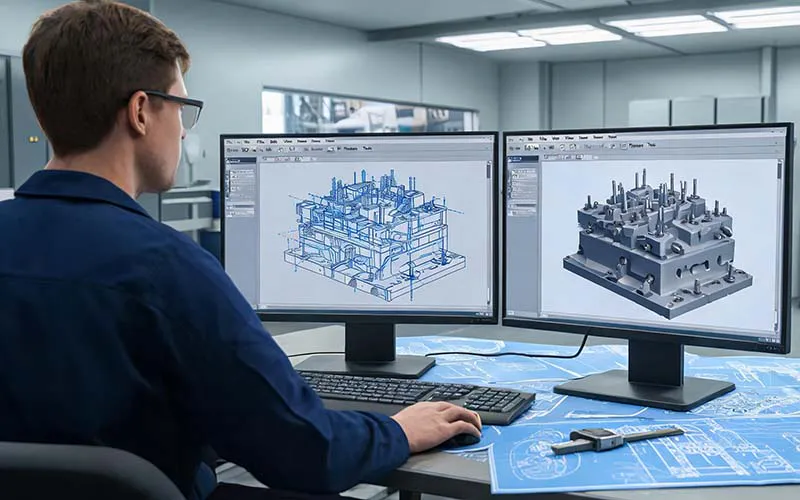
Die casting mold manufacturing begins with product drawing analysis and mold flow review. Engineers first check the wall thickness, mold release slope, and sharp angle structure of the die casting, and identify potential risks of shrinkage, trapped air, and poor filling. Subsequently, mold flow analysis is conducted to simulate in software the whole process of filling the cavity with aluminum or zinc liquid at a high speed of tens of meters per second, to predict the location of trapped air and solidification sequence, and to optimize the location of the gate, the cross-sectional area of the cross sprue and the layout of the overflow channel accordingly. In the structural design stage, the parting surface is determined, the pouring/discharge system is designed, the cooling water channel is arranged, and the calculation of the slide core extraction and ejection mechanism is completed. The final output of 3D model and 2D parts drawing provides accurate basis for subsequent material preparation and machining.

3D/2D Mold Graphic Design and Review

2. Materials and roughingCore Roughening
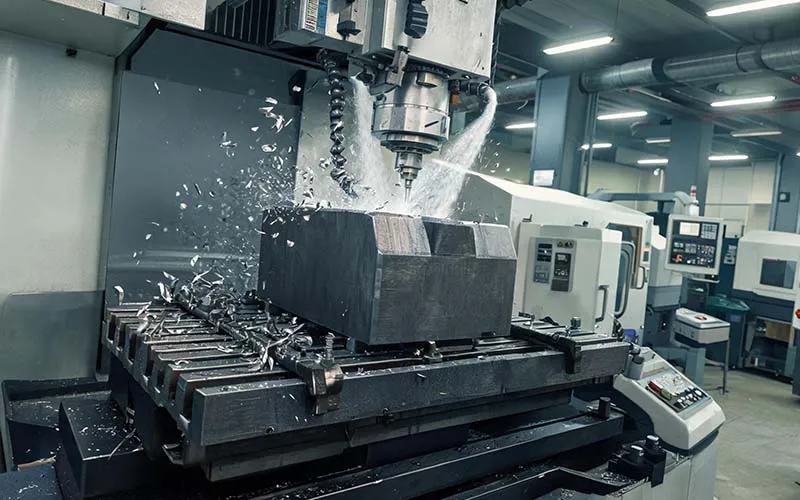
The core of this stage is to obtain qualified mold blanks. The mold frame is usually purchased in standard specifications, while the die nut (cavity/core), which is in direct contact with high-temperature metal liquid, needs to be made of hot-work mold steel such as H13, SKD61 or 8407. In order to improve the denseness and isotropy of the internal organization of the steel, the blank must be forged in three directions, which is a key pre-process to prevent early cracking of the mold. Rough machining is carried out on an ordinary milling machine or roughing frame machine to quickly remove a large amount of residual material, leaving 0.5-1mm finishing allowance on one side. Subsequently, vacuum heat treatment: quenching + high temperature tempering, so that the hardness of the mold kernel to reach HRC 48-52. heat treatment will inevitably bring deformation and oxide skin, so ranked before the finishing process, which is the iron law of the mold manufacturing process.

Mold Materials and Rough Machining

3. Finishing and special machiningPrecision milling after heat treatment

The mold kernel is strengthened by heat treatment and then enters the finishing stage. High-speed CNC carries out precision milling of parting surfaces, cavity contours, slide grooves, etc., and the cutting allowance is uniformly controlled at 0.1-0.2mm. for the deep grooves, narrow slits, concave texts or sharp corners that cannot be accessed by the CNC tool, EDM is used: a graphite or copper electrode is used to pulse-discharge in kerosene medium to replicate the shape of the electrode in reverse, and the dimensional accuracy is up to ±0.005mm. ejector pin holes, tilt-top holes, and gate-sleeve mounting holes are completed by slow-feed wire-cutting. At the end of this stage, surface nitriding (gas nitrocarburizing or ion nitriding) is applied to form a hardened layer of several microns to tens of microns to improve the mold's resistance to Al/Zn fusion wear. High-end molds can be further friction-reduced with an optional PVD coating.

He Xin EDM

4. Assembly and commissioningMold Fit Mold
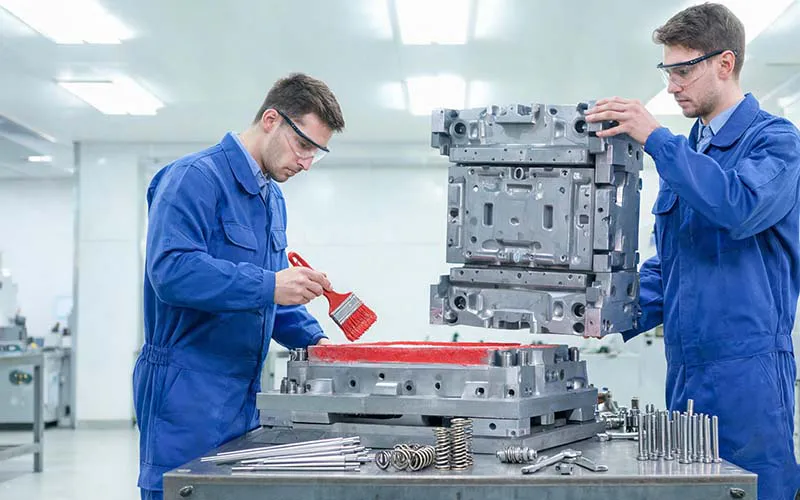
The parts are processed, transferred to the clamp assembly process. The first task is to research with (fly mold): in the mold kernel parting surface coated with red Dan, and the other side of the mold pressure, observe the distribution density of the contact patch, repeatedly scrape repair until the parting surface fit rate of 85% or more, this is to prevent die-casting edge phi feng fundamental protection. Subsequently assembled ejector plate, reset lever, spring, installation of slider and oblique guide column, connected to the hydraulic core cylinder, set up the cooling water circuit and one by one pressure leakage test. Test mold is this stage of the test link: mold lifting to the die casting machine, debugging high-speed / low-speed switching point, boost pressure, spray time, mold temperature and so on dozens of parameters. When the first complete casting out of the mold, design ideas for the first time into the real thing.

Mold Assembly

5. Acceptance and deliveryInspection of dimensions, pre-delivery maintenance
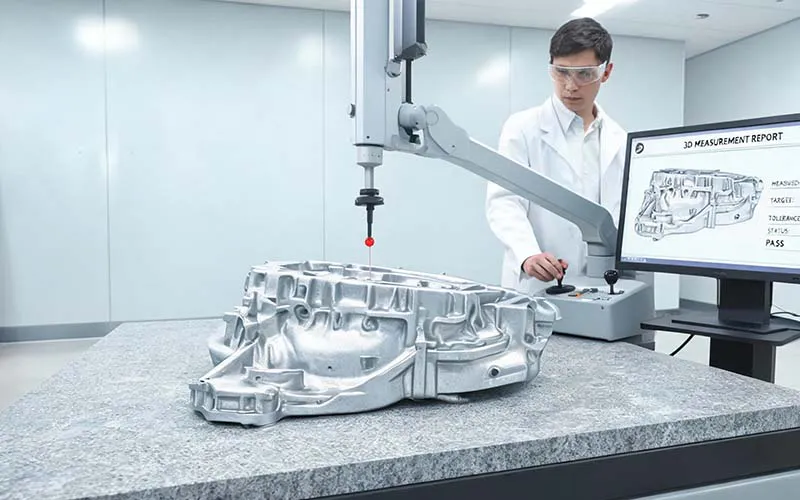
The trial mold piece enters the inspection room after removing the sprue and sandblasting. Coordinate measuring machine conducts full-size scanning of key installation dimensions, assembly hole spacing, and form and position tolerance, and generates FAI (First Article Inspection Report). At the same time, we provide mold material certification, heat treatment curve records, and hardness test data. Customers usually request to bring the sample parts back to the factory for small-lot assembly trial production, to examine the castings in the machining and assembly conditions of the actual matching effect. If the appearance of texture is required, etching/peeling treatment will be carried out after passing the mold test to avoid the texture surface from wearing out during repeated debugging. Before delivery, the molds are thoroughly treated against rust, the cavities are cleaned of oil, the spare parts package (ejector pins, seals, reset springs) is attached according to the agreement, and the molds are shipped in boxes with certificates of conformity and inspection reports.

Coordinate Measuring Machine Inspection

Mold Manufacturing Capabilities and Equipment

He Xin Molding is equipped withIn-house design, manufacturing, assembly, and debugging of moldsend-to-end capabilities, enabling us to complete the entire manufacturing process—from mold steel blanks to the delivery of qualified prototype parts—without the need for external subcontractors. The mold shop is equipped with core machinery such as CNC machining centers, EDM machines, slow-wire EDM machines, and clamping machines, supportingHigh-pressure die-casting molds, low-pressure die-casting molds, gravity die-casting moldsMold manufacturing using three types of processes; the mold development cycle is 15–40 days, and the number of trial runs and mold modifications is limited to Within 2 rounds.

Advantages of In-House Manufacturing:Compared to outsourcing to external mold manufacturers, in-house mold manufacturing eliminates information loss between the design and manufacturing stages, shortening the mold optimization and iteration cycle by more than 50%. At the same time, mold repair responses are more timely, with routine repairs completed within 24 hours, thereby minimizing customer production downtime.

A Comparison of Mold Manufacturing for Three Casting Processes

Die casting mold manufacturing

Mold MaterialsH13 / SKD61 / 8407
Heat treatment hardnessHRC 48–52
Cavity Accuracy±0.01 mm
surface treatmentIon Nitriding / PVD Coating
Mold life80,000–150,000 cycles
Manufacturing Cycle25–40 days
Die-casting molds are subjected to high-speed molten metal erosion at 50–100 m/s and injection pressures of ≥70 MPa, which places demands on the die steel’sHigh-Temperature Strength, Thermal Fatigue Resistance, and Resistance to Melting DamageThe requirements are the most stringent. The material must undergo three-directional forging + vacuum heat treatment (quenching + multiple high-temperature tempering) to eliminate residual austenite and ensure a uniform microstructure. After finishing, gas soft nitriding or ion nitriding is used to form a 0.1–0.3 mm hardened layer; high-end molds are equipped with PVD coatings (CrN / AlCrN) to reduce the tendency of molten aluminum to adhere.

Low-Pressure Die Casting Mold Manufacturing

Mold MaterialsH13 / QT500-7 Ductile Iron
Heat treatment hardnessHRC 44–48
Cavity Accuracy±0.03 mm
surface treatmentGas Soft Nitriding
Mold life30,000–50,000 cycles
Manufacturing Cycle20–30 days
The pressure exerted on low-pressure casting molds (0.02–0.3 MPa) is much lower than that in die casting, but they must be precisely matched with the riser and the holding furnace. The key to mold manufacturing lies inSealing Fit Between the Sprue Bushing and the Riser Tube Connectionrespond in singingMachining of Zoned Cooling/Heating Channels—By establishing separate water-cooling and electric-heating circuits in different areas, precise control of the mold temperature distribution is achieved, ensuring sequential solidification of the casting in the vertical direction. The base plate and side molds are typically made of QT500-7 ductile iron, which strikes a balance between cost and thermal fatigue resistance.

Gravity Casting Mold Manufacturing

Mold MaterialsQT500-7 / HT250
Heat treatment hardnessHRC 40–45
Cavity Accuracy±0.02 mm
surface treatmentMold Coatings / Localized Nitriding
Mold life20,000–100,000 cycles
Manufacturing Cycle15–25 days
Gravity casting molds are not subjected to external pressure, so the requirements for high-temperature strength of the mold steel are relatively low, allowing for a wider range of material options—cast iron (QT500-7 / HT250) is sufficient for most applications. The focus of the manufacturing process is onFitting Accuracy of Parting Linesrespond in singingSand Core Positioning Structure—When using metal molds in combination with resin sand cores, precise sand core positioning seats and vent channels (with a depth of 0.3–0.5 mm) must be machined into the mold to ensure accurate core positioning during mold closure and smooth gas venting during the pouring process.

Selection of Mold Materials and Heat Treatment Specifications

The choice of mold material directly affects mold life, casting quality, and manufacturing costs. Based on the type of casting process and production volume, He Xin recommends the following mold material options:

material grade Applicable Processes Quenching Temperature Tempering Temperature Hardness Applications Mold Life Guidelines Material Properties
H13 (4Cr5MoSiV1)Die Casting, Low Pressure1020–1050 °C560–600°C × 2–3 timesHRC 48–5280,000–150,000 cyclesExcellent high-temperature strength, good thermal fatigue resistance, and high hardenability
SKD61Die Casting, Low Pressure1020–1050 °C550–620°C × 2–3 timesHRC 46–5060,000–120,000 cyclesJapanese JIS standard; performance is similar to H13, with slightly better toughness
8407 (ASSAB)Die casting1020–1050 °C560–600°C × 2–3 timesHRC 48–52100,000–180,000 cyclesSwedish 1:100, high purity, and industry-leading resistance to thermal cracking
QT500-7 Ductile IronLow Pressure, Gravity860–900°C Normalizing550–600°C temperingHRC 25–3520,000–50,000 cyclesLow cost, good self-lubricating properties, suitable for small- to medium-volume production
HT250 Gray Cast IronGravity— (For use in as-cast condition)500–550°C Stress ReliefHB 190–24010,000–30,000 cyclesLowest cost, excellent vibration damping, suitable for small-batch production and prototyping

Core Equipment and Machining Capabilities for Mold Manufacturing

1

High-Speed CNC Machining Center

Equipped with two high-precision CNC machining centers with a spindle speed of 12,000 rpm, with a travel range of 800 × 500 × 500 mm, supporting precision milling of mold cavities, with a parting line machining accuracy of ±0.01 mm and a surface roughness as low as Ra 0.8 μm.

2

EDM (Electrical Discharge Machining) Machine

Multiple EDM machines are used to machine deep, narrow grooves, recessed text, sharp corners, and other areas that are inaccessible to CNC cutting tools. The process employs graphite or copper electrodes for electrical discharge machining, achieving dimensional accuracy of ±0.005 mm, and can machine hardened die steel with a hardness of HRC 48–52.

3

Slow-wire EDM machine

Used for machining high-precision through holes, such as ejector pin holes, angled ejector holes, and sprue bushing mounting holes, with a machining accuracy of ±0.003 mm and a surface roughness of Ra 0.4 μm, ensuring that the clearance between the ejector pin and the ejector plate is maintained within 0.01 to 0.02 mm.

4

Mold Clamping Machines and Mold Testing Equipment

Equipped with a mold clamping machine for mold fitting (fly mold), the fit of the parting line is inspected using the red lead development method; acceptance requires a fit rate of ≥85%. Once mold manufacturing is complete, the mold is transferred directly to Hexin’s in-house foundry for trial casting. The closed-loop process of trial casting → mold repair → re-trial casting can be completed in a single cycle within 24 hours.

Mold Quality Inspection and Acceptance Standards

He Xin follows a rigorous mold inspection process to ensure that every set of molds delivered meets the following key quality criteria:

Test Items Testing Methods/Tools Receiving and Inspection Criteria Timing of Testing
Cavity Dimensional AccuracyCoordinate Measuring Machine (CMM)Critical dimensions: ±0.01 mm; non-critical dimensions: ±0.05 mmAfter finishing and trial molding
Parting Line Fit RateRed Lead Development + Pressurization by Molding MachineAdhesion rate ≥85%, with no through gapsAssembly and Fitting Phase
Thimble/Slider MotionManual Push-Pull + Mold Clamping Motion TestMovement is smooth and free of jamming; the ejection distance meets the specifications in the drawings.After assembly is complete
Cooling Water Channel Leak TightnessHydrostatic Test (1.5 times the working pressure)Maintain pressure for 30 minutes; no leaks, no pressure dropAfter assembly is complete
Mold HardnessLeeb Hardness Tester / Rockwell Hardness TesterMeets process requirements (HRC 48–52 or HRC 40–45)After heat treatment, before finishing
Dimensions of the Prototype Part3-Coordinate Full-Dimension Scanning + FAI ReportCritical dimensions comply with the tolerances specified in the drawings, and Cpk ≥ 1.33After the trial run
Surface Nitrided LayerMetallographic Microscope / Microhardness TesterNitrided layer depth: 0.1–0.3 mm; surface hardness: ≥HV 900After nitriding
Spare Parts Kit CompletenessCheck the list item by itemThimble, O-ring, return spring, etc., are supplied according to the agreed-upon listBefore Delivery

Common Technical Issues in Mold Manufacturing

Q: What causes molds to have a short service life and be prone to cracking? How can mold service life be extended?
Common causes of early cracking in molds include: ① Mold steel that has not undergone three-directional forging—this is the most critical preliminary process; three-directional forging eliminates carbide segregation in the as-cast microstructure and makes the material isotropic. Mold steel that has not been forged is highly prone to network cracking under thermal cycling; ② Improper heat treatment—excessively rapid quenching or insufficient tempering leads to excessively high residual stresses; ③ Insufficient mold preheating—a cold mold coming into direct contact with high-temperature molten aluminum (680–750°C) causes thermal shock due to an extreme instantaneous temperature difference. He Xin’s countermeasures: The 100% die steel blank is a three-directional forged material. After vacuum heat treatment, it undergoes 2–3 high-temperature tempering cycles; after each tempering, it is air-cooled to room temperature before the next cycle to ensure complete transformation of the retained austenite; During production, the mold must be preheated to 180–250°C before pouring.
Q: Can die-casting molds and low-pressure casting molds be used interchangeably?
They cannot be used interchangeably because the stress conditions and interface structures of the two types of molds are completely different: Die-casting molds must withstand injection pressures of ≥70 MPa and high-speed molten metal erosion, so their wall thickness and support structures are far stronger than those of low-pressure molds; Low-pressure casting molds, on the other hand, require the base plate to be machined to accommodate feed tube connections and sealing structures, and the mold’s cooling/heating circuit design is tailored to the slow filling and sequential solidification requirements of the low-pressure process. However, the die-casting and low-pressure casting molds for the same productCavity GeometryDesigns can be based on the same 3D model, reducing the amount of repetitive modeling work. If a customer is unsure which process to choose at this stage, He Xin recommends first evaluating the feasibility of both processes through CAE simulation before deciding on the final mold manufacturing solution.
Q: How long is the mold development cycle? Can you expedite the process?
Standard Lead Time: 25–40 days for die-casting molds, 20–30 days for low-pressure casting molds, and 15–25 days for gravity casting molds. An expedited option can reduce the standard lead time by 30%, provided the following conditions are met: ① The product design is finalized, and no mid-process changes will be accepted; ② Mold materials are in stock (e.g., common H13 specifications), eliminating the need to wait for the steel mill’s production schedule; ③ Hexin currently has excess production capacity. The heat treatment process for expedited molds cannot be shortened (the quenching and tempering cycle is fixed); time savings are primarily achieved during the design review and CNC machining scheduling phases. We recommend that customers initiate mold manufacturing as early as possible after confirming the product design, allowing ample time for trial runs and mold modifications.
Q: What is Hexin’s mold warranty policy? How are mold repairs handled?
He Xin provides the following for the molds he manufactures:Lifetime Technical SupportDuring the warranty period (typically 50% of the mold’s service life or 12 months, whichever comes first), repairs for mold defects caused by materials or manufacturing processes are provided free of charge. Repairs performed after the warranty period will be charged based on actual labor hours and materials. Mold repair is a key advantage of Hexin’s in-house manufacturing—routine repairs (such as replacing ejector pins, cleaning cooling channels, and repairing minor wear) can be completed within 24 hours, while major repairs, such as cavity welding, take 3–5 business days. For mold damage caused by improper customer operation (such as mold collisions or cracking due to failure to preheat), Hexin provides a priority repair service, but a fee will apply.

Need casting mold manufacturing services?

Send us your product drawings, and Engineer He Xin will complete an evaluation of the mold design within 24 hours and provide recommendations on mold material selection, an estimated manufacturing lead time, and a quote.

Submit your drawings to get a mold proposal →


Telephone

Service hotline:
+86 18312962656

whatsapp
wechat
Connection

Email:hexinmosu@163.com