


ADC12Z Die-Cast Aluminum Alloy: A High-Silicon, High-Copper, Zinc-Optimized Alloy—An Analysis of Its High Strength, Excellent Castability, and Stable Performance
Article Catalog[Hidden]
- Standards and Designations for the ADC12Z
- ADC12Z Aluminum Alloy Composition Table (Based on Typical Requirements of JIS H 5302)
- Performance Enhancement Pathways and Technical Characteristics
- Corresponding international grades
- Applications of the ADC12Z in the Die-Casting Industry
- ADC12Z Aluminum Alloy FAQ
- 📊 Related Section: Comparative Analysis of the ADC12Z, ADC12, and ADC10Z
As part of the Japanese Industrial Standards (JIS)High-silicon, high-copper general-purpose die-cast aluminum alloyThe optimized and upgraded grades ofADC12Z by means ofHigh mechanical strength, excellent casting fluidity, good dimensional stability, and outstanding performance stability... for which it is known. This alloy is a variation of the classic ADC12 alloy,Zinc optimized versionBy means of theWhile maintaining the high-silicon, high-copper composition of ADC12, the zinc (Zn) content was optimized and adjusted.In addition, while maintaining the original high strength and high castability, it further improves the casting performance and cost structure, and it is the production ofHigh-volume, complex-shaped general-purpose die-cast parts with comprehensive requirements for strength and castabilityIt is the preferred material in automobiles, motorcycles, electrical and electronics, general machinery and other fields with a wide range of applications.
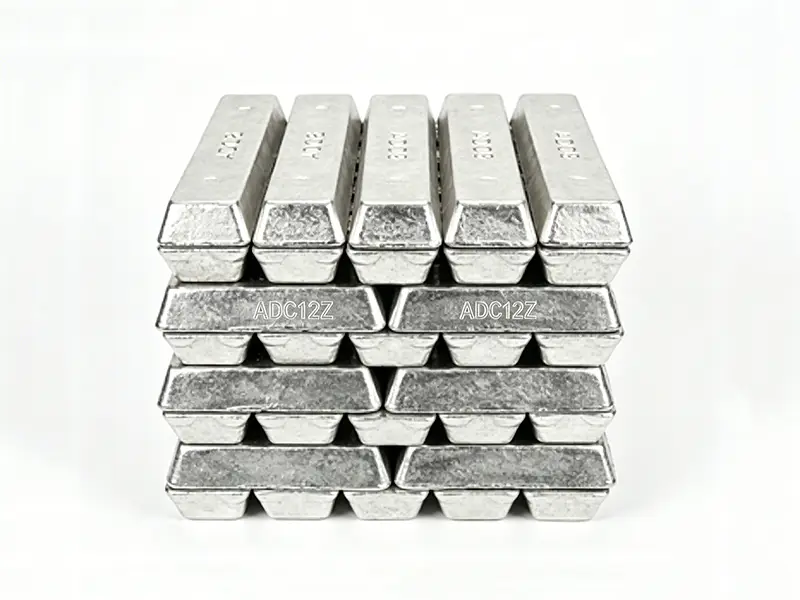
Standards and Designations for the ADC12Z
- JIS Standard Grades: According to the Japanese Industrial Standard JIS H 5302, the grade is ADC12Z“.ADC” stands for “Aluminum Die Casting,” “12” is the most widely used general-purpose grade in this series, and “Z” indicates that the zinc (Zn) content has been optimized.
- Core features:High silicon content (9.6–12.01 TP3T) Provides excellent casting fluidity and resistance to hot cracking;Medium copper content (1.5–3.51 TP3T) Provides significant solid solution strengthening;Optimized zinc content Further improvements in casting performance and cost effectiveness;Not heat treatable, whose performance depends entirely on the as-cast microstructure, emphasizing production efficiency and performance stability; it is an optimized version of ADC12 that improves process stability and cost-effectiveness while maintaining performance.
ADC12Z Aluminum Alloy Composition Table (Based on Typical Requirements of JIS H 5302)
| elemental | Content range (wt%) | Compared to the ADC12 | functional role |
|---|---|---|---|
| Silicon (Si) | 9.6-12.0 | equal | Main alloying elements. It offers excellent casting fluidity, resistance to hot cracking, and gas tightness. |
| Copper (Cu) | 1.5-3.5 | equal | Core Strengthening Elements. Formation of Al₂Cu reinforced phase significantly enhances cast strength and hardness. |
| Zinc (Zn) | ≤ 1.5 | ADC12: ≤1.0 | Optimization adjustment elements. The zinc content is slightly increased to improve casting fluidity and stabilize material properties. |
| Iron (Fe) | ≤ 1.3 | equal | Prevents mold sticking during die casting, but needs to be controlled to ensure mechanical properties. |
| Magnesium (Mg) | ≤ 0.3 | equal | Strictly controlled to maintain non-heat treatable properties. |
| Manganese (Mn) | ≤ 0.5 | equal | Neutralizes the harmful effects of iron. |
| Nickel (Ni) | ≤ 0.5 | equal | Available. |
| Aluminum (Al) | tolerance (i.e. allowed error) | - | Substrate material. |
ADC12Z Physical and Mechanical Properties Table (Die-Cast Condition, Typical Values)
| Performance indicators | ADC12Z Measurement Range | ADC12 measurement range | Comparative analysis and advantages |
|---|---|---|---|
| intensity | 2.68-2.71 g/cm³ | 2.68-2.71 g/cm³ | Similar. |
| Tensile strength (Rm) | 280-310 MPa | 280-310 MPa | The strength levels are comparable, maintaining the high-strength characteristics of the ADC12. |
| Yield strength (Rp0.2) | 150-180 MPa | 150-180 MPa | Good carrying capacity. |
| Elongation (A) | 1.5-3.0% | 1.5-3.0% | Plasticity is comparable. |
| Brinell hardness (HB) | 75-90 | 75-90 | Considerable hardness and good abrasion resistance. |
| Casting mobility | Excellent (slightly better than the ADC12) | excellent | Core Advantages: Optimized zinc content and slightly improved fluidity. |
| corrosion resistance | mediocre | mediocre | It has a relatively high copper content and moderate corrosion resistance, comparable to ADC12. |
| Performance Stability | better | favorable | Core Advantages: The zinc content tolerance has been relaxed, resulting in better consistency in performance across batches. |
| machinability | general | general | Higher silicon content and medium tool wear. |
Performance Enhancement Pathways and Technical Characteristics
The design philosophy behind the ADC12Z is “Maintain industry-leading performance and optimize process stability”:
- Optimized adjustment of zinc content: The upper limit for zinc content has been relaxed from ≤1.0% in ADC12 to ≤1.5%; this is the key feature that distinguishes ADC12Z from ADC12. Appropriately relaxing the zinc content limitHelps improve casting fluidity, stabilize material properties, and reduce process sensitivityIt also does not significantly affect the mechanical properties and corrosion resistance.
- High silicon content ensures excellent castability: With a silicon content of 9.6–12.01 TP3T, it ranks among the top in terms of fluidity among die-cast aluminum alloys. It features low shrinkage and minimal susceptibility to hot cracking, making it particularly suitable for molding complex, thin-walled structures. This is the key reason why ADC12Z has become the benchmark for general-purpose die-cast aluminum.
- Solid Solution Strengthening of Copper: The copper content of 1.5–3.51 TP3T is key to achieving high strength in ADC12Z. Copper forms the Al₂Cu phase in aluminum, which significantly enhances as-cast strength and hardness through solid solution strengthening, meeting the strength requirements for most structural components.
- Not heat treatable: Like ADC12, ADC12Z does not contain sufficient age-hardening elements such as magnesium,Unable to improve strength by T5/T6 heat treatment. This makes it a simplified production process, cost-controlled and suitable for mass production.
- Improved Performance Stability: By optimizing the zinc content, the ADC12Z maintains the high performance of the ADC12 while,Less performance fluctuation between batches... It offers a wider process window, making it suitable for batch orders that require high consistency in quality.
Corresponding international grades
The ADC12Z, as an optimized version of the ADC12, has corresponding equivalents internationally:
| (an official) standard | grades | note |
|---|---|---|
| Japan JIS | ADC12Z | - |
| ASTM, USA | A383.0 | The composition (Si 9.5–11.5%, Cu 2–3%) is similar |
| China GB | YL113 (YZAlSi11Cu3) | The composition is similar to that of ADC12, and zinc control is similar. |
| EU EN | EN AC-46200 (AlSi11Cu3) | similar in composition |
| Korea KS | ADC12 analog | Zinc content range may vary slightly |
Applications of the ADC12Z in the Die-Casting Industry
based on itsHigh strength, excellent castability, and outstanding performance stabilityGiven these features, the ADC12Z is primarily used in the following fields:
- Automotive parts (largest application)
- Shell type: Transmission housing, clutch housing, oil pan, engine mounts.
- structural member: Steering gear housing, water pump housing, generator bracket.
- Electronic Components: ECU housing, sensor housing, ABS module housing.
- Motorcycles and General Dynamics
- Engine components: Cylinder head covers, crankcase covers, carburetor housings.
- transmission part: Transmission housing, sprocket cover.
- electrical and electronics
- Shell type: Motor housings, power supply housings, junction boxes, circuit breaker housings.
- Thermal components: LED heat sinks, power module housings (combining strength and thermal management).
- General Machinery and Hardware
- Pump and valve housings: Oil pumps, water pumps, pneumatic valve bodies.
- power tool: Electric drill housings, angle grinder gearboxes.
- Furniture Hardware: Door handles, hinges, locks.
ADC12Z Aluminum Alloy FAQ
Q1: What are the main differences between the ADC12Z and the ADC12? How do I choose the right model?
- Here's the core comparison:
- ADC12Z: The upper limit of zinc content is relaxed to ≤1.5%.Slightly improved casting fluidity, superior performance stability, and a wider process window... is an optimized version of the ADC12.
- ADC12: Zinc content ≤1.0%.Stricter control of ingredients... is a classic grade in the JIS standard and the most widely used.
- In practical applications, the ADC12Z and ADC12 are often considered interchangeable.. When selecting a grade, if higher casting fluidity is required or process stability is a priority, ADC12Z is recommended; if strict standards for chemical composition control are required, ADC12 is recommended.
Q2: What is the difference between the ADC12Z and the ADC10Z? How do I choose the right model?
- comparative analysis:
- ADC12Z: Silicon 9.6-12.0%, Copper 1.5-3.5%.Better castability (excellent), comparable strength...is the mainstream general-purpose grade under the current JIS standards.
- ADC10Z: Silicon 7.5-9.5%, Copper 2.0-4.0%.slightly higher, but its castability is slightly inferior.
- selection: The QuestOptimum castability and performance stabilityChoose ADC12Z; Aim forMaximum strengthSelect ADC10Z.
Q3: Why isn't the ADC12Z heat-treated?
- because ofVery low magnesium content (≤0.3%)...it is unable to form sufficient Mg₂Si strengthening phases. T6 solution treatment not only fails to significantly improve strength but may actually cause bubbling due to the expansion of internal pores. Therefore, the properties of ADC12Z depend entirely on its as-cast microstructure, making the production process simple and costs manageable.
Q4: How corrosion-resistant is the ADC12Z? Does it require surface treatment?
- mediocre. Its high copper content (1.5–3.51 TP3T) makes it susceptible to electrochemical corrosion in humid environments. When used outdoors or in humid environments,Surface protection is mandatoryThe product can be used in a wide range of environments, such as painting, electrophoresis, anodic oxidation (with grayish film), etc. Indoor dry environment can not be treated.
Q5: How does the ADC12Z perform in terms of solderability?
- moderate. It has a moderate copper content and a lower tendency for hot cracking during welding than ADC10, but higher than ADC1. When performing TIG welding repairs, it is recommended thatPreheating (100-150°C)The choice of suitable aluminum-silicon-copper welding wire, post-welding forstress reliefThe following are some examples of the types of welding that should be done. For critical load-bearing parts, make-up welding should be minimized.
Q6: How is the machinability of ADC12Z?
- general. The high silicon content (9.6–12.01 TP3T) forms hard silicon particles that cause abrasive wear on cutting tools. Good results can be achieved by using coated cemented carbide cutting tools with high cutting speeds and moderate feed rates.
📊 Related Section: Comparative Analysis of the ADC12Z, ADC12, and ADC10Z
| comparison dimension | ADC12Z (Zinc-Optimized) | ADC12 (Standard) | ADC10Z (zinc optimized) |
|---|---|---|---|
| Silicon (Si)% | 9.6-12.0 | 9.6-12.0 | 7.5-9.5 |
| Copper (Cu)% | 1.5-3.5 | 1.5-3.5 | 2.0-4.0 |
| Zinc (Zn)% | ≤1.5 | ≤1.0 | ≤1.5 |
| tensile strength | 280-310 MPa | 280-310 MPa | 280-320 MPa |
| Casting mobility | Excellent (slightly better) | excellent | talented |
| Performance Stability | better | favorable | favorable |
| typical application | General-Purpose Housings, Complex Thin-Walled Parts | General-purpose housings, automotive parts | High-Strength Structural Components |
Selection Quick Guide:
- Select ADC12Z: The QuestOptimal castability, performance stabilityGeneral-purpose die-cast parts are currently the most popular choice.
- Select ADC12: We adhere to strict standards for composition control and strive to use classic grades.
- Select ADC10Z: RightHigher strength requirements, and where moderate castability is required.