


ADC0 Aluminum Alloy: A Reverse Definition of “Alloying”, an Extreme Sample of Die Casting Demonstrating Purity and Frailty
As the basis and comparative benchmark for die-cast aluminum alloys in the Japanese Industrial Standards (JIS).ADC0 Aluminum Alloy It's a kind ofVery low alloy content, high purity aluminumA unique material characterized by It is not used to make high-strength structural parts, but rather as a“Specimen” or “base alloy”Mainly used forScientific research, alloy development comparisons, and testing of the die casting process itself to its limits., is of irreplaceable value in understanding the essential properties of aluminum alloys and the effects of impurities.
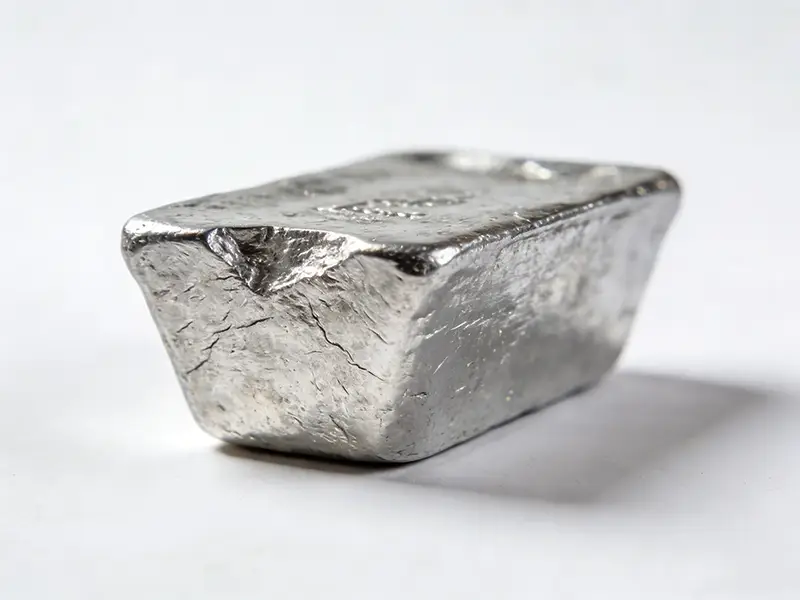
Standards and grades for ADC0
- JIS Standard Grades: According to the Japanese Industrial Standard JIS H 5302, the grade is ADC0It is the only “non-standard commercial alloy” in the standard. It is the only "non-standard commercial alloy" in the standard.
- Grade MeaningADC stands for “Aluminum Die Casting” and “0” stands for its nearly pure aluminum base composition.
- Core features: Its composition is required to be extremely pure, and the content of common alloying elements (e.g. Si, Cu) and impurity elements (e.g. Fe) is set to beStrict ceilingThe “range of content” of the alloy is not that of commercial alloys.
ADC0 Aluminum Alloy Composition Table (based on JIS H 5302 typical requirements)
| elemental | Content requirements (wt%, max) | Function and significance |
|---|---|---|
| Silicon (Si) | ≤ 0.30 | Unalloyed elements. The very low content makes for poor casting fluidity, in extreme contrast to ADC10/12, for example. |
| Iron (Fe) | ≤ 0.50 | Strict control of impuritiesThis is much lower than commercial die casting alloys (typically >0.7%). Much lower than commercial die casting alloys (typically >0.7%) and designed to evaluate the properties of “pure” aluminum. |
| Copper (Cu) | ≤ 0.10 | Unalloyed elementsThe corrosion resistance is theoretically optimal. Almost no copper, therefore no solid solution strengthening effect and theoretically the best corrosion resistance. |
| Manganese (Mn) | ≤ 0.10 | Trace impurities. |
| Magnesium (Mg) | ≤ 0.05 | Trace impurities. |
| Zinc (Zn) | ≤ 0.10 | Trace impurities. |
| Aluminum (Al) | ≥ 99.0 | Nearly pure aluminum matrixIt is the source of all its performance. |
ADC0 Physical and Mechanical Properties Parameter Table (Die-Cast State, Typical Values)
| Performance indicators | Value range/characteristics | Comparison Reference (ADC12/YL113) with Description |
|---|---|---|
| intensity | Approx. 2.70 g/cm³ | Close to pure aluminum density. |
| Tensile strength (Rm) | 80-120 MPa | Very low intensity, which is only about 1/3 that of ADC12, clearly demonstrates the contribution of alloying to strength. |
| Yield strength (Rp0.2) | 30-50 MPa | The load-bearing capacity is extremely weak. |
| Elongation (A) | 20-35% | Very high plasticity (elongation). Extremely rare in die castings, reflecting the high toughness nature of pure aluminum. |
| Brinell hardness (HB) | Approx. 25-35 | very soft, very poor abrasion resistance. |
| heat conductivity | Approx. 220 W/(m-K) | Excellent thermal conductivity, close to pure aluminum and much higher than alloyed die-cast aluminum. |
| Coefficient of linear expansion | Approx. 23.5×10-⁶/°C | Higher. |
| Casting mobility | poorly | Because of its wide solidification zone and low latent heat of crystallization, the filling capacity is far inferior to that of high-silicon alloys. |
Performance Essence and Characterization
The existence of ADC0 fundamentally explains the meaning of “alloying”:
- inverse datumThe fact that it is in an almost “pure” state proves inversely that silicon (Si) has a strong effect onCasting mobilitydeterministic enhancement of copper (Cu) and magnesium (Mg), as well as the effect of themechanical strengthThe key role of the
- Craftsmanship touchstone: Because of its poor fluidity, low strength, can successfully die casting qualified ADC0 samples, itself proves that the mold design, process parameter control has reached a high level.
- Attribute polarizationIt also has the highestThermal conductivity, corrosion resistance and plasticityand the lowestStrength, hardness and castability.
Corresponding international grades and status
- Japanese Standard:ADC0 (JIS H 5302) - Its definition is unique.
- international status: In other major national standards (e.g. China GB, USA ASTM, EU EN).No direct commercial equivalent. The concept is close to that of a scientifichigh purity aluminumor specific grades ofAluminum for electriciansThe latter, however, is not usually used in die casting.
- analogy for reference: its composition and properties are analogous to Aluminum alloys such as 1070A or 1060, pure aluminum alloys., but the molding process is different.
Application scenarios for ADC0 aluminum alloy (non-commercial)
Due to its characteristics, ADC0Virtually no large-scale commercial die casting applicationsThe main uses are concentrated in the following special areas:
- Scientific research and teaching
- Alloy development benchmarks: As the “zero point”, it is used to study the influence of a single added element (e.g. Si alone, Cu alone) on the die-casting properties of aluminum alloys.
- Teaching Presentation Materials: Visualize how alloying changes the strength, plasticity, and castability of metals in a materials science classroom.
- Specialty Performance Prototyping
- Extreme thermal/electrical conductive component prototype: It may be used to make proof-of-concept parts when the design has extreme requirements for thermal or electrical conductivity and the structure is simple and virtually unstressed.
- Corrosion-resistant media test pieces: Evaluate the performance of pure aluminum substrates in extremely harsh corrosive environments.
- Die Casting Process and Mold Evaluation
- Advanced Mold Trial: Used to test filling limits and thermal balance of new molds, as it is one of the “hardest to die cast” aluminum alloys.
- Process Window Study: Used to determine process parameter boundaries for die casting machines at the lowest fluid material.
ADC0 Aluminum Alloy Frequently Asked Questions
Q1: Why is it almost impossible to buy ADC0 die castings on the market?
- Because it's a“Tool alloys”, not “product alloys”.”. Its extremely poor casting properties and very low strength make it economically and practically unfeasible to produce commercial parts. It exists forComparison, research and testing, rather than being used directly.
Q2: Can ADC0 be heat-treated for strengthening?
- Not at all.The heat treatment strengthening (e.g., T5, T6) is based on the premise that the alloy contains sufficient quantities of elements (e.g., Cu, Mg) to form precipitation phases. Heat treatment strengthening (e.g., T5, T6) presupposes that the alloy contains sufficient amounts of elements (e.g., Cu, Mg) that can form strengthened precipitation phases.ADC0 contains almost none of these elements, and thusNo heat treatment effect.
Q3: What is the corrosion resistance of ADC0?
- Theoretically, the best in the aluminum alloy die casting series. Because it does not contain copper (Cu, which reduces corrosion resistance) and the content of iron (Fe) and other impurities is strictly controlled, the aluminum oxide film formed on its surface is purer and denser. However, its soft surface may be more susceptible to mechanical damage.
Q4:If ADC0 is so “bad”, why does the JIS standard define it?
- This is where the value lies.ADC0 plays a role in the standard's “The role of the ”origin" of the coordinates. It provides a performance comparison of all other ADC family alloys (e.g. ADC10, ADC12) with theabsolute benchmark. With it, engineers can quantitatively understand how much flow enhancement or strength growth can be achieved for every 1% of silicon or copper added.
Q5: In what extreme case would one consider using ADC0?
- Only whenElectrical/thermal conductivity requirements are given overwhelming priority99.9% may be evaluated as a theoretical option only when the shape of the part is extremely simple (e.g., solid block, thick plate), when it is subjected to almost no mechanical loads, and when it is not sensitive to manufacturing costs (e.g., special heat sink base prototypes for some high-energy physics or spacecraft). In 99.9% engineering practice, a more suitable alloy should be selected.
summarize: ADC0 is a die-cast aluminum alloy in the family of “Plain Truth” 或 “Blank control group” . It strips away all the usual alloying trimmings and nakedly demonstrates the true performance of pure aluminum under the die casting process:High plasticity, high thermal conductivity, but very difficult to mold and weak strengthIts greatest value lies not in its use, but in its very existence. Its greatest value lies not in its use, but in its very existence - it clearly defines the starting point for all other practical die-cast aluminum alloy performance enhancements, and is an excellent teaching model for understanding the leap from “material” to “engineering material” in aluminum alloys. It is an excellent teaching model for understanding the leap from "material" to "engineering material" in aluminum alloys.