


ZL109 (ZAlSi12CuMgNi) Piston Casting Aluminum Alloy: Eutectic Silicon Aluminum-Nickel-Copper-Magnesium system for high temperature strength and low expansion.
Article Catalog[Hidden]
- ZL109 Aluminum Alloy Composition Table (based on GB/T 1173 typical requirements)
- ZL109 Physical and Mechanical Properties Parameter Table (metal mold casting, typical value for T5 state)
- Performance Enhancement Paths and Technology Keys
- Corresponding international grades
- Application of ZL109 in foundry industry
- ZL109 Aluminum Alloy Frequently Asked Questions
- 📊 Extended column: comparison and analysis of ZL109 and ZL108
As a Chinese national standard (GB/T 1173) in theAluminum-silicon-copper-magnesium-nickel eutectic alloys for pistonsThe quintessential representative of theZL109 (ZAlSi12CuMgNi) by means ofExcellent high-temperature strength, good abrasion resistance, low coefficient of thermal expansion and excellent volume stabilityis known for. The alloy passesHigh silicon (Si) content to ensure low expansion and wear resistance, supplemented by copper (Cu), magnesium (Mg), nickel (Ni) multi-polymer composite strengtheningAfter T1 (natural aging) or T5 (artificial aging) heat treatment, excellent high-temperature mechanical properties and dimensional stability can be obtained, and it is the best choice for manufacturing ofInternal combustion engine pistons and other heat-resistant and wear-resistant parts subject to alternating thermal and mechanical loads.It is a specialized material for piston alloys, and is known as the “core member of the piston alloy family”.
The national grade for ZL109 is ZAlSi12CuMgNi.
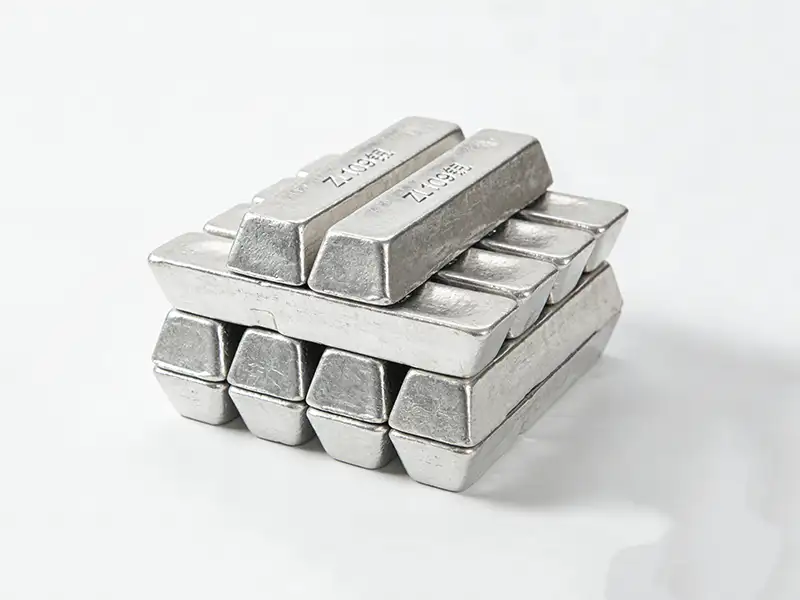
- National Standard Grade: According to GB/T 1173, its grade isZAlSi12CuMgNi. The name directly reflects its core alloy system: silicon (Si), copper (Cu), magnesium (Mg), and nickel (Ni).
- Industry/Enterprise Code:ZL109 It is the designation of the material widely used in the field of piston manufacturing and internal combustion engine design.
- Core features:Eutectic/near-eutectic silicon content (11-13%) Gives a low coefficient of expansion and good abrasion resistance;Multi-composite of copper, magnesium and nickelProvides excellent high temperature strength;Strict impurity controlLong-term service reliability is guaranteed.
ZL109 Aluminum Alloy Composition Table (based on GB/T 1173 typical requirements)
| elemental | Content range (wt%) | functional role |
|---|---|---|
| Silicon (Si) | 11.0-13.0 | core element. Provides low coefficient of thermal expansion, good abrasion resistance and guarantees casting fluidity. |
| Copper (Cu) | 0.5-1.5 | High Temperature Enhanced Elements. Formation of heat-resistant Al₂Cu phase to enhance high-temperature strength and hardness. |
| Magnesium (Mg) | 0.8-1.3 | Key Enhancement Elements. Forms the Mg₂Si phase with Si, providing significant precipitation strengthening. |
| Nickel (Ni) | 0.8-1.3 | Important heat-resistant elements. Formation of stable nickel-containing heat-resistant phases (e.g., Al₃Ni, Al₃CuNi) significantly improves high-temperature creep resistance. |
| Iron (Fe) | ≤ 0.6 | Impurity elements. Needs to be controlled, but is slightly more lenient than ZL108. |
| Manganese (Mn) | ≤ 0.3 | impurities, or trace additions to improve organization. |
| Titanium (Ti) | ≤ 0.2 | Grain refiner. |
| Zinc (Zn) | ≤ 0.3 | Impurities. |
| Aluminum (Al) | tolerance (i.e. allowed error) | Substrate material. |
ZL109 Physical and Mechanical Properties Parameter Table (metal mold casting, typical value for T5 state)
| Performance indicators | Numerical range | Performance Positioning and Benefits Explained |
|---|---|---|
| intensity | 2.68-2.70 g/cm³ | -- |
| Room temperature tensile strength (Rm) | 240-280 MPa | High strength level to meet piston structural loading requirements. |
| High temperature tensile strength (250°C) | ≥ 130 MPa | Core Advantages, maintains sufficient strength at high temperatures to prevent cracking or deformation of the top of the piston. |
| Yield strength (Rp0.2) | 180-220 MPa | The yield ratio is high and the elastic deformation is small. |
| Elongation (A) | ≤ 1.0% | Poor plasticity, an inherent characteristic of highly reinforced, high-silicon alloys. |
| Brinell hardness (HB) | 90-110 | high stiffnessThis ensures excellent abrasion resistance. |
| Coefficient of linear expansion (20-200°C) | 19.0-20.5 × 10-⁶/°C | Core AdvantagesIt is lower than common aluminum-silicon alloy and matches well with cylinder liner. |
| volumetric stability | talented | After T5 treatment, the dimensional change under long-term use is extremely small. |
| heat conductivity | Approx. 140-150 W/(m-K) | Good for piston heat dissipation. |
Performance Enhancement Paths and Technology Keys
The performance realization of the ZL109 relies on a sophisticated multi-component co-design:
- Multi-Compound Strengthening System:
- Silicon (Si): Provides low coefficient of expansion, wear resistance and castability.
- Copper (Cu): Formation of Al₂Cu to enhance room and high temperature strength.
- Magnesium (Mg): Formation of Mg₂Si to provide precipitation strengthening.
- Nickel (Ni): Formation of stable nickel-containing intermetallic compounds (e.g., Al₃Ni, Al₃CuNi), which are phases that are not easily roughened at high temperatures, is a key factor in obtaining theExcellent high temperature creep resistanceThe key.
- Heat treatment system:
- T1 (natural limitation): Cast directly for long periods of time, suitable for less demanding applications.
- T5 (artificial aging):Most commonly used processes. Holding at 200-220°C for 6-10 hours to obtain optimum high temperature properties and tissue stability. Unlike ZL108, ZL109 is usually not subjected to solid solution treatment (T6) to avoid coarsening or over-firing of eutectic silicon.
- Casting process: Mainly usedMetal type gravity casting或Low-pressure castingProduced to obtain a dense, uniform as-cast organization.
Corresponding international grades
As a classic eutectic piston alloy, it has several international counterparts:
- Chinese national standard:ZAlSi12CuMgNi (GB/T 1173)
- American Standard: Closest A332.0 (Al-Si12CuNiMg) with highly similar compositions; some of the data also correspond to the SAE 321.
- EU standard:EN AC-48000 (Al-Si12CuNiMg) (EN 1706)
- Japanese Standard:AC8A (JIS H 5202), which is very close in composition.
- German Standard:DIN 1725 G-AlSi12CuNiMg in the similar grade.
Application of ZL109 in foundry industry
based on itsExcellent high temperature strength, low coefficient of expansion and good wear resistanceThe application of ZL109 is highly concentrated in the field of internal combustion engines:
- Pistons (absolute core applications)
- Diesel Engine Pistons: Pistons for medium and light diesel engines, small agricultural diesel engines, and generator sets.
- Gasoline engine pistons: Passenger car gasoline engine pistons, motorcycle engine pistons.
- Universal Gasoline Engine Pistons: Lawn mowers, small generators, outboard pistons.
- Other heat-resistant and wear-resistant parts
- Compressor pistons: Medium and low pressure compressors.
- Brake Caliper Pistons: Part of the passenger car braking system.
- Wear parts for hydraulic systems: Bushings and slides requiring low expansion and high wear resistance.
ZL109 Aluminum Alloy Frequently Asked Questions
Q1: What is the main difference between ZL108 and ZL109? How to select the model?
- This is the most classic comparison in piston alloys:
- ZL108:Eutectic aluminum-silicon alloys(Si 11-131 TP3T, but usually on the high side) and higher copper content (1.0-2.01 TP3T).Lower coefficient of thermal expansion, better abrasion resistance, higher temperature strengthApplicable toHigher heat loads and more demanding conditionspistons (e.g., supercharged diesel engines, heavy-duty diesel engines).
- ZL109:Eutectic/near-eutectic aluminum-silicon alloys(Si 11-131 TP3T), slightly lower copper content (0.5-1.51 TP3T), with nickel.Good all-around performance, slightly better casting performance, slightly lower costApplicable toPistons for medium and light diesel engines and gasoline engines.
- selection:Heavy, high thermal loadsChoose ZL108;Light-medium, general purposeChoose ZL109.
Q2:Why is nickel (Ni) added to ZL109? Is it possible not to add it?
- Nickel is a key heat-resistant element. Nickel forms with aluminum and copperStabilized intermetallic compounds(Al₃Ni, Al₃CuNi), these phases at high temperatureNot easily roughened, not easily dissolvedIt can effectively pinch grain boundaries and dislocations, and significantly improve the alloy'sHigh temperature strength, creep resistance and thermal stability. Alloys without nickel will have significantly lower high-temperature performance and are not suitable for pistons operating above 200°C for long periods of time.
Q3: Why is ZL109 not treated with T6 (solution + aging)?
- The main reason for this is thatoverheating riskrespond in singingOrganizational deteriorationZL109 has a silicon content of up to 11-131 TP3T and is a eutectic or near-eutectic composition with a low eutectic melting point. the solid solution temperatures required for T6 treatment (typically >500°C) tend to cause theCoarsening of eutectic silicon, even localized overcooking, instead of impairing the mechanical properties. Therefore, ZL109 is usually usedT5 (direct manual ageing)The desired precipitation strengthening effect is obtained while stabilizing the tissue.
Q4: Does the ring groove area of the ZL109 piston require special treatment?
- Usually requires. To further improve the wear resistance of the ring grooves, ZL109 pistons often have aFirst ring groovecarry outHard anodizedThis treatment creates a high hardness layer of aluminum oxide, which significantly extends piston life. Some high-performance pistons also usegirdle(Inlaid wear-resistant cast iron ring groove) design.
Q5: What is the casting performance of ZL109? What are the characteristics compared with ordinary aluminum-silicon alloys?
- Good casting performanceThe high silicon content makes it suitable for casting complex shapes of pistons. The high silicon content gives it excellent fluidity and makes it suitable for casting complex shaped pistons. However, attention should be paid to itsWide solidification rangeprone toshrinkageThe casting system and the cooling process are therefore more demanding. Usually usemetal molding或Low-pressure castingThe design of the risers and cold irons is designed to achieve a dense casting.
Q6: What is the cutting and machinability of ZL109?
- Lower middle. The high silicon content (11-13%) makes it contain a large number of hard silicon particles, which is good for the tool'sabrasive wearmore severe. When machining ZL109, it is recommended to usePCD (Polycrystalline Diamond) Cutting Toolsor high qualityCoated carbide toolsAdoptionHigh cutting speeds, small feedsThe process parameters. Precision parts such as ring grooves may require grinding.
📊 Extended column: comparison and analysis of ZL109 and ZL108
| comparison dimension | ZL109 (ZAlSi12CuMgNi) | ZL108 (ZAlSi12Cu2Mg1) | Difference Interpretation |
|---|---|---|---|
| Alloy Type | Eutectic/near-eutectic aluminum-silicon alloys | Eutectic aluminum-silicon alloys | ZL108 silicon phase has primary silicon |
| Silicon (Si) content | 11.0-13.0% | 11.0-13.01 TP3T (bias control) | Similar, but ZL108 skews the upper limit |
| Copper (Cu) content | 0.5-1.5% | 1.0-2.0% | ZL108 copper is higher and stronger |
| Nickel(Ni) content | 0.8-1.3% | 0.3-0.9% | ZL109 with higher nickel content |
| Magnesium (Mg) content | 0.8-1.3% | 0.4-1.0% | ZL109 slightly higher magnesium content |
| coefficient of thermal expansion | 19.0-20.5 x 10-⁶/°C | 18.5-20.0×10-⁶/°C | Lower coefficient of expansion for ZL108 |
| High Temperature Strength | talented | better | ZL108 is more suitable for high thermal loads |
| Casting Performance | talented | favorable | ZL109 slightly better castability |
| typical application | Pistons for medium and light diesel engines and gasoline engines | Heavy Duty Diesel, Supercharged Engine Pistons | Heat load rating determines selection |
| cost positioning | moderate | Moderately high | ZL108 costs slightly more |
Selection Quick Guide:
- Choose ZL109.: Pistons for medium and light diesel engines, general-purpose gasoline engines, and motorcycle engines, requiring a good balance of overall performance and economy.
- Select ZL108: Pistons for heavy-duty diesel engines, supercharged engines, and high-performance gasoline engines requiring extreme heat resistance, lowest coefficient of expansion, and highest wear resistance.