


ADC1C Die-Casting Aluminum Alloy Comprehensive Guide: Composition System, Performance Advantages, International Grades and Selection Logic
Article Catalog[Hidden]
- ADC1C Aluminum Alloy Composition Table (based on JIS H 5302 typical requirements)
- ADC1C Physical and Mechanical Properties Parameter Table (Die-Cast State, Typical Values)
- ADC1C Performance Enhancement Path and Technical Characteristics
- ADC1C international grade
- Application of ADC1C in die casting industry
- ADC1C Aluminum Alloy Frequently Asked Questions
- 📊 Extended column: ADC1C vs. ADC1, ADC12 comparative analysis
As part of the Japanese Industrial Standards (JIS)High-silicon general-purpose die-cast aluminum alloyThe optimized and upgraded grades ofADC1C by means ofExcellent casting flow, excellent dimensional stability, good corrosion resistance and higher purityand is well known. The alloy is a classic ADC1 alloyhigh purity versionBy means of theStrict limitation of the content of impurity elements (especially iron, copper and zinc)In addition, while maintaining the excellent casting properties of ADC1, the stability of mechanical properties, corrosion resistance and elongation are significantly improved, and it is the best way to produceHigh-volume die castings with high quality consistency, complex shapes and thin wall thicknesses.It is a reliable choice for a wide range of applications in automotive, electronics, general machinery and other fields.
Standards and grades for ADC1C
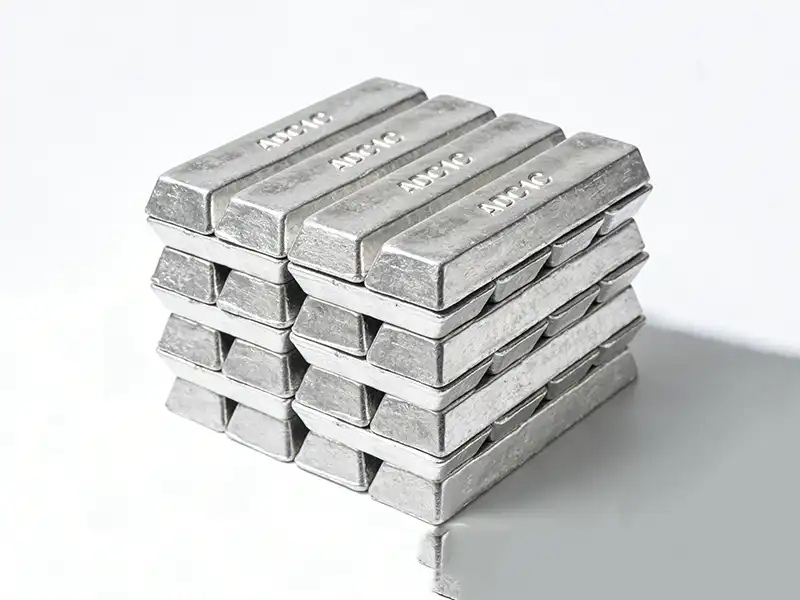
- JIS Standard Grades: According to the Japanese Industrial Standard JIS H 5302, the grade is ADC1CADC“ stands for ”Aluminum Die Casting“. ”ADC“ stands for ”Aluminum Die Casting“, ”1" stands for High Silicon Series, "C " stands for high purity or optimized version.
- Core features:High silicon content (11.0-13.01 TP3T) Gives excellent casting fluidity and resistance to hot cracking;Strictly controlled impurities (Fe≤1.0%, Cu≤0.6%, Zn≤0.5%) It makes its purity higher than ordinary ADC1, thus obtaining more stable mechanical properties and better corrosion resistance;Not heat treatableThe performance is totally dependent on the as-cast organization, emphasizing process stability and quality consistency.
ADC1C Aluminum Alloy Composition Table (based on JIS H 5302 typical requirements)
| elemental | Content range (wt%) | Compare to ADC1 | functional role |
|---|---|---|---|
| Silicon (Si) | 11.0-13.0 | equal | core elementIt provides excellent casting fluidity, low shrinkage and good resistance to hot cracking. |
| Copper (Cu) | ≤ 0.6 | ADC1: 0.5-1.5 | Tightly controlled impurities. Cu content was significantly lower, which was the result of itsImproved corrosion resistance and toughnessThe key. |
| Iron (Fe) | ≤ 1.0 | ADC1: ≤1.3 | Tightly controlled impurities. Lower iron content reduces the formation of brittle iron-rich phases and improves elongation and machinability. |
| Zinc (Zn) | ≤ 0.5 | ADC1: ≤1.0 | Tightly controlled impurities. Zinc content is reduced to further enhance corrosion resistance and reduce the tendency to hot crack. |
| Manganese (Mn) | ≤ 0.3 | equal | Neutralizes some of the harmful effects of iron. |
| Magnesium (Mg) | ≤ 0.3 | equal | Strictly controlled to maintain non-heat treatable properties. |
| Nickel (Ni) | ≤ 0.5 | equal | Available. |
| Aluminum (Al) | tolerance (i.e. allowed error) | - | High purity matrix. |
ADC1C Physical and Mechanical Properties Parameter Table (Die-Cast State, Typical Values)
| Performance indicators | ADC1C Value Range | ADC1 value range | Comparative analysis and advantages |
|---|---|---|---|
| intensity | 2.66-2.68 g/cm³ | 2.66-2.68 g/cm³ | Similar. |
| Tensile strength (Rm) | 230-280 MPa | 230-280 MPa | The intensity levels are comparable, but the ADC1C performance consistency is better. |
| Yield strength (Rp0.2) | 130-160 MPa | 130-160 MPa | Similar. |
| Elongation (A) | 1.8-3.5% | 1.5-3.0% | Core Advantages: 10-20% elongation increase, better toughness. |
| Brinell hardness (HB) | 70-85 | 70-85 | Similar. |
| corrosion resistance | Good (better than ADC1) | general | Core Advantages: Low copper and zinc make it significantly more resistant to corrosion. |
| Casting mobility | excellent | excellent | Identical, both at the top level. |
| machinability | Good (better than ADC1) | general | Impurities are reduced and tool wear is reduced. |
| Performance Stability | talented | general | Strict control of impurities leads to better performance consistency between batches. |
ADC1C Performance Enhancement Path and Technical Characteristics
The ADC1C was designed with the concept of “High purity improves quality, low cost keeps it economical”:
- High silicon guarantees processability: 11-13%'s silicon content gives it the highest fluidity among die-cast aluminum alloys, making it suitable for molding the most complex thin-walled structures, with low shrinkage and a low tendency to thermal cracking.
- Qualitative changes in impurity control:
- Copper (Cu)≤0.6%: Significantly lower copper content compared to ADC1's 0.5-1.51 TP3T.Significantly improved corrosion resistanceThe risk of galvanic corrosion is reduced.
- Iron (Fe) ≤1.0%: Reducing the content of brittle acicular phases, theElongation enhancement 10-20%The toughness is better.
- Zinc (Zn)≤0.5%: Further improves corrosion resistance and reduces the tendency to thermal cracking.
- Not heat treatable: As with ADC1, ADC1C does not contain sufficient age strengthening elements such as magnesium (Mg).Unable to improve strength by T5/T6 heat treatmentThe properties are entirely dependent on the as-cast organization. This makes it a simplified production process, cost-controlled and suitable for mass production.
- Quality Consistency: Through strict raw material control and melting process, ADC1C'sLess performance fluctuation between batchesIt is suitable for bulk orders that require high quality consistency.
ADC1C international grade
ADC1C has an international counterpart as a high-purity version of high-silicon die-cast aluminum:
| (an official) standard | grades | note |
|---|---|---|
| Japan JIS | ADC1C | - |
| ASTM, USA | A413.0 High-purity version of | A413.0 composition (Si 11-13%, Cu ≤ 0.6%) highly consistent with ADC1C |
| China GB | YL102 High-purity version of | Need to use YL102 with tighter control of iron and copper |
| EU EN | EN AC-44000 或 EN AC-47100 | High purity grade required |
| International ISO | AlSi12 high purity | having a correspondence |
Application of ADC1C in die casting industry
based on itsExcellent castability, good corrosion resistance and stable quality, ADC1C is mainly used in the following fields:
- Auto Parts
- Shell type: Sensor housings, ECU housings, lamp housings, door lock housings.
- bracket class: Mirror mounts, interior trim mounts, harness mounts.
- fuel system: Fuel pump housing, fuel level sensor housing (high requirement for corrosion resistance).
- electrical and electronics
- communications equipment: 5G base station heat sink housing, router housing, antenna base.
- consumer electronics: Laptop housings, projector structures, power adapter housings.
- Lighting: LED lamp heat sinks, street light housings.
- General Machinery and Appliances
- precision instruments: Instrument housings, structural parts of measuring devices.
- domestic electric appliance: The main body of the vacuum cleaner, the internal structural parts of the coffee maker, and the fan motor bracket.
- Hardware Tools: Power tool housings, garden tool housings.
- Bulk parts that require high quality consistency
- OEM/ODM orders that require strict batch control.
- Exported to Europe and the United States and other markets with strict requirements for environmental protection and performance of materials.
ADC1C Aluminum Alloy Frequently Asked Questions
Q1: What is the main difference between ADC1C and ADC1? How to select the type?
- Here's the core comparison:
- ADC1: Basic version, copper content 0.5-1.5%, iron≤1.3%, zinc≤1.0%.Lower costThe product is suitable for general-purpose parts that do not require high corrosion resistance and toughness.
- ADC1C: High purity version, copper ≤ 0.6%, iron ≤ 1.0%, zinc ≤ 0.5%.Better corrosion resistance, better toughness, more stable qualityThe product is suitable for applications where reliability and consistency are important.
- selection: Common structural components, cost-sensitive optionsADC1We have a wide range of products, including automotive electronics, outdoor equipment, export products, and products with strict quality requirements.ADC1C.
Q2: Can ADC1C be used instead of ADC12?
- Yes, subject to assessment of strength requirementsADC1C has a higher silicon content and better casting fluidity than ADC12, but a much lower copper content than ADC12, so theSlightly lower strength in cast form than ADC12. ADC1C is a good alternative if the part has moderate strength requirements and castability, corrosion resistance or quality consistency are more important. Conversely, if higher strength is required, ADC12 should be used.
Q3: Why is ADC1C not heat-treated?
- because ofVery low magnesium (Mg) content (≤0.3%)In the case of Mg₂Si, it is not possible to form sufficient Mg₂Si strengthening phases. Carrying out T6 solid solution treatment not only fails to enhance the strength significantly, but may also lead to blistering due to the expansion of internal pores. Therefore, the performance of ADC1C is completely dependent on the as-cast organization, and the production process is simple and cost-controlled.
Q4: How is the corrosion resistance of ADC1C? Does it need surface treatment?
- favorableThe corrosion resistance is significantly better than ADC1 and ADC12 due to the significantly reduced copper and zinc content. Due to the significantly reduced copper and zinc content, the corrosion resistance is significantly better than that of ADC1 and ADC12. In normal indoor environments no additional surface treatment can be done. However, in humid, salt spray or chemical environments, painting, anodizing or electrophoresis is recommended to further extend service life.
Q5: What is the welding repair performance of ADC1C?
- favorable. The low copper content gives it a low tendency to weld hot cracks. It can be repaired by argon arc welding (TIG), using homogeneous wires or Al-Si system wires, cleaned before welding, and localized stress relief treatment can be carried out after welding.
Q6: What is the cutting and machinability of ADC1C?
- Superior to ADC1 and ADC12. Lower iron content reduces hard brittle phases, resulting in less tool wear and higher surface finishes. Good results can be obtained with coated carbide tools.
📊 Extended column: ADC1C vs. ADC1, ADC12 comparative analysis
| comparison dimension | ADC1C (high purity version) | ADC1 (basic version) | ADC12 (generic version) |
|---|---|---|---|
| Silicon (Si)% | 11.0-13.0 | 11.0-13.0 | 9.6-12.0 |
| Copper (Cu)% | ≤0.6 | 0.5-1.5 | 1.5-3.5 |
| Iron (Fe)% | ≤1.0 | ≤1.3 | ≤1.3 |
| Zinc (Zn)% | ≤0.5 | ≤1.0 | ≤1.0 |
| tensile strength | 230-280 MPa | 230-280 MPa | 280-310 MPa |
| elongation | 1.8-3.5% | 1.5-3.0% | 1.5-3.0% |
| Casting mobility | excellent | excellent | talented |
| corrosion resistance | favorable | general | mediocre |
| machinability | favorable | general | general |
| Quality Stability | talented | general | favorable |
| Typical Costs | moderate | lower (one's head) | moderate |
Selection Quick Guide:
- Select ADC1C: RequirementsHigh castability, good corrosion resistance, quality consistencyComplex thin-walled parts (automotive electronics, communication equipment, export products).
- Select ADC1: General structural components, cost-sensitive, with low requirements for corrosion resistance and toughness.
- Select ADC12: Requiredhigher intensityThe die casting is a general-purpose die casting that does not require high corrosion resistance.