


ZL107 (ZAlSi7Cu4) Cast Aluminum Alloy: A High Copper Strengthened Alloy, Explaining Its High Strength Properties and Engineering Applications
Article Catalog[Hidden]
- ZL107 Aluminum Alloy Composition Table (based on GB/T 1173 typical requirements)
- ZL107 Physical and Mechanical Properties Parameter Table (metal mold casting, typical values)
- Performance enhancement paths and process characteristics
- Corresponding international cards
- Application of ZL107 in foundry industry
- ZL107 Aluminum Alloy Frequently Asked Questions
- 📊 Extended column: ZL107 vs. related alloys
As a Chinese national standard (GB/T 1173) in theAluminum-silicon-copper high strength casting alloyThe quintessential representative of theZL107 (ZAlSi7Cu4) by means ofHigher strength, good casting performance and excellent heat treatment strengthening effectis known for. The alloy passesSilicon (Si) for casting fluidity and copper (Cu) as the main reinforcing element.After T5 or T6 heat treatment, the strength level of aluminum-copper alloys can be obtained, while retaining better casting processability than aluminum-copper alloys.Medium-strength castings with high static loads and complex shapesIt is the ideal material for the automobile, power machinery and general equipment fields.
The national grade for ZL107 is ZAlSi7Cu4.
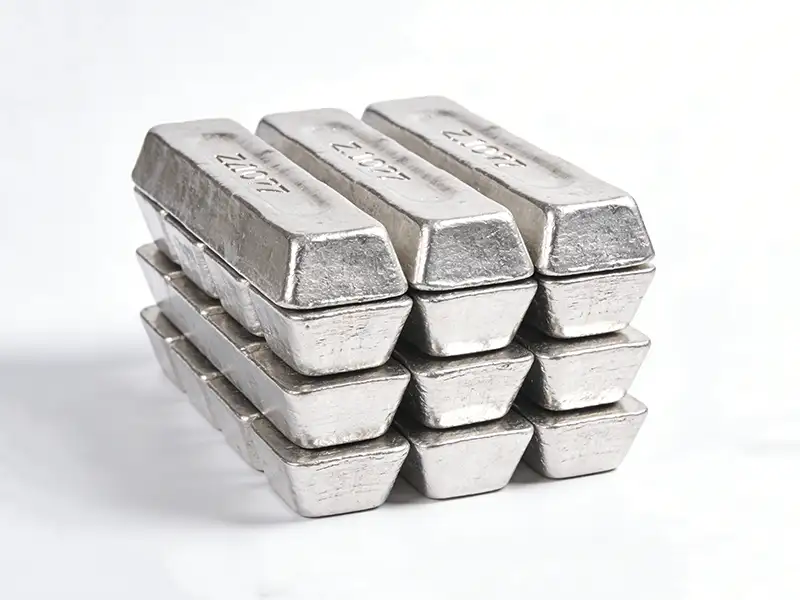
- National Standard Grade: According to GB/T 1173, its grade isZAlSi7Cu4. The name directly reflects its core alloy system: silicon (Si) and copper (Cu).
- Industry/Enterprise Code:ZL107 It is a widely used code for this material in foundry industry drawings, manuals and enterprise standards.
- Core features:Medium silicon content (6.5-7.51 TP3T) Ensures good casting fluidity;Higher copper content (3.5-4.5%) This gives it a significant heat treatment strengthening ability to achieve high strength in the T5 or T6 condition, but at the expense of some elongation and corrosion resistance.
ZL107 Aluminum Alloy Composition Table (based on GB/T 1173 typical requirements)
| elemental | Content range (wt%) | functional role |
|---|---|---|
| Silicon (Si) | 6.5-7.5 | Main alloying elements. Provides good casting fluidity, resistance to hot cracking, and partial solid solution strengthening. |
| Copper (Cu) | 3.5-4.5 | Core Strengthening Elements. Formation of Al₂Cu reinforced phase significantly improves room temperature strength and hardness. |
| Magnesium (Mg) | 0.3-0.5 (some standards included) | Ancillary Strengthening Elements. Forms Mg₂Si with silicon, which synergizes with Al₂Cu to further enhance strength. |
| Iron (Fe) | ≤ 0.5 | Impurity elements. Needs to be controlled to avoid formation of brittle phases. |
| Manganese (Mn) | ≤ 0.5 | May be added to neutralize the harmful effects of iron. |
| Zinc (Zn) | ≤ 0.3 | Impurities. |
| Titanium (Ti) | 0.1-0.2 (can be added) | Grain refiner. |
| Aluminum (Al) | tolerance (i.e. allowed error) | Substrate material. |
ZL107 Physical and Mechanical Properties Parameter Table (metal mold casting, typical values)
| Performance indicators | Cast (F) | T5 aging state | T6 solid solution + aging state | Performance Positioning and Interpretation |
|---|---|---|---|---|
| intensity | 2.72-2.74 g/cm³ | -- | -- | Slightly higher than aluminum-silicon-magnesium alloys. |
| Tensile strength (Rm) | 180-220 MPa | 250-280 MPa | 290-330 MPa | Excellent strength in T6 stateIt reaches the level of high-strength cast aluminum. |
| Yield strength (Rp0.2) | 100-130 MPa | 180-210 MPa | 220-260 MPa | The yield strength is greatly increased after heat treatment, and the load carrying capacity is high. |
| Elongation (A) | 2.0-4.0% | 2.0-3.0% | 1.5-2.5% | Lower plasticity, is the price of pursuing high intensity. |
| Brinell hardness (HB) | 70-80 | 90-105 | 100-120 | High hardness and good wear resistance after T6. |
| High Temperature Strength (200°C) | general | favorable | talented | The addition of copper keeps the high temperature properties better. |
| Casting mobility | favorable | -- | -- | The medium silica content ensures a good filling capacity. |
| corrosion resistance | moderate | moderate | moderate | Higher copper content, less corrosion resistant than copper-free alloys, requires surface protection. |
Performance enhancement paths and process characteristics
The performance of ZL107 comes from itsCopper-enhanced lead, heat-treatment drivenThe technical route:
- Copper is the cornerstone of strength: The higher copper content (3.5-4.5%) enables the precipitation of a large number of diffuse Al₂Cu reinforced phases after heat treatment, which is the fundamental reason for its high strength.
- Heat Treatment as a Performance Engine:
- T5 (artificial aging): Direct artificial aging in the cast state, can be obtained under the conditions of controlled deformation of a certain strengthening, suitable for parts with high requirements for dimensional stability.
- T6 (solid solution + full artificial aging): Peak strength is obtained and is suitable for load-bearing structural components, but the risk of deformation that may be caused by solution hardening needs to be borne in mind.
- Solid solution temperature needs to be careful: Usually carried out at 515-525°C, temperatures too high tend to cause overburning of the copper phase.
- Wide adaptability of casting process: Applicable toSand casting, metal casting, investment castingVarious processes, but because of its high copper content, hot cracking tendency is slightly higher than the aluminum-silicon-magnesium alloys, the design of the casting system should be noted.
Corresponding international cards
ZL107 has a number of close international equivalents, but it is important to be aware of minor differences in composition:
- Chinese national standard:ZAlSi7Cu4 (GB/T 1173)
- American Standard: The closest is 319.0 (Al-Si6Cu4), the composition ranges basically match, is a typical international counterpart of ZL107.
- EU standard:EN AC-45400 (Al-Si8Cu3) is slightly higher in silicon and slightly lower in copper;EN AC-46200 (Al-Si8Cu3) is similar.
- Japanese Standard:AC2B 或 AC4B, but need to check the specific ingredients.
- international standard:AlSi7Cu4 (ISO 3522) has a counterpart.
Application of ZL107 in foundry industry
based on itsHigh strength, good castability and cost effectivenesscharacteristics, ZL107 is mainly used in the following fields:
- Automotive and Power Machinery (Mainstream Applications)
- Engine components: Cylinder head (non-high heat load area), intake tube, oil pan, timing gear housing, engine mounts.
- transmission system: Transmission housing, clutch housing, distributor housing.
- braking system: Brake master cylinder housing, vacuum booster housing.
- General mechanical equipment
- Pump and valve housings: Medium and high-pressure oil pumps, hydraulic valve bodies, water pump housings.
- transmission part: Reducer housings, industrial gearboxes.
- Motor Casing: High-power motor housings, generator end caps.
- Construction and agricultural machinery
- Hydraulic cylinder end cap, connecting bracket, transmission case.
- electrician's equipment
- High-voltage switch housing, cable junction box, motor fan.
ZL107 Aluminum Alloy Frequently Asked Questions
Q1: What is the main difference between ZL107 and ZL104, ZL105? How to select the type?
- comparative analysis:
- ZL107:High copper (3.5-4.51 TP3T), medium silicon (71 TP3T), may contain small amounts of magnesium.High strength (especially after T6), but low elongation and average corrosion resistance. Close to US 319.0.
- ZL104:Copper-free, high silicon (9%), magnesium-containing.Good castability and excellent corrosion resistance, but medium strength.
- ZL105:Medium copper (1-1.5%), low silicon (5%), magnesium-containing.High strength, medium elongation, good high temperature performance.
- selection: RequiredMaximum strength with low elongation requirementsfashionableZL107(T6); requiredGood castability and corrosion resistance, moderate strengthfashionableZL104(a) The need forHigher strength combined with a certain degree of toughnessfashionableZL105.
Q2: What are the general heat treatment process parameters for ZL107?
- Typical T6 process (for reference only, needs to be adjusted according to the casting):
- solid solution treatment: 515-525°C × 6-12 hours.Warm water (60-80°C) quenching(Note: the temperature should not be too high to prevent overcooking).
- artificial time limit: 160-180°C × 6-10 hours, air-cooled.
- The T5 process (direct aging in the cast state) can also be used, with a slightly lower strength gain, but with less risk of deformation, and is suitable for parts with complex shapes.
Q3: What is the casting performance of ZL107? Is there a big tendency of hot cracking?
- Good casting properties, but need to be aware of thermal crackingThe With a silicon content of around 7%, the fluidity is sufficient for most moderately complex parts. However, due to the higher copper content, the solidification interval is wider, theSlightly higher hot cracking tendency than high silicon alloys such as ZL104. When designing the casting system and risers, attention needs to be paid to make-up shrinkage to avoid cracks in the hot joints.
Q4: How is the corrosion resistance of ZL107? Does it need surface treatment?
- moderateThe higher copper content makes it less corrosion resistant than the copper-free ZL101A, ZL104. The higher copper content makes it less resistant to corrosion than the copper-free ZL101A, ZL104. used outdoors or in wet environments.Surface protection is recommendedSuch as painting, anodizing (the anodized film may be grayish and slightly less uniform), and so on.
Q5: What is the welding repair performance of ZL107?
- Lower middle. Higher copper content, welding thermal cracking tendency is more obvious. Argon arc welding filler welding, need to bePreheating (150-200°C)The choice of suitable aluminum-silicon-copper welding wire, post-welding forstress reliefThe following are some examples of the types of welds that should be used. For important load-bearing parts, large patch welding should be avoided as much as possible.
Q6: What is the relationship between ZL107 and A319.0? Are they interchangeable?
- Very close, can be regarded as the corresponding grade in the Chinese and American standardsThe composition range of A319.0 (Si 5.5-6.5%, Cu 3-4%) differs slightly from that of ZL107 (Si 6.5-7.5%, Cu 3.5-4.5%), but the performance intervals are highly overlapping. In engineering practice, the two are often regarded as materials that can be substituted for each other, but this needs to be confirmed by verification of properties based on specific compositions and after heat treatment.
📊 Extended column: ZL107 vs. related alloys
| comparison dimension | ZL107 (ZAlSi7Cu4) | ZL104 (ZAlSi9Mg) | ZL105 (ZAlSi5Cu1Mg) | A319.0 (AFSL) |
|---|---|---|---|---|
| Silicon (Si)% | 6.5-7.5 | 8.5-10.5 | 4.5-5.5 | 5.5-6.5 |
| Copper (Cu)% | 3.5-4.5 | ≤0.1 | 1.0-1.5 | 3.0-4.0 |
| Magnesium (Mg)% | 0.3-0.5 | 0.17-0.35 | 0.4-0.6 | ≤0.10 |
| Tensile strength (T6) | 290-330 MPa | 240-270 MPa | 280-320 MPa | 275-310 MPa |
| Elongation (T6) | 1.5-2.5% | 1.5-3.0% | 1.5-3.0% | 1.5-2.5% |
| Casting mobility | favorable | talented | favorable | favorable |
| Typical Costs | moderate | lower (one's head) | moderate | Medium (slightly higher for imports) |