


ZL104 casting aluminum alloy technical details: composition, properties and industry applications
As one of the most widely used alloys in the cast aluminum alloy family, ZL104 (ZAlSi9Mg) is known for itsExcellent casting performance, good airtightness and high overall mechanical propertiesIt is well known. The alloy is particularly well suited for use bySand casting, metal casting and investment castingTo produce parts with complex shapes that require air tightness or are subjected to moderate loads, a good balance between process adaptability and performance reliability has been achieved.
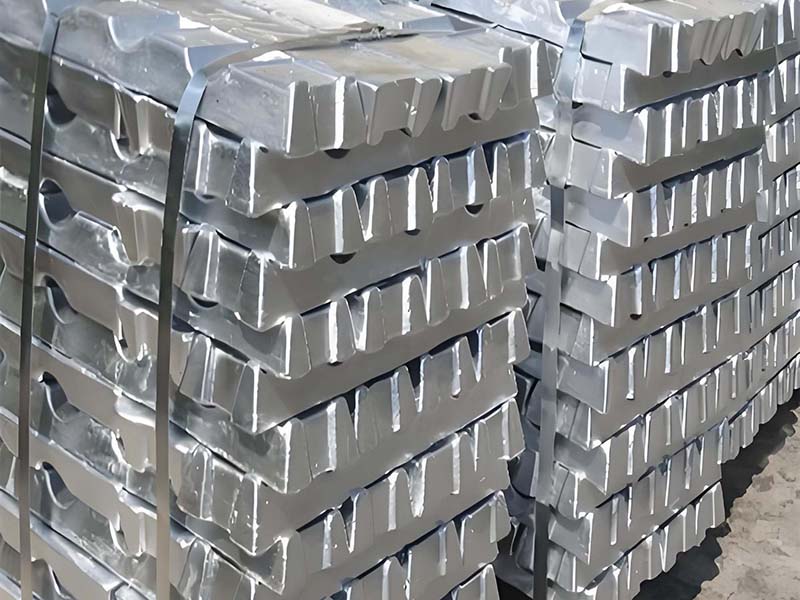
The national grade for ZL104 is ZAlSi9Mg.
- National Standard Grade: According to GB/T 1173, its grade isZAlSi9MgThe “Z” stands for “casting” and the “L” stands for “aluminum”. Where "Z" stands for "casting" and "L" stands for "aluminum".
- Industry/Enterprise Code:ZL104 It is a widely used designation for this material in industry drawings, manuals and corporate standards.
- Cast and heat-treated state: its performance is highly dependent on heat treatment, usually in the form of aT6 status(Solution treated + fully artificially aged) delivered and used for optimum strength.
ZL104 Aluminum Alloy Composition Table
| elemental | Content range (wt%) | functional role |
|---|---|---|
| Silicon (Si) | 8.0-10.5 | Improves casting fluidity, reduces hot cracking tendency, is the main alloying element. |
| Magnesium (Mg) | 0.17-0.35 | Key reinforcing element that forms the Mg₂Si phase with silicon, which significantly increases strength through heat treatment. |
| Manganese (Mn) | 0.2-0.5 | Neutralizes the harmful effects of iron, improves corrosion resistance, and partially forms a strengthened phase. |
| Iron (Fe) | ≤0.6 | Impurity elements, which need to be strictly controlled to maintain good mechanical properties and corrosion resistance. |
| Titanium (Ti) | ≤0.15 | Commonly used grain refining agent to improve the casting organization and mechanical properties. |
| Aluminum (Al) | tolerance (i.e. allowed error) | Substrate material. |
ZL104 Physical and Mechanical Properties (Typical, T6 state)
| Performance indicators | Numerical range | Process Remarks |
|---|---|---|
| intensity | 2.65 g/cm³ | -- |
| Tensile strength (Rm) | 220-250 MPa | Metal mold casting T6 state can reach the upper limit, better than sand casting. |
| Yield strength (Rp0.2) | 140-180 MPa | -- |
| Elongation (A) | 2.0-4.0% | Significantly better than die cast alloys of the same strength level. |
| Brinell hardness (HB) | 70-90 | -- |
| heat conductivity | Approx. 150 W/(m-K) | -- |
| Coefficient of linear expansion | 21.5 x 10-⁶/°C | -- |
Mechanical Performance Enhancement Path
Excellent performance of ZL104Obtained almost exclusively by heat treatmentIts path to reinforcement is clear:
- T6 heat treatment is the coreThe standard “solution treatment (535±5℃ holding, water quenching) + complete artificial aging (175±5℃ holding)” is the key to its performance leap. After T6 treatment, the tensile strength can be increased by more than 50% compared with the as-cast condition.
- Precise control of ingredients: Ensuring that the magnesium (Mg) content is at the upper limit of the requirement is a prerequisite for obtaining sufficiently reinforced phases (Mg₂Si). Strict control of the iron (Fe) content prevents the formation of harmful brittle phases.
- Casting process optimization: Adoptionmetal molding或Low-pressure castingThe use of faster cooling rates to achieve a finer as-cast organization allows properties to reach the upper end of the range after T6 and improves casting densities.
Corresponding international grades
This cast aluminum alloy with silicon and magnesium as the main alloying elements is widely used in the standards of various countries:
- Chinese national standard:ZAlSi9Mg (GB/T 1173)
- American Standard:356.0 (ASTM)
- EU standard:EN AC-43000 (EN 1706)
- Japanese Standard:AC4C (JIS)
ZL104 in the foundry industry
based on itsGood overall performance, excellent casting adaptability and reliable heat treatment strengthening effectThe ZL104 is widely used in the analysis ofAirtight, complex construction, corrosion resistant and medium strengthRequired fields:
- Aerospace & Military(Classical applications)
- Engine Accessories: Aircraft engine magazines, casings, pump bodies, etc. (requiring high airtightness and reliability).
- Instrumentation housings: Complex housings for all types of aeronautical instruments.
- Transportation(mainstream applications)
- Automotive components: Engine intake manifolds (metal-type casting), cylinder head covers, water pump housings, gearbox housings (low-pressure casting).
- Motorcycle/Electric Vehicle: Hubs, motor housings, frame connectors.
- Ship components: Outboard housings, marine pump valves.
- General Machinery and High Pressure Equipment
- Hydraulic and pneumatic parts: Hydraulic valve bodies, cylinder bodies, air compressor heads (good machinability and pressure capacity).
- Transmission housing: Reduction gearboxes, gearbox housings.
- High Load Bracket: Engine mounts, equipment bases.
- Other areas
- electronic equipment: Large motor housings, generator end caps.
- medical equipment: Structural components in medical devices that require complex shapes and clean surfaces.
ZL104 Aluminum Alloy Frequently Asked Questions
Q1: What is the most common defect of ZL104 casting? How to prevent it?
- Porosity and ShrinkageSolution: ①Strengthen the melt refining to remove gas; ②Optimize the pouring riser system to strengthen the sequence of solidification; ③For key parts, use low pressure casting or pressure regulating casting to improve the shrinkage capacity. Solution: ① Strengthen the melt refining and degassing; ② Optimize the pouring and riser system to strengthen the sequential solidification; ③ For key parts, use low-pressure casting or pressure-regulated casting to improve the shrinkage capacity.
Q2: Why must ZL104 be heat treated?
- The strength of ZL104 is mainly derived from the precipitation strengthening of the Mg₂Si phase. This phase is coarse in the as-cast state and the strengthening effect is weak.T6 Heat Treatment(solid solution + aging) can make Mg₂Si fully dissolved and diffuse precipitation, thus significantly increasing the strength, hardness and yield limit, is its performance standards to meet the use ofRequired Processes.
Q3: What is the corrosion resistance of ZL104?
- Good corrosion resistanceThe corrosion resistance of these alloys in atmospheric and seawater environments is superior to that of cast aluminum alloys (such as YL113). Because it does not contain copper or copper content is very low, and the addition of magnesium is beneficial to the stability of the surface oxide film, so that its corrosion resistance in the atmosphere, seawater environment is better than the casting of aluminum alloys containing copper (such as YL113/ZL107). However, appropriate surface treatment (e.g. anodizing, painting) is still required according to the usage environment.
Q4: What is the main difference between ZL104 and die-cast alloys (e.g. YL113/A380)?
- The core difference lies in the casting method and composition system:
- ZL104: forSand casting/metal mold castingDesign withMagnesium (Mg) by means ofheat treatment strengtheningand contains no or very little copper.Tight control of iron (Fe) contentfor better elongation and corrosion resistance.
- YL113/A380: forHigh Pressure Die CastingDesign withHigher copper (Cu) and iron (Fe) to accommodate die casting processes (anti-sticking molds).Usually without solution heat treatment(to avoid blistering), mainly by solid solution strengthening of Cu and T5 aging.
- Key to Selection: RequiredHigh strength, high density, heat treatableSelection of complex partsZL104(a) The need forHigh-volume, high-efficiency productionSelection of medium-strength thin-walled partsYL113/A380.
Q5: What should I pay attention to when machining ZL104?
- ① Tool Selection: Due to its silicon content, it is highly abrasive and recommended to useCarbide or PCD tools.
- ② Cutting parameters: Higher cutting speeds and smaller feeds are used.
- (iii) state of affairs: inT6 state (after aging) Processing, better dimensional stability. If stress relief is required after machining, low temperature stress relief annealing can be carried out.
summarize: ZL104 is an example of a product that is based on theSilicon, magnesiumFor strengthening elements.Dependent on T6 heat treatmentpeak performanceGeneral purpose cast aluminum alloy. It follows a different technological path than the die-casting alloy YL113: YL113 pursues theCost and Efficiency in Die CastingWhile ZL104 pursuesBetter overall performance and reliability through various casting methods and heat treatmentsIt's manufacturing.Important, complex, load-bearing structural elementsThe classic choice.