


What materials can be machined using CNC precision machining?
Excerpt:
CNC precision machining can handle an extremely wide range of materials—from the most common ones like aluminum and steel, to challenging materials such as titanium alloys and nickel-based superalloys, all the way to engineering plastics like PEEK and Acetal—covering virtually all metals and plastics used in manufacturing. However, "machinable" does not necessarily mean "cost-effective to machine": for the same part drawing, machining time and tooling costs can vary by a factor of 3 to 5 depending on whether titanium or aluminum is used. This article breaks down CNC-machinable materials by category and uses machinability data to help you quickly see at a glance whether each material is "easy or difficult to machine" and what applications it is best suited for.
Article Catalog[Hidden]
- 1. Material Flexibility: Full Spectrum Coverage of Metals and Plastics
- 2. Overview of Material Categories
- 3. Detailed Explanation of Metallic Materials
- 4. An In-Depth Look at Engineering Plastics
- 5. Machinability Rating Table
- 6. How to Select Materials: The Four-Dimensional Decision-Making Method
- 7. Common Misconceptions
- 8. Frequently Asked Questions
1. Material Flexibility: Full Spectrum Coverage of Metals and Plastics
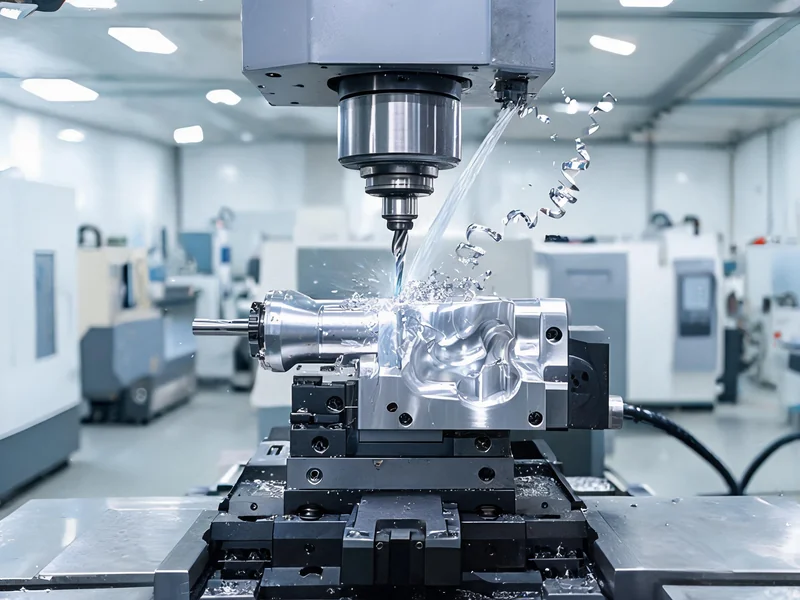
Unlike 3D printing—a process where "you can print whatever you have powder for"—CNC machining draws on a well-established industrial supply chain: mold steel, aluminum alloy bar stock, and engineering plastic sheets can all be fed directly into the machine. Professional machining shops can routinely handle More than 500 grades, with a tolerance of ±0.01 mm, and a quote provided within 24 hours. In other words, materials are hardly a constraint,It is the processing difficulties and costs associated with the material that are.
This is also true for CNC and Die casting A key distinction: Die casting is limited by whether the material "can be melted" and "can be injected into the mold," whereas CNC machining is limited only by whether the “cutting tool can machine it.” As a result, CNC machining can handle a wider range of alloy grades and supports high-hardness, high-melting-point materials that die casting cannot process.
2. Overview of Material Categories
| Major Categories | Representative Grades | localization |
|---|---|---|
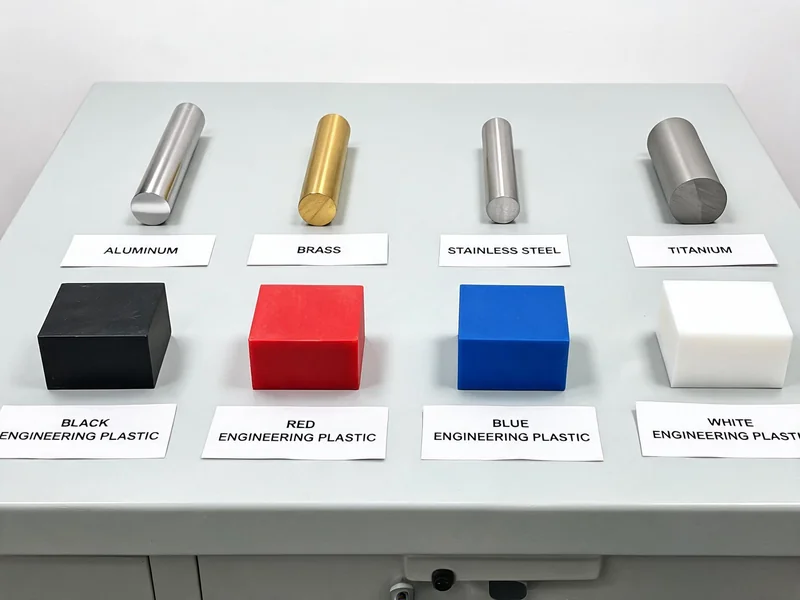
| aluminum | 6061-T6, 7075, 2024, 5083 | Lightweight, easy to work with, and offering the best value—the "versatile starting point" |
| stainless steels | 303, 304, 316, 17-4PH | Corrosion- and heat-resistant, high strength, difficult to machine |
| Titanium Alloys | Grade 2, Ti-6Al-4V | Unmatched strength-to-weight ratio, biocompatible, the most expensive and hardest to cut |
| copper alloy | Brass C360 | Machinability is the top priority, with excellent electrical and thermal conductivity |
| Carbon steel | 1018, etc. | High strength, low cost—the top choice for structural components |
| zinc alloy | Zamak 3 / 5 | Dimensionally stable, electroplating-compatible, small hardware |
| Nickel-based alloys | Inconel, etc. | Extremely high temperatures; most difficult to machine; aerospace/gas turbines |
| Engineering Plastics | POM, PA, PEEK, PTFE | Insulating, Wear-Resistant, Lightweight: Tooling and Insulating Components |
3. Detailed Explanation of Metallic Materials
3.1 Aluminum Alloy: The Most Common, Easiest to Machine, and Best Value for the Money
Aluminum alloys are the mainstay of CNC machining, especially 6061-T6—With a tensile strength of approximately 310 MPa, a density of just 2.7 g/cm³, a machinability rating of 90/100, good corrosion resistance, and an attractive anodized finish, this material is the default choice for the vast majority of parts. For applications requiring higher strength, choose 7075(Strength comparable to steel; used in aerospace structural components and bicycle parts); If you prioritize marine corrosion resistance and weldability, choose 5083(ship components, chemical processing equipment). Aluminum has a thermal conductivity as high as 167 W/m·K, which allows heat generated during cutting to be rapidly carried away by the chips, resulting in high cutting speeds and low tool wear. Aluminum billets in aluminum casting It is also common to perform secondary finishing on the parts.
3.2 Stainless Steel: A "Tough Nut to Crack" That Resists Corrosion and High Temperatures"
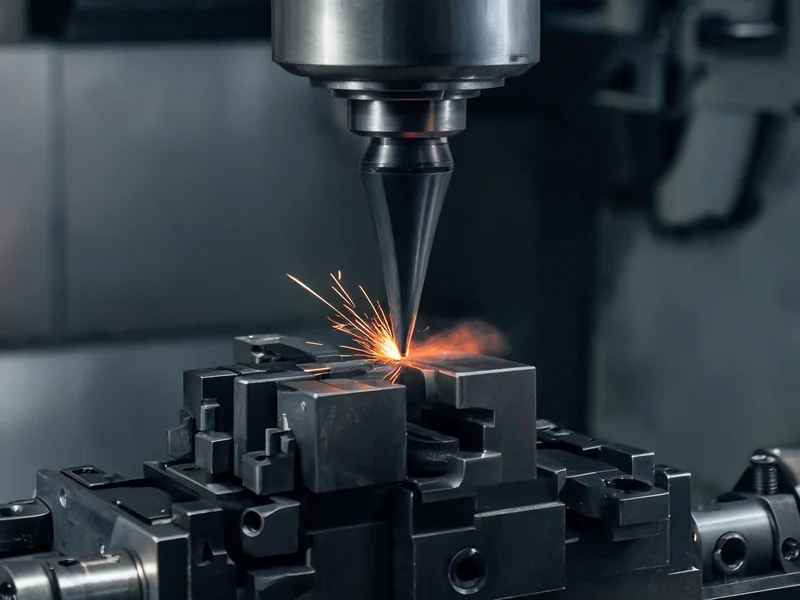
Among stainless steels,303 Easiest to process,304 General,316 Marine chemicals offer the highest corrosion resistance,17-4PH Precipitation hardening yields the highest strength. But keep one thing in mind: stainless steel has a thermal conductivity of only about 16 W/m·K (less than one-tenth that of aluminum), so cutting heat tends to accumulate at the tool tip, leading to work hardening and rapid tool wear, and machinability drops to that of 45%. It is suitable for applications requiring corrosion resistance, high-temperature resistance, or biocompatibility, but you’ll need to account for the additional time and tooling costs associated with its difficult machinability.
3.3 Titanium Alloys: Ultimate Performance, Ultimate Cost
Titanium (Ti-6Al-4V) has the highest strength-to-weight ratio of any structural metal and is also biocompatible; it is indispensable in the manufacture of aerospace structures, medical devices, and marine components. However, its machinability is only 20%... Due to poor thermal conductivity and extremely high temperatures in the cutting zone, slow feed rates and low cutting speeds are required; machining time is several times longer than for aluminum, and tooling costs rise sharply. Before choosing titanium, ask yourself: Is this performance premium worth the high machining costs?
3.4 Brass and Copper Alloys: Easiest to Cut, but with Limited Applications
brass C360 It is the benchmark for machinability among 100% grades—it offers excellent chip formation and minimal burrs, making it a favorite for high-speed mass-produced parts. It is widely used in valves, connectors, electrical terminals, and fluid fittings. If you need "low-cost, high-volume, precision small parts that conduct electricity or fluids," brass is virtually the only choice.
3.5 Carbon Steel, Zinc Alloys, and Nickel-Based Alloys
Carbon Steel 1018 With high strength, low cost, and good chip control (machinability: 70%), it is the primary material for structural components.Zinc Alloy Zamak 3/5 It offers dimensional stability and good electroplating compatibility, making it suitable for small housings, cover plates, and low-load hardware; it is also a commonly used material for die casting, and many parts can be produced using a combination of "zinc die casting + CNC finishing" (see A Comparison of Core Technologies in Zinc Die Casting and Aluminum Die Casting ).Nickel-Based Superalloys (Inconel) It is the most difficult material to machine, but it retains its strength even at temperatures of 1,000°C and is used exclusively in extreme applications—such as aviation and gas turbines—where there are "no alternatives."
4. An In-Depth Look at Engineering Plastics
Don't think that CNC is just for metals—engineering plastics are also commonly used materials:
- POM (Sai Gang): Dimensionally stable, self-lubricating; gears, bearings, and clamps.
- PA (Nylon): High wear resistance and toughness; used for wear-resistant and insulating components.
- PEEK: Withstands temperatures up to 260°C + high strength + chemical resistance—it is the "stainless steel" of plastics, used in medical, aerospace, and semiconductor equipment.
- PTFE (Teflon): Seals with extremely low friction and exceptional chemical resistance.
- ABS / PC / PMMA: Affordable, housings, transparent parts, prototypes.
Plastics require little cutting force and cause almost no tool wear, but care must be taken to prevent thermal deformation—since plastics are poor heat conductors, cutting too fast can cause localized softening and tool sticking. Therefore, when machining plastics, it is often necessary to control the spindle speed and cutting parameters.
5. Machinability Rating Table
This table is a "treasure map" for material selection. If you can master this table, you'll be able to estimate the processing time and cost range before placing an order.
| makings | Machinability Rating | Analysis |
|---|---|---|
| Brass C360 (Easy-to-Machine) | 100% | The benchmark; best for cutting; the top choice for high-speed mass production |
| Aluminum Alloy 6061 | 90% | Fast cutting, smooth surfaces—the best value for the money |
| Carbon Steel 1018 | 70% | Effective chip control; key component for structural parts |
| 304 Stainless Steel | 45% | Work hardening and tool wear require sharp cutting tools |
| Titanium Alloy Ti-6Al-4V | 20% | High-calorie, slow-feeding—the most difficult and most expensive |
6. How to Select Materials: The Four-Dimensional Decision-Making Method
- Mechanical Properties:What strength level is required? For standard structures, use 6061 or 1018; for high strength, use 7075 or 17-4PH; and for the ultimate strength-to-weight ratio, use titanium.
- Operating Environment:For humid or chemical environments, choose 316 or 5083; for high-temperature applications, choose stainless steel or PEEK; for marine applications, choose 5083 or 316.
- Weight Requirements:For lightweight applications, choose aluminum or plastic; for non-sensitive applications, carbon steel is an option.
- Cost and Batch Size:Brass and aluminum, which are easy to machine, have the lowest costs; titanium and Inconel, which are difficult to machine, cost twice as much or even several times as much. Consider this option for high-volume production of thin-walled parts. CNC Machining Combined with other processes.
7. Common Misconceptions
Misconception 1: "Any material can be CNC-machined, so there's no need to be selective."Being able to machine a material is one thing; value for money is another. Machining costs for titanium and Inconel can be 3 to 5 times higher than those for aluminum.
Misconception #2: "Plastic is easy to cut, so plastic parts are always the cheapest."The unit price of plastic and the need to control thermal deformation can sometimes actually drive up costs, and plastic is far less strong than metal.
Misconception 3: "Stainless steel is always more corrosion-resistant than aluminum."It depends on the specific grade and substrate—5083 aluminum offers excellent corrosion resistance in seawater and performs just as well as 304 in many applications.
8. Frequently Asked Questions
Q1: What metal materials can be machined using CNC machining?
Aluminum alloys (6061, 7075, 2024, 5083), stainless steel (303, 304, 316, 17-4PH), titanium alloys (Grade 2, Ti-6Al-4V), brass C360, carbon steel 1018, zinc alloy Zamak, nickel-based high-temperature alloys, etc.
Q2: Can a CNC machine machine plastic?
Yes, engineering plastics such as POM, PA, PEEK, PTFE, ABS, PC, and PMMA are widely used in insulation components, wear-resistant parts, prototypes, and tooling.
Q3: Which material is easiest to machine using CNC?
Brass C360 machinability: 100% is the benchmark for easiest machining; 6061 aluminum is approximately 90%; 304 stainless steel is approximately 45%; titanium is approximately 20%. The further down the list, the harder it is to machine and the more expensive it becomes.
Q4: How do you choose materials for CNC machining?
Evaluate the options based on four criteria—mechanical properties, operating environment, weight, and machinability—and then select a combination of processes based on production volume.
Q5: Why are titanium alloys so expensive?
Its machinability is only about that of 20%; poor thermal conductivity causes heat to concentrate in the cutting zone and leads to rapid tool wear, requiring slow feed rates and low spindle speeds. As a result, machining time and tooling costs are significantly higher than those for aluminum.