

A Comprehensive Analysis of the Brushing Process for Metal Surfaces: Functions, Types, Process Comparisons, and Common Issues
Excerpt:
A Comprehensive Analysis of Metal Surface Brushing Techniques: Covers five major types—straight, random, wavy, spiral, and threaded—compares brushing with sandblasting and polishing processes, and addresses common issues such as work hardening and uneven texture. A must-read for engineers—click to view the full article.
Article Catalog[Hidden]
I. The Purpose and Effects of Wire Drawing
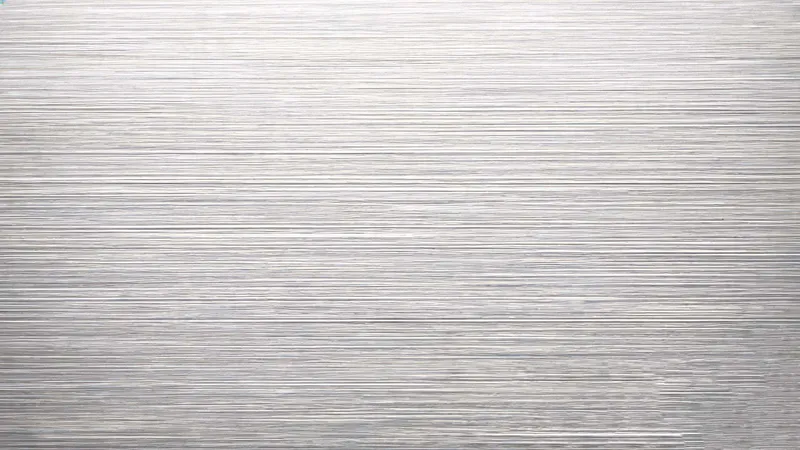
The core function of the wire-drawing process is to create extremely fine ridges and grooves on the metal surface through mechanical friction, thereby achieving the following functions:
- Repairing Scratches:When localized scratches appear on a metal surface, a wire drawing machine is used to create a uniform scratched texture across the entire surface (reducing the wall thickness) to conceal the original scratches. This is one of the most common applications. Although the process causes work hardening and alters the material’s properties, wire drawing remains a widespread choice because scratches are difficult to completely avoid during production.
- Decorative Enhancements:Brushing not only removes scratches from the surface of aluminum sheets but also gives the metal surface a unique decorative finish. Through various texture designs, it can create a wide range of visual effects, from an industrial look to refined elegance.
Technical Tip:Wire drawing causes work hardening, which alters some of the material’s mechanical properties. Therefore, in applications where the material’s original properties must be preserved, the wire drawing process should be used with caution, or followed by heat treatment to restore those properties.
II. Main Types of Wire Drawing
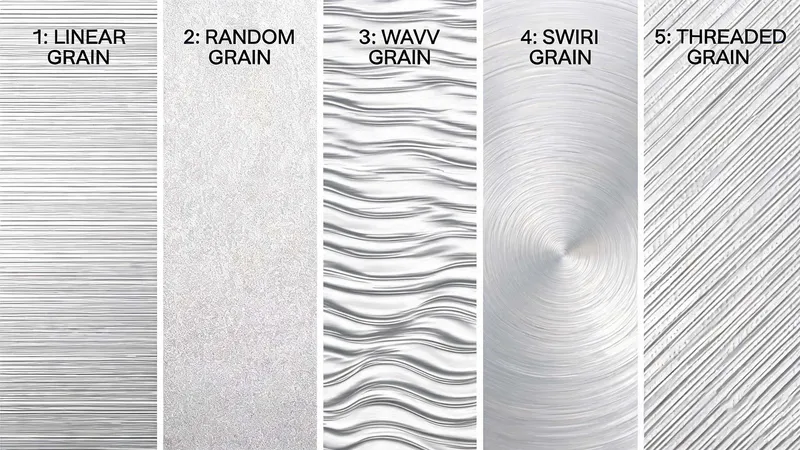
Brushed finishes can be created in a variety of textures to suit decorative needs; the five most common types are straight grain, random grain, wavy grain, swirl grain, and screw grain.
1. Straight-grain brushed finish
Straight-line patterns are created on the surface of aluminum sheets through mechanical friction, serving the dual purpose of removing surface scratches and enhancing the surface’s appearance. Straight-line brushed finishes are divided into two types: continuous brushed patterns and intermittent brushed patterns:
- Continuous Thread Pattern:Use a scouring pad or stainless steel brush to rub the surface of the aluminum sheet continuously in horizontal, straight lines (such as by hand or by clamping a wire brush in a planer and brushing the aluminum sheet). By changing the wire diameter of the stainless steel brush, you can achieve textures of varying coarseness.
- Intermittent Thread Patterns:It is typically produced using a polishing machine or a texturing machine. The process involves two sets of co-rotating differential rollers: the upper set consists of high-speed grinding rollers, while the lower set consists of low-speed rubber rollers. As the aluminum or aluminum alloy sheet passes between the two sets of rollers, it is brushed to produce a fine, intermittent straight-line pattern.
2. Random-pattern brushed finish
This is a random, matte brushed finish without distinct patterns, achieved by moving an aluminum sheet back and forth and side to side under a high-speed rotating copper wire brush to create friction. This process places high demands on the surface quality of aluminum or aluminum alloy sheets and is suitable for applications where a subtle, soft texture is desired.
3. Corrugated Wire Drawing
This finish is typically produced on a polishing or texturing machine, which uses the axial movement of the upper set of grinding rollers to grind and brush the surface of aluminum or aluminum alloy sheets, creating a wavy texture. The wavy texture conveys a sense of flow and a dynamic visual effect, and is often used on highly decorative products.
4. Optical Rotation (Optical Rotation)
This finish is achieved by mounting a cylindrical felt pad or a nylon wheel with an abrasive stone onto a drilling machine, then using a polishing compound mixed with kerosene to perform rotary polishing on the surface of aluminum or aluminum alloy sheets. It is commonly used for decorative finishing on circular nameplates and small decorative dials, producing a unique concentric circular texture.
5. Thread Drawing
Use a small motor with a circular felt pad mounted on its shaft; secure it to the tabletop at an angle of approximately 60 degrees to the edge of the table. Construct a sliding block equipped with a fixed aluminum clamping strip, and attach a strip of polyester film with straight, even edges to the sliding block to limit the width of the thread pattern. By combining the rotation of the felt pad with the linear movement of the carriage, uniform-width thread patterns are created on the surface of the aluminum plate.
III. Frequently Asked Questions About the Wire Drawing Process
Q1: Does wire drawing have to be performed on a flat surface?
Wire drawing is relatively easy to perform on flat surfaces and can also be done on surfaces with low curvature, but it becomes difficult to control the quality of the finish when the curvature is high. Therefore, for parts with high-curvature surfaces, it is generally recommended to perform wire drawing first and then proceed with forming, or to use wire-drawn sheet metal for stamping.
Q2: Should electroplating be done before brushing, or brushing before electroplating?
Typically, brushing is performed before electroplating, which is less expensive. In situations where appearance is of the utmost importance, electroplating may be performed before brushing; however, this requires a sufficiently thick electroplated layer and careful control of the brushing depth, which significantly increases costs.
Q3: How is the brushed finish on stainless steel created?
The brushed finish on stainless steel is also achieved through machining methods such as grinding with mechanical grinding wheels. For example, vacuum-formed stainless steel products are typically sanded using 180-mesh and 240-mesh sandpaper.
Q4: Which process should be performed first—wire drawing or stamping?
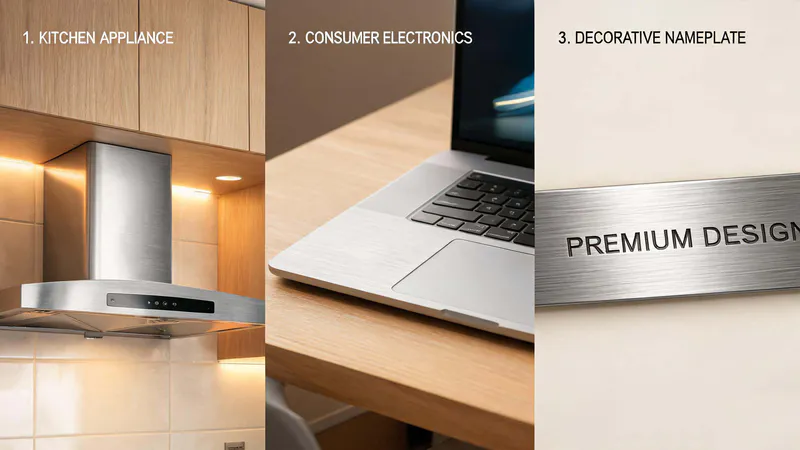
The cost of wire-brushing after stamping is very high, making it suitable only for small, high-margin IT and digital products. For larger home appliances (such as range hoods, disinfection cabinets, and rice cookers) that require a wire-brushed finish, manufacturers generally use pre-brushed sheet metal (such as SUS430 stainless steel) for stamping. Stainless steel is not widely used due to its high cost—ordinary stainless iron sheet costs approximately 8,000 yuan per metric ton (domestically produced), rising to about 10,000 yuan per metric ton after brushing; domestically produced SUS304 stainless steel sheet costs approximately 25,000 yuan per metric ton. Stainless steel offers a high-end aesthetic, but it has a high scrap rate during processing. For joining, riveting or TOX welding are generally the only options, and process control is relatively difficult.
Q5: Can die-cast aluminum parts be given a brushed finish?
Die-cast aluminum parts can undergo a brushed finish, followed by the application of a protective coating (an anti-oxidation paint layer). Additionally, plastic parts can be electroplated to achieve a brushed texture, with results virtually indistinguishable from those of aluminum.
Q6: Is there a connection between wire drawing and oxidation?
Brushing is unrelated to surface oxidation treatment, but it must be performed before oxidation. Surfaces resulting from natural oxidation should be considered quality defects, as the resulting oxide film differs significantly from that produced by specialized treatment in both composition and appearance. Coloring is not a post-treatment following oxidation, but rather a process carried out simultaneously with oxidation. The following are three commonly used methods for oxidation and coloring:
- Colored Anodized Coating:The anodized aluminum coating is colored by adsorbing dye.
- Self-coloring anodized coating:When certain aluminum materials are immersed in a suitable electrolyte (typically based on organic acids), an anodic oxide film with color is spontaneously formed on the alloy’s surface through the process of electrolysis.
- Electrolytic Coloring:The coloring of the anodized oxide film is achieved by the electrodeposition of metals or metal oxides into the pores of the oxide film.
Additional Notes:In addition to brushing, sandblasting is also a commonly used surface treatment for aluminum, which can similarly help conceal scratches and enhance the appearance.
IV. Comparison of Wire-Drawing and Hot-Stamping Processes
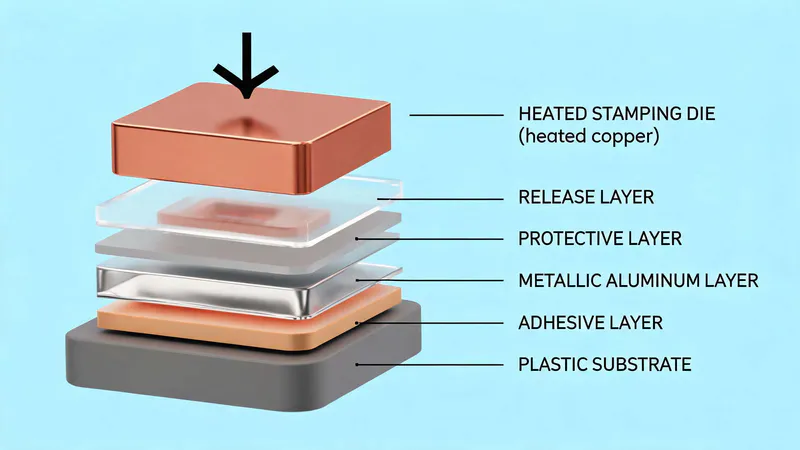
The hot stamping (electrolytic aluminum transfer) process can create a brushed-metal-like effect on the surface of plastic parts. Each method has its own specific applications and cannot simply be substituted for the other. Here are the key comparisons:
| comparison dimension | Wire Drawing Process | Hot Stamping Process |
|---|---|---|
| Suitable Substrates | Metal sheet metal parts (aluminum, stainless steel, etc.) | Paper, Plastic, and Textiles |
| Process Principles | Textures Created by Mechanical Friction | Hot stamping: Transferring foil to the surface of the substrate |
| Cost Comparison | Slightly cheaper (when comparing the manufacturing process alone) | Slightly higher, but the difference in substrate and structural costs is even greater |
| typical application | Home Appliance Panels, Digital Device Enclosures, and Nameplates | DVD player panels, audiovisual products, decorative parts |
| Textural Effects | Natural metal finish, wear-resistant | A variety of gloss levels and textures can be achieved using different hot-stamping foils. |
| Molds and Structures | Direct Machining of Sheet Material | Consider the hot-stamping suitability of plastic parts |
It is important to note that the two processes are suited for different applications, so a simple cost comparison is of limited value. When selecting a process, it is also necessary to consider other cost differences arising from mold and structural design, as well as material variations—these often far exceed the cost difference between the processes themselves.
V. Key Technical Points of the Hot Stamping Process
Hot stamping is a type of thermal transfer process. When creating a brushed finish on the surface of plastic parts, the following three key factors determine the quality of the stamping:
1. Selection of Hot-Stamping Plate Materials
Red copper is the best material for pressure heads because it has good heat dissipation and thermal conductivity. Among metals, it is considered a neutral material—neither too soft nor too hard—making it easy to machine. It also has some elasticity and excellent durability. In practice, many manufacturers opt for aluminum alloy printing plates to reduce costs. However, aluminum is too soft and has a short service life; for large production runs, new plates must be made, and plate-making costs are not insignificant. These factors should be considered comprehensively.
2. Hot Stamping Process Parameters
It mainly includes three parameters:Hot Stamping Pressure,Hot Stamping Temperaturerespond in singingHot Stamping Time. These three factors need to be matched and optimized based on the characteristics of the substrate and the foil.
3. Choosing Hot-Stamping Foil
This is the most critical factor. Hot-stamping foil must be matched to different substrates; no single type of foil can be used for all materials, as this directly affects the adhesion strength during hot stamping. When selecting a foil, you must choose the appropriate foil grade based on the substrate’s characteristics (such as the type of plastic and surface energy).
Extended Applications:Magic mirror decorative trim (widely used in audiovisual products) is made by hot-stamping reflective film onto PMMA sheets (though electroplating is also used). The brushed finish on plastic parts is generally achieved through hot stamping, in which the material from the hot-stamping foil is transferred to the plastic surface under the high temperature and pressure of a hot-stamping machine.
concluding remarks
As a classic metal surface treatment technique, the brushed finish has found widespread application in the home appliance, digital product, and decorative panel industries due to its dual functions of repairing defects and enhancing appearance. From straight to random patterns, and from wavy to swirled textures, the variety of texture types offers a wealth of design options for products. At the same time, hot stamping—as an alternative method for achieving a brushed finish on plastic parts—also plays an important role in specific applications.
In actual production, decisions regarding whether to use wire-drawing or hot stamping, which type of texture to adopt, and how to arrange the process sequence must be made by comprehensively considering the product’s positioning, cost budget, batch size, and material properties—rather than simply comparing individual process parameters.