


The Complete Guide to Aluminum Thunder Carving: Principles, Processes, Applications & FAQs
Article Catalog[Hidden]
- 1. Basic principles of aluminum alloy thunder sculpture
- 2. Main types of effects of aluminum alloy thunder sculptures
- 3. Aluminum alloy thunder sculpture process details
- 4. Key factors affecting the quality of thunder sculptures
- 5. Common defects and solutions for aluminum alloy thunder sculptures
- 6. Equipment selection guide for aluminum alloy thunder sculptures
- 7. Areas of application for aluminum alloy thunder sculptures
- 8. Safety and maintenance considerations
- 9. Future trends in aluminum alloy thunder sculptures
- 10. Frequently Asked Questions (FAQ)
- 12. Conclusion
In the rapid development of metal surface treatment technology today, aluminum alloy laser engraving (also known as laser engraving) by virtue of its high precision, non-polluting, permanent pattern of the unique advantages, is rapidly replacing the traditional silk screen, pad printing and chemical etching, consumer electronics, automotive, aerospace and other areas of the first choice of marking and decorative processes.
The so-called laser engraving refers to the use of high energy density laser beam irradiation of the material surface, through the photothermal effect to make the material instantly melt, vaporization or discoloration, thus leaving a permanent marking processing method. Compared with chemical etching, it requires no consumables, no waste liquid emission; compared with mechanical engraving, it has no tool wear, can process any complex pattern.
This article will provide you with a comprehensive guide to laser engraving of aluminum alloys, covering the fundamentals, main effect types, detailed process flows, parameter optimization tips, solutions to common problems, and the latest application examples. Whether you are a process engineer, a product designer, or an entrepreneur interested in laser processing, you will be able to get practical reference information from it.
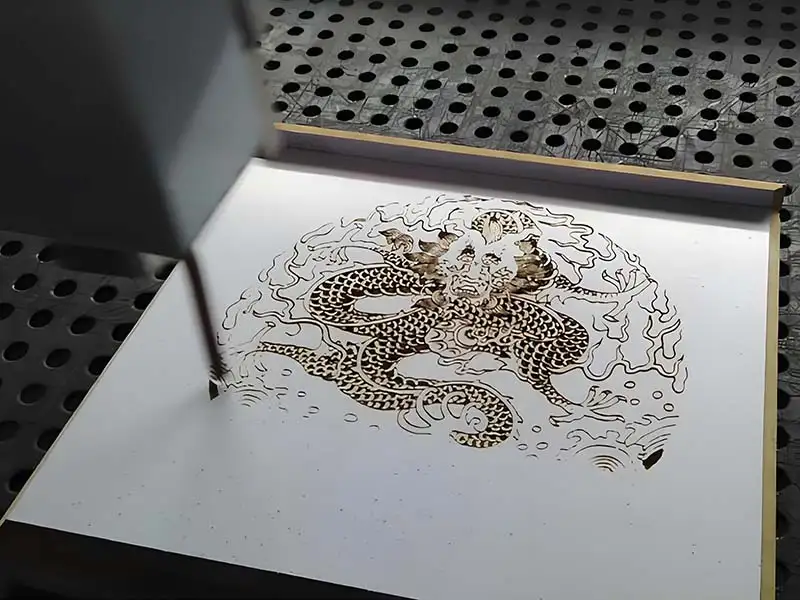
1. Basic principles of aluminum alloy thunder sculpture
know wellAluminum laser engravingtechnology, it is first necessary to understand the mechanism of interaction between the laser and the aluminum alloy.
Laser-Metal Interaction: When a laser beam is focused onto the surface of an aluminum alloy, the light energy is absorbed by the material and rapidly converted into thermal energy. Depending on the energy density, three main effects occur:
- lower temperature zone(<600°C): Oxidation or phase transformation of the material surface, resulting in color changes (e.g. yellow-brown).
- central temperature area(600-1200°C): melting and recondensation of the material surface, formation of a smooth molten layer (high gloss effect)
- hot zone(>1200°C): vaporization and evaporation of material, formation of grooves (deep engraving)
Selection of laser type:
- fiber laser(1064nm): the highest absorption rate of aluminum alloy, clear marking, excellent efficiency, is the mainstream choice for aluminum alloy processing
- MOPA fiber laserAdjustable pulse width (2-500ns) for special effects such as anodized aluminum breaking, color marking, etc.
- ultraviolet laser(355nm): Cold working characteristics, very small heat affected zone, suitable for thin-walled parts and precision micromachining.
- CO₂ Lasers(10.6μm): aluminum alloy absorption rate is very low, generally only used for surface coating removal, not suitable for direct engraving
Influence of Aluminum Alloy GradesDifferent grades of aluminum alloys have different laser absorption and thermal conductivity due to differences in alloying elements. 5 series (aluminum-magnesium alloy) and 6 series (aluminum-magnesium-silicon alloy) are the most suitable materials for laser engraving, with uniform and consistent engraving results; while cast aluminum alloys with high silicon content (e.g., A356) may have problems with non-uniformity of engraving.
2. Main types of effects of aluminum alloy thunder sculptures
Depending on the application requirements and process parametersAluminum alloy thunder sculptureFour distinct visual effects can be realized:
2.1 High-gloss laser engraving (mirror effect)
- principle: A high-powered continuous laser (>120W) is used to scan the surface of the material, instantly melting the existing rough surface (usually sandblasted) to form a dense, smooth layer of aluminum oxide. The reflectivity of this new surface is dramatically increased, resulting in a mirror-like, high-gloss effect.
- specificities: Bright mirror-like surface, almost no depth change (only a few micrometers), high abrasion resistance.
- Applicable Scenarios: Laptop case LOGO, high-end electronic product logo, luxury packaging.
2.2 Black and gray/color markings
- principle: By adjusting the pulse width and frequency of the MOPA laser, it induces the formation of oxide layers or nanostructures of different thicknesses on the surface, resulting in visual effects ranging from light grey to deep black and even color. No ink is added to this process.
- specificities: Permanent marking, no risk of peeling, high contrast, and can give a grayscale effect.
- Applicable Scenarios: Product serial number, barcode, QR code, functional logo, brand logo.
2.3 Deep engraving
- principle: A pulsed laser with high energy density is used to remove material layer by layer, creating a groove with a certain depth. The final depth can be controlled by multiple scans.
- specificities: distinctly tactile, controllable depth (0.01mm-1mm+), excellent abrasion resistance.
- Applicable Scenarios: Mold textures, Braille logos, decorative patterns, buttons requiring tactile feedback.
2.4 Translucent engraving (for anodized aluminum)
- principle: The laser precisely removes the localized anodic oxide layer, exposing the metal substrate. When the product is backlit, light transmits from the engraved area, creating a luminous marking effect.
- technical point: Precise control of laser power and pulse width is required to remove only the oxide layer without damaging or discoloring the substrate. The short pulse width mode (<100ns) of the MOPA laser is generally used.
- Applicable Scenarios: Keyboard backlit characters, car interior ambient light, electronic products translucent logo.
3. Aluminum alloy thunder sculpture process details
A successfulAluminum alloy markingThe process requires fine control of the entire process from pre-treatment to post-treatment.
3.1 Pre-processing
The purpose of pre-treatment is to prepare a uniform, clean surface base for thunder sculpting.
- Surface cleaning: Thoroughly removes oil, fingerprints and natural oxidized layers. Commonly used ultrasonic cleaning or alcohol wipe to ensure no residue.
- Surface Pretreatment Options:
- sandblast: the most commonly used method for obtaining a uniform matte finish. The number of blasts has a direct influence on the final result:
- 120 grit blasting: roughness approx. 1.2-1.4 μm, suitable for general marking
- 150 mesh sand blasting: roughness of about 0.3-0.4μm, optimal choice for high gloss laser engraving.
- 180 mesh sandblasting: more delicate, but can not hide the fine scratches, use with caution
- wire drawing: Obtains a directional texture, suitable for products with high decorative requirements.
- anodic oxidation: Formation of a dense oxide layer for subsequent engraving to achieve black and white/color contrast, or translucent effects
3.2 Thunder sculpture parameter setting
Parameter setting is the core of the Ray Engraving process and directly determines the final result.
| parameters | High Gloss Laser Engraving | black and gray markings | deep engraving | Translucent engraving |
|---|---|---|---|---|
| laser power | >120W (continuous) | 20-50W (pulsed) | 50-100W (pulsed) | 10-20W (short pulse) |
| scanning speed | 1000-2000mm/s | 2000-5000mm/s | 500-1500mm/s | 1000-3000mm/s |
| frequency | Continuous mode | 50-200kHz | 20-80kHz | 100-500kHz |
| pulse width | - | 4-200ns | 100-500ns | <100ns |
| fill spacing | 0.01-0.03mm | 0.02-0.05mm | 0.03-0.08mm | 0.02-0.04mm |
| Focus position | defocusing | Positive focus or slightly out of focus | defocusing | defocusing |
Sequence of critical processes (high gloss laser engraving as an example):
- Process 1(Laser engraving → chemical polishing → anodizing): Brightness 150-200GU (glossiness unit)
- Process 2(chemical polishing → laser engraving → anode): brightness 60-80GU
- Process 3(chemical polishing → laser engraving → chemical polishing → anodizing): brightness 200-300GU (best effect)
3.3 Post-processing
- Clean and Dust: The fine dust generated by engraving needs to be thoroughly removed by compressed air or ultrasonic cleaning.
- anodic oxidation: To protect the engraved area and to achieve color effects, a laser engraving followed by an anodizing process can be used, allowing the anodized film to cover the entire surface.
- chemical parabolism: Chemical polishing further improves reflectivity in high brightness areas and is recommended for applications where extreme brightness is sought.
- sealing treatment: The engraved area can be a starting point for corrosion. Passivation or sealing improves corrosion resistance and prevents oxidative discoloration.
4. Key factors affecting the quality of thunder sculptures
To obtain a stable, high-qualityAluminum Laser Engravingeffect, the following factors must be understood in depth and controlled:
- Aluminum
- Pure aluminum (Series 1): fast thermal conductivity, higher energy density required
- Series 5 (5052, 5083): Uniform effect, suitable for most applications
- Series 6 (6061, 6063): the most common structural aluminum, good engraving results
- Series 7 (7075): high hardness, parameters need to be adjusted to avoid cracking
- surface state
- The mesh size of the sandblast directly affects the roughness and brightness of the engraving. 150 mesh sandblast is the gold standard for high brightness laser engraving.
- The thickness and density of the anodized layer affects the difficulty of breaking the anode and the light transmission effect.
- laser equipment
- Fiber laser: 20W for shallow marking, 100W+ for high brightness and deep engraving
- Selection of galvanometer: φ14mm galvanometer for small-sized workpieces (high precision), 3D galvanometer or large-sized galvanometer for large-sized workpieces.
- Lens focal length: F160 (fine), F254 (general purpose), F330 (wide range)
- environmental factor
- Temperature fluctuations will affect the laser output stability, it is recommended to operate in a constant temperature environment.
- Dust can contaminate the lenses, so keep the table clean.
5. Common defects and solutions for aluminum alloy thunder sculptures
Even experienced operators inevitably encounter process problems. Below are common defects and targeted solutions:
| common defect | Possible causes | prescription |
|---|---|---|
| lack of brightness | Too low power; inaccurate focus; inappropriate blasting mesh size | Increase power (ensure >120W); refocus; choose 150 mesh blasting sand |
| carve too deeply | Too much power; too many scans; too high pulse overlap rate | Reduce power; reduce number of scans; adjust fill spacing to 0.03-0.05mm |
| Edge burn/burr | Excessive heat accumulation; poor heat dissipation | Increased scanning speed (>2000mm/s); adoption of pulse mode; increased blowing assistance |
| Oxidized discoloration of engraved areas | Inadequate reprocessing; no containment | Closed in time after engraving; using laser engraving and then anodizing process |
| Anode layer peeling off | Improper sun-breaking process; laser damage to substrate | Optimized pulse parameters (short pulse width <100ns); laser engraving before anode to avoid broken anodes |
| Uneven pattern | Uneven material surface; unstable laser energy | Checking material flatness; calibrating lasers; optimizing fill paths (e.g., using bi-directional fill) |
| Not enough blackness | Improper pulse width setting; insufficient number of scans | Adjust pulse width to 4-20ns range; add 1-2 scans |
| The black markings are white. | Excessive energy leading to ablation | Reduced power; increased scanning speed; reduced fill density |
6. Equipment selection guide for aluminum alloy thunder sculptures
Choosing the right laser equipment is half the battle. Below are suggestions for selection based on different needs:
6.1 Comparison of laser types
| Laser type | Applicable Scenarios | vantage | drawbacks | Recommended power |
|---|---|---|---|---|
| Standard Fiber Laser | General metal marking, depth engraving | High efficiency and low cost | Unable to color mark | 20W-50W |
| MOPA fiber laser | Color marking, anodized broken sun, high gloss engraving | Adjustable pulse width, multi-purpose | Higher prices | 20W-100W |
| ultraviolet laser | Thin-walled parts, precision micromachining | Minimal thermal influence | Low efficiency and high maintenance costs | 3W-15W |
6.2 Key Parameter Considerations
- power (output):
- 20W-30W: suitable for shallow surface marking, barcode engraving
- 50W-100W: suitable for deep engraving, anode broken sun
- 100W+: For high brightness laser engraving, it is recommended to choose MOPA 100W or continuous fiber 120W+.
- marking format: Selected according to the maximum workpiece size:
- 110×110mm: F160 lens, suitable for small pieces of fine processing
- 175 x 175mm: F254 lens, universal option
- Above 300×300mm: need to match with 3D galvanometer or large format table
- software functionality: Support for variable data (serial numbers, QR codes), support for multiple file formats, support for rotary axis linkage
6.3 Auxiliary equipment
- axis of rotation: Suitable for cylindrical surfaces (e.g. cups, tubes)
- Automatic loading and unloading: Suitable for high-volume production and increased efficiency
- dust collection systemAluminum engraving produces fine dust, which requires an efficient fume cleaner! Aluminum alloy engraving produces fine dust, need to be equipped with high efficiency smoke purifier
- Red light preview: Easy positioning and focusing
7. Areas of application for aluminum alloy thunder sculptures
Aluminum alloy thunder sculptureWith its high precision, permanence and environmental friendliness, it is widely used in many industries:
- 3C Electronic Products: Laptop shell LOGO, cell phone center frame logo, tablet PC decorative parts, smart watch case. High-gloss laser engraving has become the standard process for high-end laptop.
- automobile industry: wheel markings, interior trim, engine nameplates, gear knob scales, steering wheel buttons. Abrasion resistance and permanence make it ideal for automotive parts.
- aerospace: Parts traceability codes, batch numbers, safety markings, maintenance instructions. The permanence of the Ray Eagle ensures full life cycle traceability.
- consumer good: Key case personalization, aluminum scale, wine bottle customization, thermos commemorative text. The preferred process for small batch personalization.
- medical equipment: Surgical instrument marking, implant labeling, medical device panels. No pollution, no residue, meets the stringent requirements of the medical industry.
- Industrial components: Radiator model identification, connector markings, mold numbers, tool identification. Remains legible in harsh environments.
- Cultural Creations and Gifts: Customized medals, souvenirs, artistic creations, signature edition products. Rich grayscale and color effects are possible.
8. Safety and maintenance considerations
Laser processing involves high energy beams and dust, and safe operation is critical.
- Laser Safety Levels:
- Most industrial lasers are Class 4 lasers, which can cause permanent vision damage by looking directly into the beam or reflecting light
- Specialized laser protective eyewear (for 1064nm wavelength) is required.
- The equipment should be installed in a closed light path or in a work area with a protective cover
- Ventilation and dust removal:
- Aluminum alloy engraving produces fine dust (nano-scale) that can penetrate deep into the lungs, requiring a high-efficiency HEPA filtration dust collection system.
- Ensure that the work area is well ventilated to avoid dust accumulation
- Equipment Maintenance:
- (soup etc) of the day: Clean the lenses (with a dust-free cloth + anhydrous ethanol), check the cooling system water level
- daily: check the optical path for offset, clean and lubricate the guide screws
- every month: Calibrate laser power, check focusing lens for damage
- quarterly: Replace cooling water, check circuit connections
- Material safety:
- Avoid machining aluminum alloys with unknown coatings or plating, which may generate toxic fumes.
- When processing aluminum alloys with high magnesium content (e.g. AZ series), special attention should be paid to fire prevention, as magnesium chips are flammable.
9. Future trends in aluminum alloy thunder sculptures
With the development of laser technology and market demandAluminum alloy thunder sculptureThe following trends are being observed:
- Popularization of high brightness laser engraving: Expanding from high-end pen drives to more consumer electronics, it has become a standard process to enhance the texture of metal products.
- Color laser engraving technology: Inkless color marking is achieved with the MOPA laser, moving from black and white and grey to multi-color such as red, blue and gold, replacing some of the pad printing and screen printing needs.
- Automation and Intelligence: Integrate with production line to realize automatic engraving of traceability code, online inspection and data uploading to meet the requirements of Industry 4.0 for full-process traceability.
- Ultrafast Laser Applications: Application of picosecond and femtosecond lasers in micro and nano processing of aluminum alloys to achieve special structures with sub-micron precision for use in anti-counterfeiting and optical components.
- Environmentally friendly process alternatives: Laser dry processing gradually replaces wet chemical etching, reduces waste liquid emissions, and is in line with carbon neutral and green manufacturing trends.
10. Frequently Asked Questions (FAQ)
Q1: What is the difference between aluminum thunder engraving and chemical etching?
A1: Thunder engraving is physical processing (laser ablation/melting), no chemicals, no waste liquid emission, good environmental protection, suitable for small and medium batch, high precision, pattern changeable scenes; etching is chemical dissolution, suitable for large quantities, low-cost, need to deep etching (such as filters) of the scene. Thunder engraving has higher precision (±0.01mm) and more flexibility.
Q2: Can an anodized aluminum alloy be directly ray-engraved?
A2: Yes, but the effect depends on the process. Direct engraving of the anode layer will reveal a white or light gray substrate (i.e. broken anode effect). If high contrast dark markings or translucent effects are required, the use of a MOPA laser with optimized pulse width parameters is recommended. The industry prefers the process sequence of laser engraving followed by anodizing for better protection and consistency.
Q3: How can I prevent oxidation and discoloration of the engraved area?
A3: After aluminum alloy engraving, the fresh metal surface may gradually oxidize and discolor when exposed to air. Solution: 1) Closed treatment after engraving (e.g. spraying transparent protective lacquer); 2) Adopting laser engraving and then anodizing process, so that the anodized film will cover and protect the engraved area; 3) Passivation treatment immediately after engraving.
Q4: How much power is needed for aluminum alloy high gloss laser engraving?
A4: Generally need 200W continuous pulsed laser, the actual processing power > 120W to get the ideal high brightness effect. 20W-50W conventional fiber laser can only achieve light color marking, can not achieve the mirror brightness.
Q5: What is the effect of grit size on thunder sculpture results?
A5: The finer the sand blasting, the smoother the surface after laser engraving. 150 mesh sand blasting can get 0.3-0.4μm roughness, which is the optimal choice for high-gloss laser engraving; 120 mesh sand blasting (roughness 1.2-1.4μm) is suitable for ordinary marking; 180 mesh sand blasting is finer but can't cover up the original scratches of the material, which is easy to expose the imperfections, and needs to be used with caution.
Q6: Is there any difference in the thunder sculpture effect of different grades of aluminum alloys?
A6: There are obvious differences. 5 series and 6 series aluminum alloys have stable engraving effect due to uniform alloy composition; pure aluminum (1 series) has fast thermal conductivity and needs higher energy; casting aluminum alloys (e.g., ADC12) have high silicon content and may have uneven engraving or greyish color. It is recommended to do sample block test first.
Q7: Can I control the depth of mine engraving?
A7: Yes. By adjusting the power, scanning speed, and number of scans, depth control from micron level (0.01mm) to millimeter level (1mm or more) can be achieved. Depth engraving usually requires more than 50W of power and multiple scans (5-20 times).
Q8: Do I still need to do surface treatment after aluminum alloy thunder engraving?
A8: Available upon request: 1) Anodizing: to improve corrosion resistance and achieve color effects; 2) Clear protective lacquer: to prevent oxidative discoloration; 3) Chemical polishing: to further enhance the brightness of highlighted areas; 4) No treatment required: can be left in place if only marking function is required and is environmentally friendly (e.g., indoor products).
Q9: How much accuracy can be achieved with aluminum alloy thunder sculptures?
A9: General up to ± 0.1mm, high precision equipment (such as with F160 lens) up to ± 0.01mm. barcode engraving accuracy up to ± 1.0mm (barcode module), 2D code engraving can meet the minimum size of 1 × 1mm.
Q10: Does aluminum alloy thunder sculpture damage the strength of the material?
A10: Shallow markings (0.1mm) removes material, which corresponds to localized thinning, and needs to be evaluated for its effect on structural strength. For load bearing parts, it is recommended that the depth of engraving be controlled to within 5% of the material thickness.
Q11: How to do aluminum alloy thunder sculpture on curved surfaces?
A11: Two options are available: 1) use a 3D galvanometer, which automatically adjusts the focus to accommodate surface changes; and 2) use a rotary axis, which rotates the workpiece so that the laser is always focused on the curved surface. For simple cylindrical surfaces, the rotary axis is the most cost-effective option.
Q12: Are the consumables for Aluminum Thunder Carving costly?
A12: Ray engraving is a near-zero-consumables process. The main costs are electricity, equipment depreciation and a small amount of auxiliary gas (e.g. compressed air). Compared to screen printing (inks, screens) and chemical etching (chemicals, mask materials), RayEngraving has very low long-term operating costs.
12. Conclusion
Aluminum alloy thunder sculptureIt is an advanced technology that integrates precision processing, surface engineering and visual aesthetics. From the understanding of the basic principles, to the mastery of different types of effects, to the fine control of the process and the solution of common problems, each link profoundly affects the quality of the final product.
With the continuous progress of laser technology and the continuous upgrading of application requirements, LeiCarving is developing from pure marking function to multi-dimensional development such as surface decoration, functionalized modification, anti-counterfeiting and tracing. Its environmentally friendly, flexible and high-precision features make it occupy an increasingly important position in consumer electronics, automotive, aerospace and other fields.
For enterprises and craftsmen, the key to successful application of thunder engraving technology lies in: understanding material properties, matching equipment selection, optimizing process parameters, and strict quality control. We hope this article can provide a comprehensive and practical technical guide for your aluminum alloy thunder engraving practice. In the actual application, it is recommended to carry out sufficient process tests in combination with specific product requirements, and seek the support of professional equipment suppliers and technical service providers when necessary, in order to achieve the best processing results and economic benefits.