

The Complete Guide to Aluminum Anodizing: From Principles, Common Defects to Hole Sealing Process Analysis
Article Catalog[Hidden]
- 1. Introduction
- 2、Anodic oxidation principle and process classification
- 3、Pre-treatment process
- 4、Sulfuric acid anodizing process
- 5、Common defects root cause analysis and solutions
- 6、Coloring and sealing process
- 7、FAQ:Anodizing production of high-frequency problems
- 8. Conclusion: from process implementation to quality stabilization
1. Introduction
The thickness of the oxide film formed by aluminum alloy in the natural environment is only 0.01~0.1μm, which is insufficient for protection and cannot meet the requirements of corrosion resistance, abrasion resistance and decorative properties for engineering applications. Anodic oxidation is currently the most widely used aluminum alloy surface strengthening technology, through the electrochemical reaction on the surface of the aluminum substrate to generate aluminum oxide (Al₂O₃) film layer. The film layer is firmly bonded to the substrate, has high hardness, and can be colored and sealed due to its porous structure.
However, defects such as whitening of the film, chalking, deep clamping marks and localized absence of film often occur in actual production. The causes of these problems involve multiple variables, such as alloy composition, pretreatment quality, electrolyte parameters, clamping methods and operating practices. In this paper, we summarize the causes of these problems in terms ofSulfuric acid anodizingThe main line, with reference to "Aluminum Alloy Surface Oxidation Treatment Q&A" (edited by Zheng Ruiting) and the industry failure case library, systematically expounds the process principle, parameter control, defect analysis and solutions.
2、Anodic oxidation principle and process classification
2.1 Anodizing reaction mechanism
Anodizing is the process of placing an aluminum workpiece in an electrolyte solution as an anode and applying direct current to it, where two reactions occur simultaneously on the anode surface:
- film-forming reaction: Aluminum combines with oxygen precipitated from the anode to form Al₂O₃;
- dissolution reaction: The electrolyte (in the case of sulfuric acid) dissolves the resulting Al₂O₃.
The final thickness and structure of the film layer depends on the balance between the film formation rate and the dissolution rate. The film generated by sulfuric acid anodizing is a honeycomb porous structure, with a pore diameter of about 0.01-0.03 μm, and a porosity of about 20%-30%. This structure is the basis for subsequent coloring and sealing processes.
2.2 Comparison of three major anodizing processes
| Process Type | electrolyte | Film thickness range | specificities | typical application |
|---|---|---|---|---|
| Chromic acid anodizing | 3%~10% Chromic acid | 5~8μm | Thin film layer maintains workpiece accuracy; no change in dimensions | Precision parts, welded parts, aerospace structural parts |
| Sulfuric acid anodizing | 10% to 20% Sulfuric Acid | 8~25μm | High transparency, low cost, colorable film | Consumer electronics, building materials, daily necessities |
| Hard anodized | Sulfuric acid + organic acid | 25~150μm | High hardness (HV300~600), wear resistance, insulation | Cylinders, hydraulic parts, military equipment |
3、Pre-treatment process
The quality of pretreatment directly affects the uniformity, bonding and appearance of the anodized film. Defects introduced by incomplete pretreatment or improper methods cannot be repaired after oxidation.
3.1 Criteria for acceptance of blanks
- Different grades of aluminum alloy should not be mixed with hanging. 2 series (aluminum-copper), 7 series (aluminum-zinc) and 5 series (aluminum-magnesium), 6 series (aluminum-magnesium-silicon) alloys in the same electrolysis parameters of the oxidation rate of the significant differences in the same groove treatment is likely to lead to selective oxidation, the film color difference.
- Squeeze lines, scratches, and original corrosion pits are difficult to eliminate completely in pre-treatment, and the defects will be magnified and revealed after oxidation. Surface quality should be controlled at the machining stage.
3.2 Mechanical finishing
- sandblast: Remove oxidized skin and casting skin to get even sand surface effect. High surface activity after sandblasting, need to enter the oxidation process within 4 hours to avoid secondary oxidation or pollution.
- Grinding/polishing: If the pretreatment alkaline etching time after mirror polishing is insufficient, the residual stress layer or dense oxide film will cause the oxide film to bloom. The polishing paste must be thoroughly degreased.
3.3 Chemical pre-treatment
skim (milk)Recommended to use neutral or weak alkaline degreasing agent, temperature 50 ~ 70 ℃, time 3 ~ 5 min. degreasing is not clean is the primary cause of the film layer bloom, adhesion loss.
alkaline erosion: 10% ~ 15% sodium hydroxide solution, temperature 50 ~ 60 ℃, time 1 ~ 3 min. alkaline etching can remove the natural oxide film and minor surface defects, so that the substrate to reveal a uniform metal organization. Aluminum ion concentration in the alkaline etching solution should be controlled at 30 ~ 50g / L, more than 80g / L when the alkaline etching rate drops, the surface is easy to hang ash.
gleam (of light): 20%~30% Nitric acid solution, room temperature, time 1~3min. remove the gray film (aluminum, silicon, iron and other compounds) left by alkaline etching.
Special Treatment - High Silicon Aluminum Alloy: Silica fume remains on the surface of aluminum-silicon alloy (cast aluminum) after alkaline etching, and it is difficult to remove it by conventional nitric acid polishing. Must useNitric acid mixture containing 5% hydrofluoric acid(Nitric acid 30%, Hydrofluoric acid 5%, Water 65%), room temperature treatment for 30-60s, until the surface is uniform silver white.
4、Sulfuric acid anodizing process
Sulfuric acid anodizing accounts for more than 80% of the total industrial applications. It has a wide process window, low cost, high film transparency, and is suitable for products with high dyeing and protective requirements.
4.1 Criteria for control of process parameters
| parameters | Recommended Scope | limit range | Consequences of deviation |
|---|---|---|---|
| Sulfuric acid concentration | 15% to 20% | 10% to 25% | Low concentration results in a thin film layer; high concentration results in rapid dissolution and a loose film layer. |
| Aluminum ion concentration | 5~15g/L | <20g/L | More than 20g/L, the film layer is gray and corrosion resistance decreases. |
| Tank temperature | 18~22℃ | 15~25℃ | >25℃ film layer loose, powder; <15℃ film layer dense but brittleness increased |
| current density | 1.2~1.5A/dm² | 0.8~2.0A/dm² | Too high causes burnout; too low results in thin film layers and low productivity |
| oxidation time | 30-60min | Retinal Thickness Requirements | Insufficient film thickness due to insufficient time; excessive prolongation leads to enlarged pore size and reduced bonding force |
| Cl- concentration | ≤25mg/L | ≤50mg/L | Excessive standards lead to pitting corrosion, perforation |
4.2 Water quality requirements
Anodizing tank fluid and all cleaning tanks must usedeionized water或distilled water. The Cl- content in tap water is usually 50-200mg/L, and direct use will trigger the anodic oxidation process of thepitting corrosion--The surface of the oxidized film shows pinpoint black spots, which in severe cases run through the film to the substrate. Water resistivity should be controlled at ≥5×10⁴Ω-cm.
4.3 Clamping technology and conductive design
- contact area: The contact point between the fixture and the workpiece should be ≥ 1/200 of the surface area of the workpiece. insufficient contact area will lead to excessive local current density and Joule heat accumulation, which will result in yellowing of the film layer and melting and burns in case of serious injury.
- Material Selection: The fixture should be made of pure aluminum or aluminum-magnesium alloy, which is similar to the material of the workpiece. Strictly prohibit the use of copper, iron fixture direct contact, copper ions contaminate the tank liquid will make the oxide film dark.
- Lifting angle: The workpiece should be kept tilted or vertical in the tank, with the opening of the inner cavity of the profile facing down or tilted to ensure that the oxygen bubbles generated during the oxidation process can escape smoothly. The nested gas parts are insulated by gas resulting in no film or very thin film layer, known asair shielding defect.
- Fixture Reuse: The decoating of the fixture must be thorough. Residual oxide film at the resistance rises, the current through the difficult, the clamping point near the workpiece area will appear localized film.
4.4 Summer heat production plan
Anodizing is an exothermic reaction, and the bath temperature is affected by both environment and current heat generation. When the bath temperature exceeds 25℃ and there is no refrigeration equipment, the dissolution rate of the oxide film increases dramatically, and the film layer is loose and powdery. Temporary measures include:
- increaseoxalic acid C2H2O41.5% to 2.0% orglycerine0.5%~1.0%, which can increase the upper limit of temperature resistance of the bath to 35℃, but it will reduce the transparency of the film layer;
- Increase mixing intensity and use compressed air or pump circulation to accelerate heat dissipation;
- Batch production to avoid long continuous high load operation.
5、Common defects root cause analysis and solutions
This section adopts the three-part structure of “Phenomena - Causes - Countermeasures” to include the 12 most common defects in the production of sulfuric acid anodizing.
5.1 Yellowing and graying of the film layer
impunity: The oxidized film is yellow, grey or dark with reduced transparency.
rationale:
- When the aluminum alloy base material contains copper > 3% and silicon > 7%, the alloying elements form compounds in the oxidized film, causing the film to gray;
- Iron in the electrolyte >200mg/L, silicon >100mg/L, impurities deposited in the membrane pores;
- Too high a concentration of sulfuric acid, too high a dissolution rate, the film structure is loose and light scattering increases.
countermeasures:
- High copper, high silicon alloys choose DC / AC superimposed power supply, or use a special electrolyte formula;
- The tank fluid is periodically purified and iron impurities can be removed by low current density electrolytic treatment;
- Control the upper limit of sulfuric acid concentration.
5.2 Chalking, loosening, peeling of the film layer
impunity: The surface of the oxide film is powdery, and there is white powder falling off when rubbed by fingers, and the film layer is peeled off in serious cases.
rationale:
- The tank temperature exceeds 28°C and lasts for a long time;
- Current density > 2.0 A/dm² with insufficient agitation;
- Excessive prolongation of the oxidation time and dissolution of the outer layer of the film exceeds the generation;
- Aluminum ion concentration >25g/L, tank aging.
countermeasures:
- Forced refrigeration ensures that the tank liquid is ≤24°C throughout;
- Reduce current density to 1.2 to 1.5 A/dm²;
- Analyze aluminum ions after oxidation of each batch, and dilute the tank solution or partially replace it when the limit is exceeded;
- The chalking film layer cannot be repaired and must be retreated and redone.
5.3 Localized absence of film, dark spots
impunity: Localized areas of the workpiece have no oxide film or a very thin film with dark patches.
rationale:
- The oxide film at the contact point between the fixture and the workpiece is not retired, and the contact resistance is high;
- Loose clamping and interruption of the oxidation process current;
- The inner cavity of the profile harbors gas, and the gas shields the current;
- The alloy composition is heavily segregated with high resistance in the silicon-rich zone.
countermeasures:
- The hangers decoating using nitric acid or special decoating solution, thoroughly exposed metal luster;
- Check tightness after clamping and use spring clamps if necessary;
- Adjust the hanging direction to ensure a clear gas discharge path.
5.4 Burning, melting, scorching
impunity: Localized areas of the workpiece show black spots, pockmarks, or even melting of the substrate.
rationale:
- The contact point between fixture and workpiece is too small and the current density is locally >5A/dm²;
- The workpiece is too close to the cathode or short-circuited;
- Poor tank mixing and bubble attachment lead to distortion of current density distribution.
countermeasures:
- Increased fixture contact area and multi-point clamping;
- Keep the distance between the cathode and the workpiece ≥ 150mm;
- Pre-oxidize the workpiece by energizing it before it goes into the tank to prevent initial current shock.
5.5 Pitting corrosion, black spots
impunity: Distribution of pinpoint black spots on the surface of the oxide film, microscopically as etching pits.
rationale:
- Excessive Cl- content in tank fluid or wash water;
- The anodizing process cuts off in the middle of the process and the workpiece stays in the corrosive cleaning solution for too long;
- Inadequate washing after pre-treatment pickling, residual acid carried into the oxidation tank.
countermeasures:
- Strict use of deionized water and weekly testing of tank solution Cl-;
- The workpiece should be removed immediately after power failure, rinsed with water and re-hung;
- A tertiary countercurrent rinse is added after pre-treatment.
5.6 Fingerprints, grease spots
impunity: The surface of the oxide film shows clear fingerprints or oil contours.
rationale:
- Touch the workpiece with bare hands after pre-treatment until oxidation;
- Compressed air contains oil;
- The surface of the hangers is oiled.
countermeasures:
- Operators wear clean nylon gloves throughout;
- The compressed air line is equipped with an oil-water separator;
- Hangers are degreased regularly.
6、Coloring and sealing process
6.1 Selection of coloring method
| Coloring method | principle | specificities | application scenario |
|---|---|---|---|
| Organic dyeing | Adsorption of dye molecules to membrane pores | Vivid colors and wide color gamut | Interior Decoration, Small Hardware |
| Electrolytic coloring | Deposition of metal salts on the bottom of the pore | Excellent weather resistance | Architectural curtain wall, automotive trim |
| Overall coloring | Alloying element color development | Small color difference, high cost | High-end electronics |
technical pointBefore dyeing, the oxidized film should be fresh (≤30min between dyeing and discharging from the oven), the film thickness should be ≥10μm, and the pH value, temperature and concentration of dyeing solution should be strictly controlled according to the parameters provided by the dyestuff supplier.
6.2 Need for hole sealing
Unsealed anodic oxide film porosity of about 20% ~ 30%, exposed to the atmosphere will be adsorbed pollutants, moisture and salt, corrosion resistance life of only 1/10 ~ 1/20 of the sealed membrane.
Comparison of mainstream sealing processes:
| arts and crafts | medium | temp | timing | suitability |
|---|---|---|---|---|
| hot water sealing | deionized water | 95-100°C | 15-30min | All sulfuric acid anodized films |
| Medium temperature sealing | Nickel acetate solution | 60~80℃ | 10-20min | Dyeing film, energy-saving scenes |
| cold seal | Nickel fluoride solution | 25-35°C | 5-10min | High productivity requirements |
Seal hole quality inspection: Adopting the dye spot method (GB/T 8753.2), the part of poor sealing hole can be colored by the dye.
7、FAQ:Anodizing production of high-frequency problems
1. Q: Why is the color of my aluminum parts dull after anodizing?
A: Possible causes are ranked in order -
- Power failure or current fluctuation in the middle of the oxidation process;
- Low pH (residual acid) in the final wash tank;
- Cleaning water Cl- content >50mg/L;
- The substrate contains copper > 4% or silicon > 8%;
- Tank liquid aluminum ion concentration >20g/L.
2. Q. What is the reason that the oxidized film falls off powder when touched by hand?
A: This isbaking soda (used leaven bread)Typical causes: Tank temperature >28°C for more than 30 min, or current density >1.8A/dm² and insufficient agitation. It is very easy to happen when there is no refrigeration equipment in summer. Temporary countermeasures: add 1.5% oxalic acid, reduce the current density to 1.0A/dm², extend the oxidation time to make up the film thickness.
3. Q. Can different grades of aluminum alloys be oxidized in the same bath?
Answer:not recommendedThe difference in oxidation potential window between 2-series and 7-series alloys and 5-series and 6-series alloys is large. When treated in the same tank, high potential alloy (such as 6063) priority film, low potential alloy (such as 2024) film lag, the film thickness difference can be more than 5μm, and accompanied by color difference. Must be the same groove, should be selected with pulse power or phased ascending current.
4. Q. What process is chosen for the bright red color after oxidation?
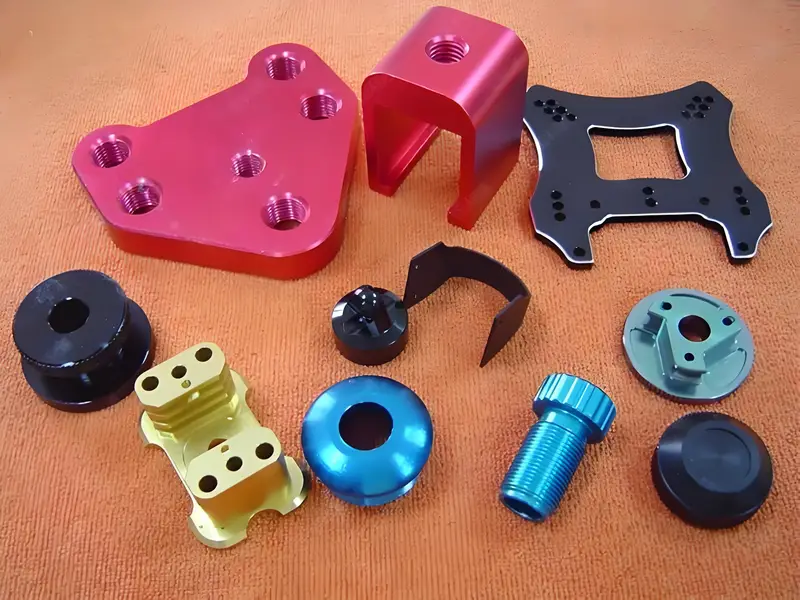
A: Indoor products: organic dyes dyeing, recommended anthraquinone red dyes, pH 5.5 ~ 6.0, temperature 50 ~ 55 ℃, dyeing time 5 ~ 15 min. outdoor products: electrolytic coloring, tin salt or tin-nickel mixed-salt system, can obtain burgundy hue, UV-resistant grade up to ISO 2810 level 5.
5. Q. Can tap water be used with anodizing tank solution?
Answer:absolute prohibition. The concentration of Cl- in tap water is 50~200mg/L, more than 25mg/L will trigger pitting corrosion. The water used for anodizing and cleaning before and after all processes must be deionized or distilled water with conductivity ≤ 20μS/cm.
6. Q. There is white ash on the surface of the oxide film after sealing the holes, how to remove it?
A: Sealing white ash originates from high water hardness when sealing holes with hot water, or the pH value of the cold sealing tank fluid > 6.5. countermeasures:
- Hot water sealing: Use deionized water and add 0.5%~1% sealing and dust suppression agent;
- White ash has been produced: 5% ~ 10% nitric acid soak at room temperature for 30-60s, wash with water and reseal the hole.
8. Conclusion: from process implementation to quality stabilization
Aluminum alloy anodic oxidation is a systematic project with multiple processes and parameters coupled. According to the field research on 32 anodizing enterprises in China.80% or more quality incidents stemming from deviations in the execution of process discipline, rather than a lack of technical capacity.
Three basic systems are needed to achieve consistent quality:
- Tank fluid analysis ledger: Daily testing for sulfuric acid concentration, aluminum ion concentration, Cl- concentration, and weekly testing for iron and copper impurities;
- Hanger Management Regulations: Traceability of the whole process of decoating, repairing and scrapping of hangers;
- First Article Inspection: Full-size and full-appearance inspection of oxidized parts in the first groove of each shift before mass production.
There is no shortcut in anodizing process. Continuous control of temperature, water quality, clamping and impurities is the only path from “95%” to “99.5%”.