


ADC14 die-cast aluminum alloy: a high-silicon, high-copper, high-strength alloy with excellent strength, wear resistance and dimensional stability.
Article Catalog[Hidden]
- Standards and grades for ADC14
- ADC14 Aluminum Alloy Composition Table (based on JIS H 5302 typical requirements)
- ADC14 Physical and Mechanical Properties Parameter Table (Die-Cast State, Typical Values)
- Performance Enhancement Pathways and Technical Characteristics
- ADC14 international grade
- Application of ADC14 in die casting industry
- ADC14 Aluminum Alloy Frequently Asked Questions
- 📊 Extended column: ADC14 vs. ADC12, ADC10 comparative analysis
As part of the Japanese Industrial Standards (JIS)High-silicon, high-copper, high-strength die-cast aluminum alloyThe quintessential representative of theADC14 by means ofExcellent mechanical strength, excellent wear resistance, good dimensional stability and high hardnessis known for. The alloy passesThe high silicon (Si) content guarantees a low coefficient of expansion and wear resistance, while the high copper (Cu) content provides significant solid solution and aging strengthening effects.In the casting state, it can obtain the top strength and hardness of die-casting aluminum alloys, while maintaining good die-casting processability, and it is the best choice for manufacturing of aluminum alloys.Heavy-duty die castings with very high requirements for strength, hardness and wear resistance and low requirements for corrosion resistanceIt is an ideal material for automobile engine parts, high load transmission system, wear-resistant parts and other fields with irreplaceable application value.
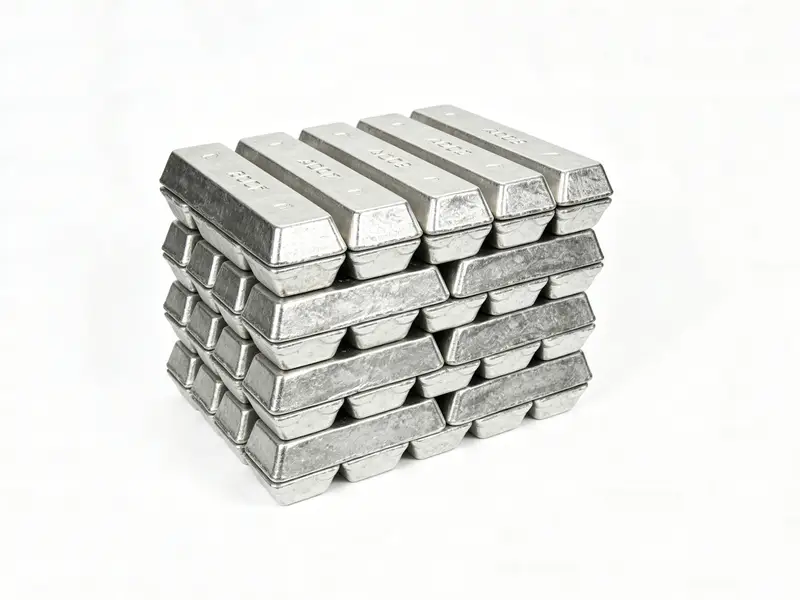
Standards and grades for ADC14
- JIS Standard Grades: According to the Japanese Industrial Standard JIS H 5302, the grade is ADC14ADC“ stands for ”Aluminum Die Casting“. ”ADC“ stands for ”Aluminum Die Casting", and "14" stands for the high-strength, high-hardness grade in the series.
- Core features:High silicon content (11.0-13.01 TP3T) Provides a low coefficient of thermal expansion, good wear resistance and excellent casting fluidity;High copper content (3.5-4.5%) Provides significant solid solution strengthening and age hardening effects;Not heat treatable for strengthening or T5 treatable(depending on the specific composition), but usually used in the cast state to obtain very high strength; is one of the highest strength grades of die-cast aluminum alloys for heavy-duty, wear-resistant, high-temperature working conditions.
ADC14 Aluminum Alloy Composition Table (based on JIS H 5302 typical requirements)
| elemental | Content range (wt%) | functional role |
|---|---|---|
| Silicon (Si) | 11.0-13.0 | Main alloying elements. Provides a low coefficient of expansion, good abrasion resistance, excellent casting fluidity and resistance to hot cracking. |
| Copper (Cu) | 3.5-4.5 | Core Strengthening Elements. Formation of Al₂Cu reinforced phase significantly improves cast strength, hardness and wear resistance. |
| Iron (Fe) | ≤ 1.0 | Prevents mold sticking during die casting, but needs to be controlled to ensure mechanical properties. |
| Magnesium (Mg) | ≤ 0.3 | Tight controls to maintain non-heat treatable properties or limit aging response. |
| Zinc (Zn) | ≤ 1.0 | Impurity elements that improve strength in trace amounts. |
| Manganese (Mn) | ≤ 0.5 | Neutralizes the harmful effects of iron and improves heat resistance. |
| Nickel (Ni) | ≤ 0.5 | Optional, sometimes added to improve high temperature performance. |
| Aluminum (Al) | tolerance (i.e. allowed error) | Substrate material. |
ADC14 Physical and Mechanical Properties Parameter Table (Die-Cast State, Typical Values)
| Performance indicators | Numerical range | Comparative analysis (vs ADC12) | Core Advantages |
|---|---|---|---|
| intensity | 2.70-2.75 g/cm³ | Slightly higher than ADC12 | - |
| Tensile strength (Rm) | 320-360 MPa | Significantly higher than ADC12 | Core Advantages: One of the strongest of the die-cast aluminum alloys. |
| Yield strength (Rp0.2) | 200-250 MPa | Much higher than ADC12 | Extremely high carrying capacity. |
| Elongation (A) | ≤ 1.0% | Below ADC12 | Low plasticity is the price of high strength and hardness. |
| Brinell hardness (HB) | 100-130 | Significantly higher than ADC12 | Core Advantages: High hardness and excellent wear resistance. |
| coefficient of thermal expansion | Approx. 18-19×10-⁶/°C | Below ADC12 | Good dimensional stability. |
| abrasion resistance | outstandingly good | Better than ADC12 | Core Advantages: High silicon + high copper for high resistance to abrasive grain wear. |
| corrosion resistance | mediocre | mediocre | Higher copper content and average corrosion resistance. |
| Casting mobility | talented | talented | High silicon ensures good mold filling capacity. |
Performance Enhancement Pathways and Technical Characteristics
The ADC14 was designed with the concept of “High Silicon + High Copper for the pinnacle of strength and abrasion resistance”:
- High silicon gives low expansion and wear resistance: Silicon content 11.0-13.01 TP3T, in the eutectic/hypereutectic range, giving the alloyLow coefficient of thermal expansion, excellent wear resistance and good casting fluiditySilicon phase as a hard mass. The silicon phase acts as a hard mass and significantly improves the resistance to abrasive wear, making it suitable for sliding friction conditions.
- High copper for ultimate reinforcement: The high copper content of 3.5-4.51 TP3T is the core of ADC14 to obtain ultra-high strength. A large number of Al₂Cu phases can be formed in the as-cast state, and through solid solution strengthening and diffusion strengthening, theMake tensile strength of 320-360 MPa, hardness of 100-130 HB, is a leader in mechanical properties among die-cast aluminum alloys.
- Not heat treatable or limited aging: Due to the extremely low magnesium content (≤0.31 TP3T), ADC14 usuallyNo T6 solid solution treatmentto avoid the risk of blistering from internal air holes. Some users useT5 manual aging(150-200°C, 4-8h) further increases hardness and strength, but elongation decreases further.
- Good dimensional stability: The high silicon content results in a low coefficient of thermal expansion (approx. 18-19 x 10-⁶/°C), which results in small dimensional changes during temperature changes, making it suitable for precision parts with tight tolerance requirements.
ADC14 international grade
ADC14 as a high-strength die casting alloy has an international counterpart:
| (an official) standard | grades | note |
|---|---|---|
| Japan JIS | ADC14 | - |
| ASTM, USA | A380.0 或 A383.0 The high copper version of the | Close composition, but ADC14 has higher copper content |
| China GB | YL113 (YZAlSi11Cu3) or customized high copper grades | YL113, which has the highest copper content, is required. |
| EU EN | EN AC-48000 (AlSi12CuNiMg) similar | But contains nickel, the composition is not exactly the same |
| Korea KS | ADC14 | identical brand |
Application of ADC14 in die casting industry
based on itsUltra-high strength, excellent wear resistance, good dimensional stabilitycharacteristics of the ADC14, the ADC14 is mainly used in the following areas:
- Automotive powertrain (core applications)
- Engine components: Pistons (some low to medium heat load), connecting rods (die-cast process), rocker arms, valve tappets.
- transmission system: Synchronizer tooth hub, shift fork, clutch pressure plate.
- steering system: Worm wheel and worm gear housing (high wear resistance required).
- High-loaded mechanical parts
- compactors: Swashplate, piston, cylinder block.
- hydraulic pump: With oil pan, plunger and cylinder.
- gearboxes: High-speed gears, bearing cages.
- Wear-resistant parts
- plain bearing: Bushings, shingles.
- slideway: Linear guide slides.
- cams: Camshaft components.
- precision instruments
- optical instrument: Mirror barrel, focusing mechanism (utilizing low expansion and high dimensional stability).
- gauge: Calipers, gauge bases.
ADC14 Aluminum Alloy Frequently Asked Questions
Q1: What is the main difference between ADC14 and ADC12? How to select the type?
- Here's the core comparison:
- ADC14: Silicon 11-13%, Copper 3.5-4.5%.Very high strength (320-360 MPa), very high hardness (100-130 HB), excellent wear resistanceLibyan Arab JamahiriyaVery low elongation (≤1.0%), poor corrosion resistance.
- ADC12: Silicon 9.6-12%, Copper 1.5-3.5%.Medium strength (280-310 MPa), excellent castabilityThe most widely used is the one with the best overall performance balance.
- selection: RequirementsMaximum strength, hardness and wear resistanceWhen low plasticity and poor corrosion resistance are acceptable, choose a product that has a low plasticity and poor corrosion resistance.ADC14Pursuits.Balanced overall performance, good castability选ADC12.
Q2: Can ADC14 replace ADC12 for piston?
- Specific conditions onlyADC14's high silicon and copper give it the low expansion, wear resistance, and high temperature strength needed for pistons, but itsLess heat resistant than specialized piston alloys (e.g. ZL108, ZL109)and slightly less castable. ADC14 can be used as a replacement for gasoline engine pistons for medium heat loads or for non-high heat loads. For high heat load diesel pistons, specialized alloys should be used.
Q3: What is the casting performance of ADC14? What do I need to pay attention to when designing?
- favorable. Silicon content up to 11-131 TP3T, excellent flowability, but high copper content widens the solidification zone, theSlightly higher tendency to hot crack than ADC12. Care needs to be taken when designing the casting system:
- Enhance shrinkage replenishment to prevent shrinkage and loosening.
- Avoid sudden changes in wall thickness and reduce stress concentrations.
- Increase the mold temperature appropriately (180-220°C) to ensure complete filling.
Q4: What is the cutting and machinability of ADC14?
- Lower middle. High Si+High Cu makes it contain a lot of hard phases (Si particles and Al₂Cu), which are very abrasive to the tool.PCD (polycrystalline diamond) tools or coated carbide tools must be usedThe threading process requires special care, as high cutting speeds and small feeds are used. Thread processing such as tapping requires special attention.
Q5: What is the welding repair performance of ADC14?
- mediocre. High copper content results in a high tendency to weld hot cracking. It is generally not recommended to refill weld important parts of ADC14. If refill welding is necessary, strict preheating (200-250°C), use of special wires, immediate stress relief after welding and non-destructive testing are required.
Q6: Can ADC14 be T5 heat treated? What is the effect?
- canT5 artificial aging (150-200°C, 4-8h) allowed further precipitation of the Al₂Cu phase.Hardness can be increased by 10-15%The strength increases slightly, but the elongation decreases to about 0.51 TP3T. For parts where dimensional stability is critical, the T5 treatment also helps to release internal stresses.
Q7: What is the corrosion resistance of ADC14? Does it need surface treatment?
- mediocre. The high copper content makes it highly susceptible to galvanic corrosion in wet environments.Surface protection is mandatory, such as painting, electrophoresis, anodizing (thicker but grayish film). ADC14 is not recommended for use in harsh corrosive environments.
📊 Extended column: ADC14 vs. ADC12, ADC10 comparative analysis
| comparison dimension | ADC14 (High Strength Wear Resistant) | ADC12 (General Purpose) | ADC10 (General Purpose) |
|---|---|---|---|
| Silicon (Si)% | 11.0-13.0 | 9.6-12.0 | 7.5-9.5 |
| Copper (Cu)% | 3.5-4.5 | 1.5-3.5 | 2.0-4.0 |
| tensile strength | 320-360 MPa | 280-310 MPa | 280-320 MPa |
| yield strength | 200-250 MPa | 150-180 MPa | 150-180 MPa |
| elongation | ≤1.0% | 1.5-3.0% | 1.5-3.0% |
| durometer | 100-130 HB | 75-90 HB | 75-90 HB |
| abrasion resistance | outstandingly good | favorable | favorable |
| coefficient of thermal expansion | relatively low | moderate | moderate |
| Casting mobility | talented | excellent | talented |
| typical application | Pistons, high load gears, wear parts | General-purpose housings, structural components | General purpose structural components |
Selection Quick Guide:
- Select ADC14: When the part requiresHighest strength, hardness, wear resistanceWhen, such as high load transmission parts, wear-resistant parts, precision machinery parts.
- Select ADC12: The QuestComprehensive performance balance, optimum castabilityThe general-purpose die castings.
- Select ADC10: RequiredHigher strength and cost sensitiveThe general purpose parts of the