


5 Core Quality Indicators for Evaluating Low Pressure Aluminum Casting Plants in China
Excerpt:
Looking for quality China low pressure aluminum casting factory? This article provides an in-depth analysis of the equipment standards, mold life and defect control process of China low pressure aluminum casting factory. Ningbo Hersin experts will show you how to scientifically evaluate the strength of suppliers and ensure casting yields, get the complete foundry inspection guide now.
Article Catalog[Hidden]
- What is low-pressure aluminum casting and why is the Chinese foundry the preferred choice?
- What should I look for in a low pressure aluminum casting plant's equipment accuracy standards?
- How are mold life and mold flow analysis capabilities evaluated?
- How do I verify the level of porosity and defect control at my plant?
- Practical effects of melting and degassing processes on casting properties
- Quality Traceability System: The Key Guarantee from Sample Delivery to Mass Production
- Low pressure casting vs. gravity casting vs. high pressure casting: which one to choose?
- Frequently Asked Questions
To evaluate the real strength of a low pressure aluminum casting factory in China, you can't just look at the quotation and factory area. In the 8 years I have been doing supplier audits for European new energy vehicle companies, I have seen too many customers being "beautiful samples, mass production turnover". What really determines the delivery capability of the foundry are 5 hard indicators: equipment precision level, mold life data, porosity control level, melting and degassing process, and quality traceability system. In this article, we will disassemble the validation method, industry benchmarks and on-site inspection points of each index one by one.
What is low-pressure aluminum casting and why is the Chinese foundry the preferred choice?
Low Pressure Die Casting (LPDC) is a precision casting process in which molten aluminum is pressed into the mold cavity from the bottom of the holding furnace through the liquid-raising tube by means of a low-pressure gas of 0.02-0.06 MPa.It is in the porosity (can be controlled in 1% below), mechanical properties consistency, and complex thin-walled parts molding ability is significantly better than gravity casting, and equipment investment is much lower than high-pressure die casting. This makes low-pressure casting become a new energy vehicle motor shell, battery pack shell, wheel hubs, steering knuckles and other safety parts of the mainstream process.
Why has China become the global capacity center for low-pressure aluminum casting? Three structural reasons.
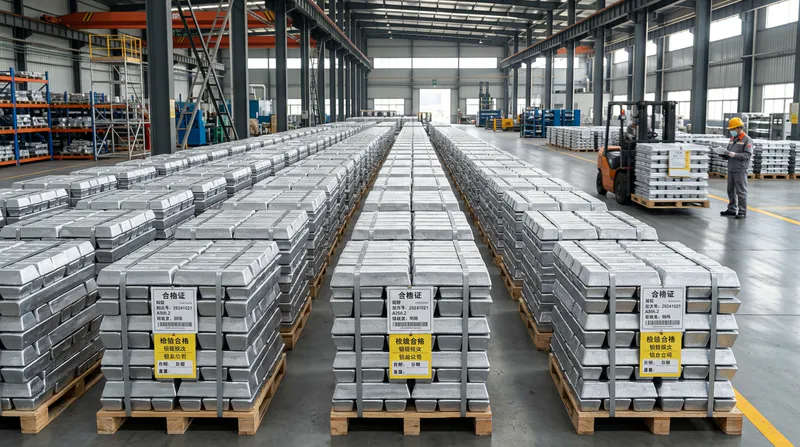
- Complete aluminum industry chain: China’s primary aluminum production reached 41.59 million metric tons in 2023, accounting for 59% of global output (Source: Statista Global Primary Aluminum Production Statistics), The Yangtze River Delta and Pearl River Delta regions have established a 200-kilometer closed-loop supply chain spanning aluminum ingots → alloying → casting → machining → surface treatment.
- Mold Industry ClusterNingbo Beilun alone has gathered more than 3,000 mold enterprises, and has been awarded the title of "Hometown of China's Mold" by China Mold Association, and the average delivery cycle of low-pressure molds is 40% shorter than that of Europe.
- New energy-driven process iterationsThe newness of the equipment is generally higher than that of the European and American counterparts.
When I visited an established foundry in Baden-Württemberg, Germany, in 2023, their plant manager said frankly: "For the same low-pressure mold for a new-energy motor housing, Ningbo, China, can deliver the first sample in eight weeks, and it takes us 14 weeks." This is the reality.
What should I look for in a low pressure aluminum casting plant's equipment accuracy standards?
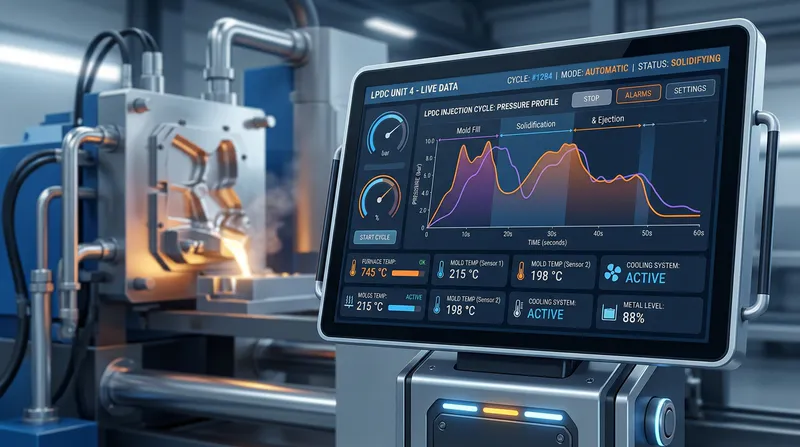
The core of evaluating the equipment is not the quantity, but three key parameters: holding pressure control accuracy (should be ≤ ± 0.001 MPa), the ceramic material of the lift tube (silicon nitride is better than cast iron), and whether the mold temperature closed-loop control system is equipped with zoned independent temperature control.Failure to reach these three devices, do ordinary home appliances is okay, do new energy three power system castings are bound to have problems.
During the actual site visit, I will ask the factory to present the following evidence:
- Equipment nameplate and year of purchase: Older pre-2018 low-pressure machines are mostly open-loop controlled, with pressure fluctuations of up to ±0.005 MPa, and internal density deviations in castings can exceed 1.51 TP3T.
- Hydraulic System BrandsBosch Rexroth or Kawasaki's are an order of magnitude more stable than local Asia-Pacific brands.
- Mould Temperature Machine ConfigurationImported brands such as Italy Piovan, Germany Single's PID temperature control accuracy can achieve ± 2 ℃, the domestic mainstream brands about ± 5 ℃, A356, A357, such as the solidification temperature gradient sensitive alloy difference is huge.
The above video can let you visualize the rhythm of a qualified low-pressure casting production line: the cycle time of furnace→pressure preservation→opening→picking up→spraying→closing the mold is stable at 90-120 seconds, and each mold has a pressure curve record. If the scene to see the cycle time suddenly long and short, the operator frequent manual intervention - this is the control system is not a clear signal of instability.
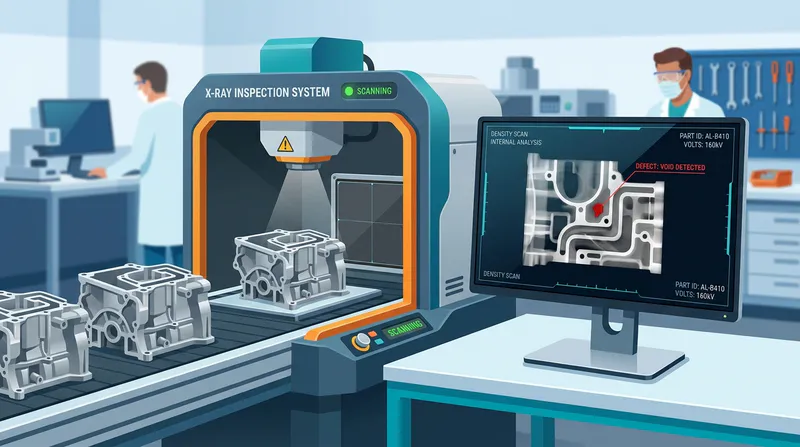
When Ningbo Hexin expanded production in 2022, our team made a special equipment selection comparison: using the same set of A356 aluminum wheel molds, 500 pieces were produced on domestic open-loop low-pressure machines and imported closed-loop low-pressure machines, and the X-ray flaw detection results showed that the closed-loop machine's internal defect rate was 4 times lower than that of the open-loop machine (0.81 TP3T). The equipment generation difference is real.
How are mold life and mold flow analysis capabilities evaluated?
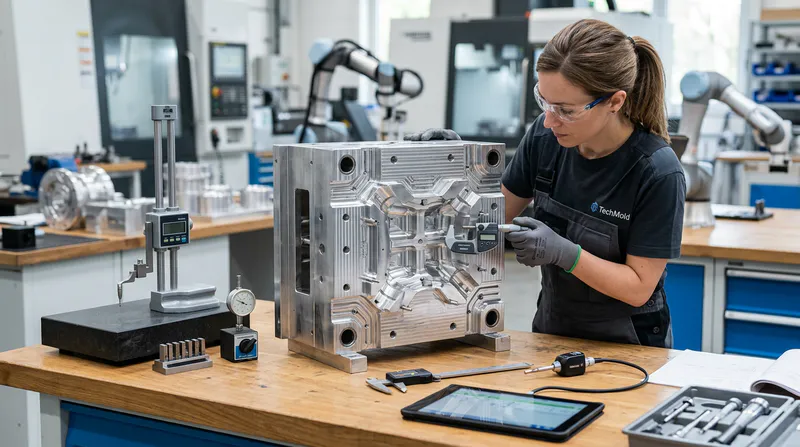
Qualified low-pressure aluminum casting mold life should reach 80,000 to 100,000 die times, and high-level factories can achieve 120,000 to 150,000 die times.Be wary of anything less than 50,000 die cycles - this means that there is a significant shortcoming in steel selection, heat treating process, or cooling water circuit design, and spreading out the cost of the mold to each casting can send your volume production quote out of control.
Mold life is not blown out of proportion, look for three pieces of hard evidence:
| evaluation unit | Qualifying standards | Criteria of excellence | Validation Methods |
|---|---|---|---|
| Mold Steel | H13 (4Cr5MoSiV1) | Import DIEVAR / 8407 SUPREME | Ask for material certificates and spectral reports |
| Heat treatment hardness | HRC 44-46 | HRC 46-48 and grain size ≥8 grade | Durometer on-site sampling |
| CAE Mold Flow Analysis | ProCAST or MAGMA reports available | Three-stage simulation of mold filling + solidification + stress | To see the original .cas file |
| Cooling water circuit | Drilled cooling | Shaped waterways (3D printed inserts) | Mold profile verification |
I especially want to emphasize the item of mode flow simulation. Many factories claim to use MAGMASOFT or ProCAST, but in reality they are just buying an outsourced report to fool the customer at bid time. A factory with real CAE capability should be able to provide a new filling time-temperature field comparison within 48 hours of your request for change. When our team did a sub-frame project for a North American customer, we moved the shrinkage location from the flange surface to the subsequent machining removal area through 5 rounds of mold flow iterations, and the yield rate was increased from 82% to 96%. This kind of internal strength is the real guarantee of mold life.
There is another detail that is often overlooked: the sealing structure of the ascending liquid tube and the bottom mold. Cheap factory with aluminum silicate fiber mat, 3,000 times on the leakage; regular factory with ceramic fiber + metal corrugated composite seal, can be stable to more than 30,000 times.
How do I verify the level of porosity and defect control at my plant?
Quality low pressure aluminum foundries should have internal porosity controlled to within ASTM E155 level 1 (corresponding to a volume share of <0.51 TP3T) and a surface defect rate of <21 TP3T.Verification of this data cannot be done by looking at the PPAP document alone, but by requesting the plant to show the SPC process control data for the last 90 days and the original X-ray sampling report.
The five most common defects in low-pressure casting and the key points of elimination:
- Shrinkage porosity: Concentration in thick and large areas, usually caused by failure of solidification sequence control - check that the mold heaters are partitioned and independent.
- Gas porosity: Spherical shape, smooth interior, originating from high hydrogen content in the melt - must look at degassing records and Alscan hydrogen content test data.
- Inclusions: Al₂O₃ oxide film entrapment requires a ceramic filter plate (CFF) at the outlet of the holding furnace.
- Cold shut: The two streams of aluminum converging at the end of the charge are not fused, and are related to the design of the lift rate curve.
- Hot tearing: Mostly found in A356 at stress concentrations, which need to be predicted by CAE stress analysis.
ASM International provides detailed technical documentation on the underlying principles and standard classification of porosity. Classification based on ASTM E155 radiographic reference films is the internationally accepted practice.
I suggest that the customer in the pre-sampling stage to require destructive dissection: along the direction of the maximum wall thickness of the casting is cut open, in the metallurgical microscope to take 100 times the picture, pores and slag can be seen at a glance. One time we audited alternative factories for a European customer, only one out of three was willing to do the dissection demonstration - then that one won the bid, three years of mass production so far zero customer complaints.
Practical effects of melting and degassing processes on casting properties
The melting process determines the "inherent quality" of the aluminum melt. A complete degassing-refining-filtering process reduces the hydrogen content of the melt from 0.4 mL/100g to less than 0.15 mL/100g, which directly determines the fatigue life and elongation of the castings.If the factory is still using the simple hexachloroethane press-in method to remove gas, it can basically be excluded from the list of suppliers of safety parts for new energy vehicles.
The industry's current mainstream three-stage degassing level:
- base grade: Solid degasser (C₂Cl₆) is pressed in, and the hydrogen content can be about 0.3 mL/100g, which is suitable for common household appliance housings.
- standard gradeRotary argon degassing (RDG) with Alscan in-line detection, stable hydrogen content 0.15-0.20 mL/100g, suitable for automotive non-load bearing parts.
- high grade: RDG + Ceramic Foam Filtration (CFF 30 ppi) + Inline Grain Refinement (Al-Ti-B wire feed), Hydrogen content <0.12 mL/100g, grain size <200 μm, standard for new energy triboelectric systems.
Alloy composition control is equally critical. Taking the most commonly used alloy A356 (Al-7Si-0.3Mg) as an example, for every deviation of 0.05% in Mg content, the tensile strength of T6 after heat treatment will fluctuate by 8-12 MPa. High-level factories are equipped with direct-reading spectrometers to do compositional testing in each furnace, and the data are directly archived in the MES system. For more detailed metallurgical principles of alloys, please refer to Common Aluminum Alloy Grades The series of standards listed in
I have done a comparative experiment: the same set of molds, the same operator, A factory with RDG + CFF production of motor shell castings, T6 elongation after an average of 8.5%; B factory only use the pressure into the de-gassing, the elongation is only 4.2%. the latter in the customer vibration fatigue test, 20,000 cycles of cracks, the former run to 100,000 times without anomalies. The gap between the melting process will eventually be presented to you in the form of failure rate.
Quality Traceability System: The Key Guarantee from Sample Delivery to Mass Production
A factory without a complete traceability system is not inherently qualified for mass production. Qualified low pressure aluminum castings factories in China must be able to trace every casting back to: furnace number, mold number, operator, equipment parameter curves, and all critical inspection data for at least 3 years.This is a mandatory requirement of the IATF 16949 system.
For an on-site audit of the traceability system, I would sample the following scenarios:
- backtrackTake a random casting from the finished goods warehouse and ask for its complete production file (pouring time, pressure curve, quality control data, heat treatment furnace) within 30 minutes. If you can't do it, you will be eliminated directly.
- backward-looking: Given an aluminum ingot lot number, ask to list what orders and castings were produced from this raw material and what customers it is currently going to.
- Disposal of non-conforming products: Randomly check a recent 8D report to see if the root cause analysis has really done the "5 Whys" or if it just says "operator negligence→strengthening training" and such nonsense.
Whether the factory has passed IATF 16949 (automotive industry quality management system) certification is the basic threshold. For new energy customers, we also ask if they have experience with VDA 6.3 process audits, and if they have cooperated in PPAP Level 3 submissions. These are not icing on the cake, they are entry requirements.
During the period of supplying for one of the first tier new energy OEMs, Ningbo Hexin built its own MES+SPC two-layer data system, with QR code laser engraving for each casting, so that customers can scan the code to view all the production parameters. The investment in this system is about 1.8 million RMB, but in return, the delivery record of PPM <50 for 26 consecutive months, as well as orders from 200,000 pieces per year to 800,000 pieces of trust increment.SAE International's technical committee in recent years released a number of white papers have repeatedly emphasized that the digital traceability is the new energy aluminum castings supplier's "invisible moat".
Low pressure casting vs. gravity casting vs. high pressure casting: which one to choose?
The first principle of selection is to match the service conditions of the parts, rather than the pursuit of the "highest end". Low-pressure casting is suitable for structural complexity, internal densities and good mechanical properties of medium and large parts; gravity casting is suitable for small quantities, thick-walled, simple geometry of the trial parts; high-pressure casting is suitable for thin-walled, large quantities, the appearance of the internal porosity is not sensitive to the parts.
| dimension (math.) | Low Pressure Casting LPDC | Gravity casting GDC | High Pressure Casting HPDC |
|---|---|---|---|
| stresses | 0.02-0.06 MPa | barometric pressure | 40-100 MPa |
| Typical Wall Thickness | 3-15 mm | 5-30 mm | 1.5-5 mm |
| Internal porosity | Low (<1%) | Medium (1-3%) | High (up to 5%) |
| heat treatable | ✓ Can T6 | ✓ Can T6 | ✗ routinely not |
| Typical Products | Hubs, motor housings, steering knuckles | Engine head prototype | Transmission housing, 3C Structural components |
| Mold Cost | center | lower (one's head) | your (honorific) |
| Cost per unit (medium lot) | center | your (honorific) | lower (one's head) |
A typical decision-making scenario: motor housings for new energy vehicles. Many customers initially consider using high-pressure die casting (HPDC) due to its low unit cost, but the motor housing requires T6 heat treatment to achieve a tensile strength of over 200 MPa. However, HPDC parts are prone to severe internal gas entrapment, which causes bubbling during the T6 heat treatment process. In this case, low-pressure die casting is the only reasonable choice. For a more systematic process selection decision tree, refer to the Process Selection Manual published by the North American Die Casting Association (NADCA).
My practical advice to customers: first define the 3 key indicators of the part - load bearing conditions (whether it is subject to cyclic loading), internal densification requirements (whether it is airtight/pressure-resistant), and annual production volume. Fill in these three answers in the decision matrix, and the process selection is basically locked.
Frequently Asked Questions
What is the usual minimum order quantity (MOQ) for low pressure aluminum casting plants in China?
The mass production MOQ of a formal Chinese low pressure aluminum casting factory is usually 5000-10000 pcs/year, with 50-200 pcs in the small sampling stage. The cost of mold development is calculated separately, a set of medium complexity low pressure mold costs between 80,000 and 250,000 RMB, the cycle time is 6-10 weeks. Some factories will ask for 50% mold prepayment for the first time customers.
What is the typical lead time for low pressure aluminum castings?
Delivery time for prototype is usually 6-10 weeks (including 6-8 weeks for mold manufacturing and 1-2 weeks for trial mold debugging). In mass production stage, the normal lead time for 100,000-piece orders is 45-60 days (including shipping). If the factory claims that the first sample can be delivered within 30 days, it is basically a false promise or sacrificing the mold flow analysis, and the quality risk is very high.
How to verify the true capacity of China's aluminum foundry plants?
The most reliable method is to ask the factory to provide monthly output data for the past 12 months and check the MES system records on site. Also observe the number of orders in production, raw material inventory turnover, and equipment utilization (about 75-85% for regular factories). During the remote audit, you can request a real-time video broadcast of the production floor to avoid being misled by the "model factory".
What standard tests are required for low pressure castings?
The standard testing consists of four major categories: dimensional testing (CMM), appearance testing (fluorescence penetration PT), internal defect testing (industrial CT or X-ray), and mechanical properties (tensile, hardness, impact). New energy vehicle parts also need to be supplemented with air tightness testing, salt spray testing, and vibration fatigue testing. Sampling at AQL 0.65 during mass production is a common practice in the industry.
What is the price advantage of aluminum castings from Chinese factories compared to Europe and the United States?
For example, the FOB price of Chinese low-pressure aluminum casting is usually 30-45% lower than that of European suppliers and 25-35% lower than that of North American suppliers for the same quality of new energy automobile motor casing, with the difference mainly coming from labor cost, energy cost and mold manufacturing efficiency, rather than material or quality sacrifice. However, it should be noted that after adding the cost of shipping, tariffs, and quality risk, the actual combined cost advantage is about 15-25%.
What are the core competencies of Ningbo Hersin in the field of low-pressure aluminum casting?
Located in Beilun, Ningbo, the hometown of molds in China, Ningbo Hexin has been focusing on the manufacturing of aluminum alloy casting molds and products since 2010, covering the three major processes of low-pressure, gravity and high-pressure. Our core competence includes independent design and manufacturing of low-pressure molds, ProCAST mold flow simulation, RDG+CFF high-grade melting process, and experience in developing castings for new energy vehicle triboelectric systems. The company supplies key castings such as battery pack shells, motor shells and controller shells for many domestic and foreign OEMs, with mass production PPM stabilized at below 50.
Back to the core proposition at the beginning of the article: finding a reliable low pressure aluminum casting factory in China is not a purchasing decision, but a 3-5 years strategic binding. Equipment precision, mold life, defect control, melting process, traceability system - each of these five dimensions of the factory to meet the standards, in the entire Chinese market accounts for only 15%. bring these five rulers to the scene, you can identify the real partners in the two-hour factory inspection. Related aluminum alloy casting mold design principles, low pressure casting new energy vehicle application cases, and casting process comparison and selection methods are the direction of the next in-depth study.