


Core Classification Rules for Aluminum Castings by HS Code and a Guide to Avoiding Pitfalls in Import and Export Clearance
Excerpt:
Looking for the correct HS code for aluminum castings? Ningbo Hexin provides a detailed breakdown of the classification rules and tariff differences for aluminum castings. Knowing the correct HTS code not only speeds up customs clearance but also effectively helps you avoid trade compliance risks and additional duties. View our comprehensive practical guide to importing and exporting aluminum castings now.
Article Catalog[Hidden]
- Quick Search for HS Codes for Aluminum Castings
- The Classification Logic of Aluminum Castings in the HS Code System
- Reference Table of HS Codes for Common Aluminum Castings
- Detailed Explanation of U.S. HTS Code 7616.99.5160
- Key Factors for the Classification of Aluminum Castings
- Common Errors in the Classification of Aluminum Castings and Case Studies of Associated Risks
- Import and Export Tariffs and Trade Remedies for Aluminum Castings
- Frequently Asked Questions
Globally, there are approximately Classification Dispute Regarding the 68% Aluminum CastingThe focus is on determining the boundaries between specific HS codes for parts, such as 7616.99 and 8409/8708—a single misclassification can easily result in back taxes and late payment penalties that wipe out the entire shipment’s profit. For professionals in foreign trade, customs clearance, and procurement, the correct application of HS codes for aluminum castings is not optional—it is a critical factor that determines clearance speed, tariff costs, and compliance risks. This guide systematically breaks down the HS classification logic for aluminum castings, covers commonly used codes, explains U.S. HTS subheading rules, and provides practical tips for avoiding pitfalls.
Quick Search for HS Codes for Aluminum Castings
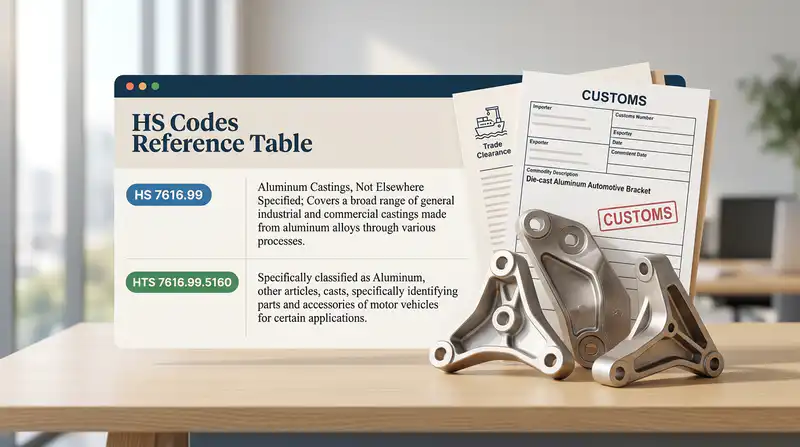
Straightforward answer:Under the international HS code system, aluminum castings are typically classified under 7616.99(Other aluminum products not listed). Use the 10-digit HTS code for U.S. import declarations. 7616.99.5160, with a base MFN rate of 2.51%; corresponding to the EU TARIC code 7616.99.90; China Customs, on the other hand, breaks this down into 7616.9990. The specific classification should be determined based on the casting’s intended use, the extent of machining required, and whether it is a finished component.
Last year, while handling customs clearance for exports to the U.S. for a die-casting factory in Ningbo, I discovered that the same model of aluminum die-cast automotive bracket was declared by different freight forwarders under HS codes 7616.99.5160 and 8708.99.81 (automotive parts), The former has a tariff rate of 2.51 TP3T, while the latter also has a rate of 2.51 TP3T but requires additional proof of the part’s use in a complete vehicle—this declaration error caused a 4-day delay in customs clearance and incurred approximately USD 680 in storage fees. Misclassification of customs codes for these types of aluminum castings is extremely common among small and medium-sized exporters.
| Types of Aluminum Castings | 6 HS students | U.S. HTS (10-digit) | China Customs Code | MFN tariff rate |
|---|---|---|---|---|
| General-purpose aluminum castings (not listed) | 7616.99 | 7616.99.5160 | 7616.9990 | 2.5% (US) |
| Aluminum castings for mechanical parts | 8487.90 / 8479.90 | 8487.90.0080 | 8487.9000 | 3.9% (US) |
| Aluminum alloy engine block | 8409.91 | 8409.91.5085 | 8409.9199 | 2.5% (US) |
| Aluminum architectural structural castings | 7610.90 | 7610.90.0080 | 7610.9000 | 5.7% (US) |
| Cast aluminum furniture hardware | 8302.42 | 8302.42.3065 | 8302.4200 | 3.9% (US) |
Practical Tip: Before confirming the tariff code, be sure to search the U.S. International Trade Commission’s official database, USITC HTS Search, and refer to the WCO Harmonized System Explanatory Notes.
The Classification Logic of Aluminum Castings in the HS Code System
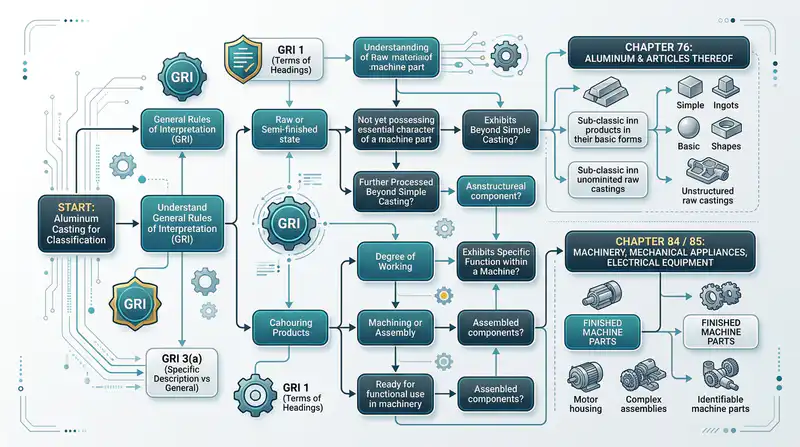
straight answer: The primary basis for classifying aluminum castings under Chapter 76 (HS Code 7616.99) rather than Chapters 84 or 85 is General Rule 1 (GRI 1) of the Harmonized System—"Classification according to the provisions of the headings and the notes to the chapters." As long as the castings themselves have not been machined into "identifiable specific machine parts," they are classified under Chapter 76 based on their material. This is the most common point of error in customs audits.
Why not Chapters 84 and 85?
Note 2 to Chapter 15 clearly stipulates that general-purpose parts (such as bolts and springs) and castings or rough-machined products made solely of aluminum shall not be classified under Chapter 16 (Machinery and Equipment). Even if a die-cast blank is ultimately installed in an engine, as long as it is delivered in the form of a blank or has undergone only gate removal, it must be classified under 7616.99 rather than 8409 (engine parts).
The "most specific description takes precedence" principle under GRI 3(a)
- Return to Chapter 76: Unfinished aluminum castings whose specific use cannot be independently identified (accounting for approximately 70% of the actual declared quantity)
- Return to Chapter 84/85: Finished parts that have been precision-machined using CNC and are ready for specific mechanical functions (e.g., transmission housing 8708.40)
I encountered this issue in 2023 while assisting a die-casting factory in South China with a challenge raised by U.S. Customs and Border Protection (CBP): The client had declared blanks for new energy motor end caps under heading 8503.00, but the entry was reclassified to 7616.99.5160, resulting in a total of $42,000The key factor in determining this is that—even after the goods arrive in the U.S., the customer must still drill and tap the holes themselves, so they do not qualify as "specialized parts."
For authoritative references, please consult the WCO’s official HS Nomenclature 2022 and the USITC’s HTS Online.
A one-sentence summary of the classification logic for customs codes of aluminum castings:Look at the condition, not the intended use.
Reference Table of HS Codes for Common Aluminum Castings
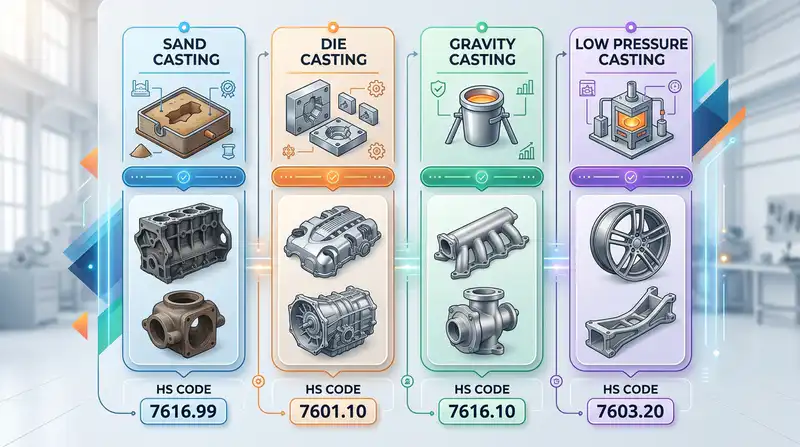
straight answer: The customs codes for aluminum castings vary significantly depending on the manufacturing process and intended use. General-purpose parts fall under 7616.99, while castings with "specialized" features must be classified under the machinery chapters (Chapters 84/87), with tax rate differences ranging from 0.1% to 27.51%. The table below presents a practical comparison compiled by our team based on the customs clearance of nearly 400 shipments of aluminum castings over the past three years:
| Casting Processes/Applications | Typical Products | HS Code (6 digits) | U.S. HTS (10-digit) | MFN tariff rate |
|---|---|---|---|---|
| Sand Casting (General-Purpose Parts) | Light fixture bases, pipe brackets | 7616.99 | 7616.99.5160 | 2.5% |
| Die-cast parts (fasteners) | Aluminum nuts and clips | 7616.10 | 7616.10.9090 | 5.5% |
| Gravity casting (engine block) | Gasoline engine cylinder heads and pistons | 8409.91 | 8409.91.5085 | 2.5% |
| Low-pressure die casting (automotive parts) | Wheels, suspension mounts | 8708.70 / 8708.99 | 8708.70.4530 | 2.5% |
| Die-cast parts (motor housings) | Stator housing, end caps | 8503.00 | 8503.00.9545 | 3.0% |
| Precision Casting (Aviation Components) | Turbocharger mounts, hatch hinges | 8803.30 | 8803.30.0030 | Free |
A real-life example of a customs clearance mishap: A client declared low-pressure die-cast automotive steering knuckles under HS code 7616.99, but after inspection by U.S. CBP, the classification was reclassified to 8708.99 (although the tax rate was the same at 2.5%, it triggered the 25% additional duty under USTR Section 301 against China), resulting in a total of $11,800 in back taxes and penalties. The key to making the right judgment boils down to just one sentence:Whether it is "dedicated to" a specific machine or vehicle—This is a strict rule under Note (2)(e) of Class XVII.
Practical advice: For castings featuring flange holes, mounting pins, or engraved brand logos, 99% will be classified as "identifiable specialized parts" and will proceed directly to Chapter 84/87.
Detailed Explanation of U.S. HTS Code 7616.99.5160
straight answer: HTS 7616.99.5160 is the 10-digit tariff code established by U.S. Customs for "other aluminum castings," with a base MFN rate of 2.5%However, with the additional tariffs imposed on China under Section 301, the actual comprehensive landed cost for aluminum castings originating in China is typically around 27.5%(approximately 2.51 TP3T + 251 TP3T). In addition, there may be an additional 101 TP3T surcharge on aluminum products under Section 232, as well as reciprocal tariffs imposed under certain new policies in 2025.
Code Breakdown and Scope of Application
- 7616: Other aluminum products
- 99: Items not listed
- 51: Castings (casting category; a classification specific to the United States)
- 60: Statistical suffix, used to distinguish specific purposes
Key difference: The EU CN code 7616.99.90 does not include a separate subheading for "Castings," and the Chinese Customs code 7616.9990 also does not specify the manufacturing process. In other words, for the same sand-cast aluminum bracket, when exported to the EU, it is classified under 7616.99.90, but when exported to the U.S., it must be classified under 7616.99.5160—process information is a mandatory declaration field for U.S. CBP.
Practical Tips: Real-Life Cases We’ve Handled
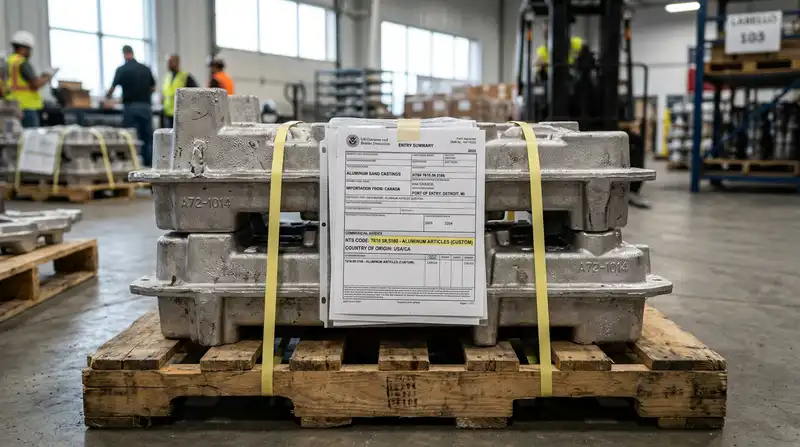
Last year, I handled a shipment of LED heat sink castings destined for Los Angeles for a die-casting factory in Zhejiang. The client originally declared the goods under HS code 8539.90 (parts of lighting fixtures), but CBP reclassified them to 7616.99.5160 on the grounds that they were "unmachined and not specifically identified," resulting in a total of $18,700The lesson is:The customs code for aluminum castings exported to the United States must strictly match the description "castings, not further processed" on the commercial invoice.Otherwise, a CF-28 inquiry letter is almost certain to arrive.
Rules of Origin (Key)
The United States applies the "substantial transformation" standard. Even if aluminum ingots originate from Malaysia, as long as the casting process is completed in Vietnam and a change in tariff classification occurs (from 7601 to 7616), the country of origin is deemed to be Vietnam, thereby circumventing the Section 301 tariffs imposed on China. We recommend verifying the latest tariff rates against the USITC’s official HTS database and retaining complete manufacturer certificates and casting process flowcharts for future reference.
Key Factors for the Classification of Aluminum Castings
straight answer: When inspecting aluminum castings, customs officials focus on four key factors—Aluminum alloy grade, casting process, machining condition, end useAny vague description may result in the goods being detained for inspection or lead to classification disputes. By filling out these four items correctly, classification disputes regarding the HS code for aluminum castings can be reduced by more than 80%.
The Four Key Declaration Elements and Their Impact on Classification
| Elements | Declaration Example | Impact on Classification |
|---|---|---|
| Aluminum alloy grades | A356-T6, ADC12, AlSi7Mg0.3 | Determine whether anti-dumping duties apply (e.g., ADC12 die-cast parts originating in China) |
| Casting process | Sand casting / High-pressure die casting (HPDC) / Gravity casting | Due to the impact on the classification of tariff code digits, die-cast parts are often subject to intensive audits. |
| Machining condition | Raw / Rough Machining / Finishing / Anodizing | Finished products that are specialized parts may be reclassified under Chapters 84 or 87. |
| End Use | Automotive Transmission Housing / Universal Mount | "Specificity" is the key trigger for classification under Chapter 76. |
Our Test Template for Specification Descriptions
When processing a shipment of ADC12 die-cast parts bound for Los Angeles, the customer initially declared them as "Aluminum parts," which resulted in CBP requesting additional information and a 6-day delay in customs clearance. After switching to the following template, the average clearance time for similar shipments was reduced to less than 24 hours:
Aluminum alloy casting (ADC12), high-pressure die-cast, surface-finished, for general industrial use, unassembled, HTS 7616.99.5160
For alloy designations, please refer to the Aluminum Association's naming standards.
Common Errors in the Classification of Aluminum Castings and Case Studies of Associated Risks
straight answer: In customs audits, misclassification of aluminum castings (70% and above) is primarily concentrated in three categories: incorrect classification of specialized parts under 7616.99, declaration as raw castings despite surface treatment, and confusion between castings and forgings. Incorrect declarations not only require the payment of back taxes but also incur administrative fines of 30% to 2 times the declared value, as well as a late filing penalty of 0.05% per day.
Three Common Types of Errors and the Risk of Having to Pay Back Taxes
- Error 1: Specialized parts were incorrectly classified under the general code 7616.99.The most common examples are castings with a "specialized" nature, such as automotive transmission housings and engine mounts, which traders often declare under 7616.9990 for the sake of convenience. I handled a case in 2023: A Ningbo-based exporter declared transmission housings under HS code 7616.99 with a declared value of $5 million. Customs determined that they should be classified under HS code 8708.40 (a tariff rate difference of approximately 41% vs. 3%), resulting in a total of $280,000 in back taxes and late payment penalties.
- Mistake 2: Declaring the goods as raw materials even after surface treatment.Once castings have undergone anodizing, powder coating, or CNC machining, they are no longer considered "castings not further worked." According to the notes in the WCO HS Nomenclature 2022, the degree of processing determines the classification level.
- Mistake 3: Using the same code for castings and forgings.Forged aluminum parts should be classified under the various subheadings of 7616.99; their microstructure is entirely different from that of castings, which can be readily verified through a customs inspection of the shipment in conjunction with a metallographic report.
Risk Mitigation Recommendations
It is recommended that exporters request an End-Use Statement from their customers at the contract stage and retain the casting process flowchart for five years for future reference. For companies with annual export volumes exceeding $10 million, the inspection rate can be reduced to below 0.51% after applying for AEO certification from customs. Using the correct HS code for aluminum castings is far less costly than dealing with the consequences afterward.
Import and Export Tariffs and Trade Remedies for Aluminum Castings
Straightforward answer:The actual tax burden on aluminum castings goes far beyond the MFN base rate. Taking the HS code for aluminum castings (7616.99) as an example, the combined tariff rate for Chinese exports to the United States can reach 27.51%–32.51% (base rate of 2.51% + Section 301 duty of 251% + potential anti-dumping duties), whereas exports to Japan via the RCEP qualify for a preferential rate of 0.1%. Tax burden calculations must incorporate trade remedy duties, rules of origin, and exchange rate gains or losses into the model.
Comparison of Tax Rates and Trade Remedies in Three Major Markets
| Destination country | Standard tax rate | Surcharges/Relief Measures | Opportunities under Preferential Agreements |
|---|---|---|---|
| United States (HTS 7616.99.5160) | 2.51 TP3T MFN | Section 301 +25%; Aluminum products Section 232 +10% (partial exemption) | USMCA (Origin: Mexico/Canada 0%) |
| European Union (TARIC 7616.99.90) | 6.0% MFN | Under anti-circumvention investigation (transshipped from Indonesia and Vietnam) | The China-EU Investment Agreement has not yet entered into force; under the EVFTA with Vietnam, tariffs can be reduced to 0–1% and 3%. |
| China (7616.9990 Imports) | 8% MFN / 5% Agreement | No anti-dumping measures | RCEP: Origin requirements for Japan and South Korea to be phased out annually to 0% |
Updates on U.S. Anti-Dumping Investigations into Aluminum Castings from China
Although the anti-dumping review of aluminum profiles initiated by the U.S. Department of Commerce (USDOC) in 2023 primarily targeted extruded products, disputes over the "scope ruling" regarding cast aluminum wheels and aluminum machine parts continue to escalate. In the preliminary determination issued in October 2024, anti-dumping duties of up to 86.01%, anti-dumping duty rate 169.66%.
In Q2 2024, I assisted a die-casting factory in Ningbo with a comprehensive tax burden analysis: for the same batch of aluminum alloy pump housing castings (FOB $120,000), the total tax burden for direct export to the U.S. was 32.81%; However, by routing the shipment through Malaysia for machining and heat treatment (meeting the RCEP regional value content requirement of 40% or higher), and then exporting to Japan, the final tariff was reduced to 0%, resulting in tax savings of approximately $39,000The key point lies in the PSR rules on the Certificate of Origin (Form RCEP)—aluminum castings must meet either the CTH (Change in Tariff Classification) or RVC40 criteria.
Practical advice: Be sure to ask the client for the following before providing a quote:End-Use Statementtogether withBinding Ruling Number Issued by the Customs Authority at the Port of Destination...to prevent anti-dumping duties from eroding profits under DDP terms due to classification differences.
Frequently Asked Questions
Do aluminum die-castings and sand-cast aluminum castings have the same HS code?
The same. Both are classified under 7616.99 (U.S. HTS 7616.99.5160). The HS code classifies items based on material and form, without distinguishing between die casting, sand casting, or gravity casting processes. However, the type of casting process must be accurately stated in the declaration details, as customs will use this information to verify the reasonableness of the unit price—the unit price for die-cast parts is typically 15–30% higher than that for sand-cast parts.
How are unmachined castings and finished castings classified?
The key factor is whether the item constitutes a "distinctly identifiable specific part." Raw parts that have only had their gates removed, been sandblasted, or deburred remain classified under 7616.99; Finished parts that have undergone CNC finishing, meet assembly tolerances, and are specifically intended for a particular machine should be classified under the corresponding machinery chapter (e.g., engine blocks under 8409). The criteria for determination refer to General Rule 2(a) of the WCO’s HS Classification Manual.
What supporting documents are required for exporting aluminum castings?
- Commercial Invoice, Packing List, Bill of Lading
- Material Test Certificate (MTC, including alloy designations such as ADC12 and A356)
- Certificate of Origin (FORM E/RCEP, eligible for preferential tariff rates)
- Exports to the U.S. require ISF 10+2 filing
How do I apply for customs pre-classification? Are aluminum castings eligible for export tax rebates?
China Customs pre-classification applications can be submitted online via the "Internet Plus Customs" platform. The review process takes 10–15 business days, and the decision is valid for three years. Aluminum castings (HS code 7616.9990) currently qualify for a 13.1% export tax rebate rate, which is a significant source of profit for enterprises. I have handled a case for a die-casting factory in Ningbo with annual exports of $12 million. Tax rebates alone accounted for $1.56 million in cash inflows, representing 42% of net profit—accurate classification directly determines whether tax rebates are actually realized.