High-silicon aluminum-silicon alloy ZL102: composition, properties and non-heat treatable characteristics in detail
Date: 2026-01-15 Categories: Blog Views: 170
As a cast aluminum alloy familyHighest silicon content and best casting performanceOne of the alloys, ZL102 (ZAlSi12), is known for itsVery good flowability, very low shrinkage and excellent resistance to thermal crackingand is well known. The alloy is categorized asSimple Silica Aluminum, as it contains no other fortifying elements.Cannot be strengthened by heat treatmentThe casting is usually used for casting extremely complex shapes, large differences in wall thickness but for theAbsolute strength requirements are not highThe parts of theCasting manufacturability and economyThe aspect reached its peak.
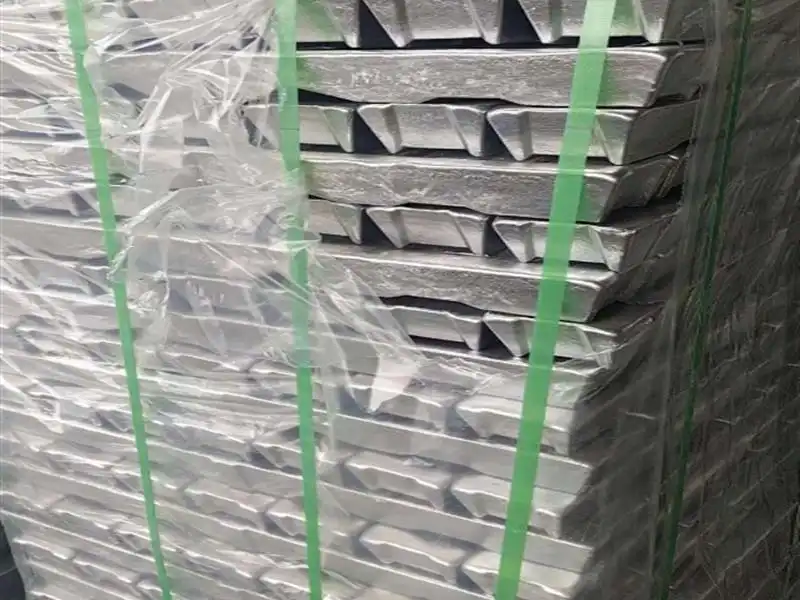
The national grade for ZL102 is ZAlSi12.
- National Standard Grade: According to GB/T 1173, its grade isZAlSi12The following are the names of the products. Where “Z” stands for “casting”, “L” stands for “aluminum”, and “Si12” stands for nominal silicon content. Si12" stands for nominal silicon content.
- Industry/Enterprise Code:ZL102 It is a widely used designation for this material in industry drawings, manuals and corporate standards.
- state of affairs: usually in the form ofCast (F state) 或Annealed state (O state) Used, primarily, to improve cutting machinability or stabilize dimensions.
ZL102 Aluminum Alloy Composition Table
| elemental | Content range (wt%) | functional role |
|---|---|---|
| Silicon (Si) | 10.0-13.0 | The core elements, which greatly improve fluidity and reduce shrinkage, are the key to superior casting performance. |
| Aluminum (Al) | tolerance (i.e. allowed error) | Substrate material. |
| Iron (Fe) | ≤0.7 | Impurity elements, which need to be controlled. |
| Copper (Cu) | ≤0.15 | Impurity elements, strictly controlled to maintain good corrosion resistance. |
| Magnesium (Mg) | ≤0.10 | Impurity elements, which need to be present at very low levels to ensure that the alloy is not heat treatable for strengthening. |
| Manganese (Mn) | ≤0.35 | Impurity element that neutralizes some of the harmful effects of iron. |
ZL102 Physical and Mechanical Properties Parameter Table (as-cast, sand casting typical values)
| Performance indicators | Numerical range | Cross Reference (YL113) and Description |
|---|---|---|
| intensity | 2.64-2.66 g/cm³ | Slightly lower than YL113. |
| Tensile strength (Rm) | 140-160 MPa | Lower intensityThe 60%-70%, which is only YL113, is its primary shortcoming. |
| Yield strength (Rp0.2) | 80-100 MPa | Limited load-bearing capacity. |
| Elongation (A) | 4.0-6.0% | Relatively good plasticity, thanks to its eutectic organization. |
| Brinell hardness (HB) | 50-55 | low hardness, poor abrasion resistance. |
| heat conductivity | Approx. 155 W/(m-K) | Good. |
| Coefficient of linear expansion | 21.0×10-⁶/°C | Lower, favoring dimensional stability. |
Mechanical Performance Characteristics and Limitations
The mechanical properties of ZL102 are a clear boundary for its application:
- Not heat treatable: Due to the near absence of magnesium (Mg), copper (Cu) and other elements that can form reinforcing phases.Unable to increase strength by solution aging (T6/T5). Its performance can be improved only byspoilage treatmentRefinement of the eutectic morphology to achieve this.
- Low intensity level: Cast strength is one of the lowest grades of all commonly used cast aluminum alloys and is only applicable toNo or very small static loadsThe structure of the
- The advantage is craftsmanship: all of its designs are centered around “Easy casting”Unfolding, sacrificing strength for unrivaled mold-filling ability and resistance to thermal cracking.
Corresponding international grades
This high silicon aluminum-silicon alloy is very common in global standards:
- Chinese national standard:ZAlSi12 (GB/T 1173)
- American Standard:A413.0 或 443.0 (ASTM)
- EU standard:EN AC-44000 或 EN AC-47100 (EN 1706)
- Japanese Standard:ADC10 (but ADC10 contains copper and is closer to YL113, so be careful to distinguish) or AC3A (JIS)
Application of ZL102 in foundry industry
based on itsThe ultimate in casting performance and low cost of ownership.Libyan Arab JamahiriyaWeak mechanical propertiesThe characteristics of ZL102 are mainly used in the following fields which require very high moldability and very low strength:
- Complex thin-walled decorative parts and housings (mainstream applications)
- Artistic castings and artifacts: Complex sculptures, decorative objects, antique components (able to reproduce details perfectly).
- Instrument housings: Various instrument panel housings, covers, decorative frames (smooth surface, small deformation).
- Furniture Fittings and Sanitaryware Components: Complex door handles, light fixture trim, faucet non-pressurized housings.
- Low-load airtight parts
- Pneumatic instrument housings: Pressure gauges, flow meter housings (good casting densities).
- Low pressure valve housings: Low-pressure valve bodies (non-critical lines) for media such as water and air.
- Automotive non-structural parts: Certain decorative air intake grilles, lampshade housings.
- High thermal conductivity and corrosion-resistant parts (utilizing its aluminum-silicon alloy nature)
- Radiator (conventional): Some conventional radiators that do not require high mechanical strength.
- Chemical equipment lining or support: Utilizes its good corrosion resistance (no copper) for non-load bearing parts in corrosive environments.
ZL102 Aluminum Alloy Frequently Asked Questions
Q1: What are the biggest advantages and disadvantages of ZL102?
- greatest strength:Excellent casting fluidityThe shrinkage rate is very small (about 0.8%), and the resistance to thermal cracking is excellent, so it is possible to cast parts that are difficult to mold with other alloys, have an unusually complex structure, or have extremely thin wall thicknesses.
- biggest drawback:Low mechanical propertiesIt is not heat-treatable and is not suitable for any structural component subjected to loads.
Q2: What is “Deterioration Treatment”? What is the effect on ZL102?
- spoilage treatmentIt is added to the ZL102 melt during the melting process.Sodium (Na) or strontium (Sr) and other metamorphic agents. Their central role is to change the morphology of eutectic silicon from coarse flakes to fine fibers or grains.
- corresponds English -ity, -ism, -ization: this can beSlightly improved mechanical properties (especially elongation) and machinability of the alloyand improve the surface gloss. It is to enhance the comprehensive use performance of ZL102Key process steps.
Q3: What do I need to pay attention to when machining ZL102?
- vantage: due to its low hardness.Very good machinabilityLow tool wear.
- drawbacks: due to its high silicon content.Chips may be short and brittleWhen the surface finish is high, it is necessary to choose the appropriate tool angle and cutting parameters. Due to its softness, care should be taken to prevent deformation when clamping.
Q4: Can ZL102 be anodized? How is the effect?
- Can be anodized. Because it does not contain copper and other interfering elements, anodizing performancefavorableIt is a good way to obtain a uniform, bright oxide film.
- specificities: Oxidized surfaceLight gray to off-white. The wear resistance of the oxide film is also relatively limited due to the low hardness of the substrate itself.
Q5: Under what circumstances should I choose ZL102 instead of ZL104 or YL113?
- The only decisive factor in choosing ZL102:When the structural complexity of the part (e.g., extremely thin walls, dense ribbing, deep cavities) results in a very low pass rate or no molding at all using other alloys..
- Decision-making flowchart:
- Are the partsbear the weight (of the upper storeys of a building)? → be → Excluding ZL102For more information, consider ZL104 (heat treatment required) or YL113 (die casting).
- Are the partsExtremely complex, thin-walled? → be → Preferred ZL102.
- pursue (a goal etc)Minimum material and casting costsand the strength is satisfied (very low requirements) → Optional ZL102.
summarize: The ZL102 is a combination ofCasting craftsmanship at its best(used form a nominal expression)High Silicon Aluminum-Silicon Alloy. It is based onSacrifice all heat treatment strengthening capabilities and high strengthFor the price of unparalleledForm-filling capacity and crack resistance. It is the solution to “Can you cast it?”the ultimate material for the overarching problem, not the solution“Can it be stressed?”The choice of the problem. It is an irreplaceable classic in areas involving complex art castings, thin-walled decorative shells, etc. where strength is not required.