
A Comprehensive Guide to Plating Processes: Principles, Types, Applications and FAQs
Date: 2026-02-14 Categories: Blog Views: 51
1. Introduction
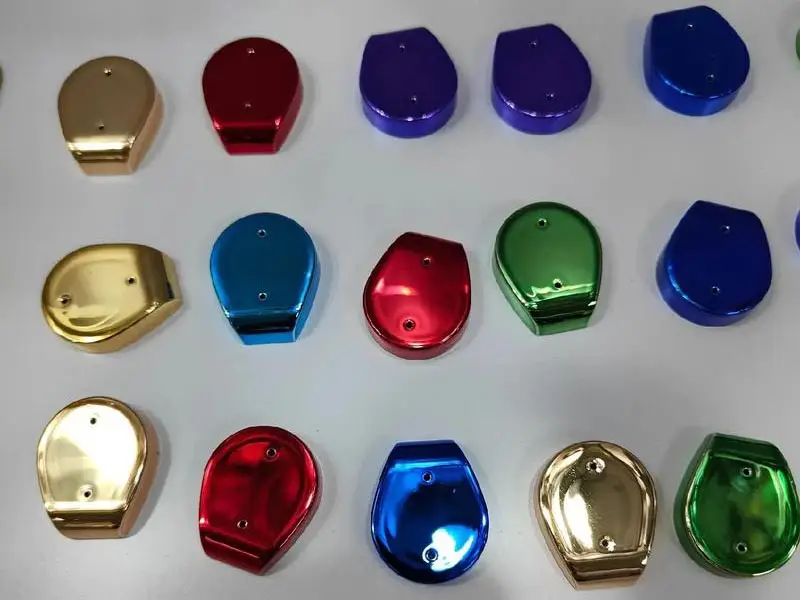
Electroplating is a time-honored surface treatment technology that deposits a metallic layer on the surface of a substrate material through electrochemical principles to meet corrosion protection, decorative or functional needs. Since its birth in the 19th century, electroplating technology has evolved from purely protective and decorative to a precision process capable of providing specific functions such as electrical, magnetic, optical and thermal.
Based on the function of the plating, plating can be divided into three main categories:
- protective coating: Prevention of corrosion of the substrate (e.g. galvanization)
- Decorative plating: To give an aesthetic appearance (e.g. chrome, gold plating)
- Functional plating: Provide special physico-chemical properties (e.g., silver plating to improve electrical conductivity, hard chrome plating to increase wear resistance)
The material being plated can be metallic or non-metallic (e.g. plastic plating). The purpose of this article is to provide an authoritative and comprehensive guide to plating knowledge that will help readers gain a deeper understanding of the plating process, select the appropriate program, and answer frequently asked questions.
2. Basic principles of electroplating
2.1 Fundamentals of electrochemistry
Electroplating is a method of obtaining a plated layer on the surface of a substrate by electrolysis in a solution containing the metal ions to be plated, with the plated material or product as the cathode. The application of electroplating technology has a long history, initially developed to meet the needs of people's anticorrosion and decorative, with the continuous progress of science and technology, electroplating technology can also be used to produce a specific composition and function of the metal covering layer, providing electrical, magnetic, optical, thermal and other characteristics. According to the function of plating, it can be divided into protective plating, decorative plating and functional plating. The plated material can be either metallic or non-metallic, and the plating is obtained on the surface of the substrate by electrolysis using the plated material or product as the cathode. The plating process requires three necessary conditions:Power supply, plating bath (bath), electrode.
In a closed loop, a DC power supply continuously pumps electrons from the anode to the cathode:
- anodic: an oxidation reaction occurs in which the metal loses electrons and dissolves as ions into solution (M → Mⁿ⁺ + ne-)
- negative electrode (i.e. emitting electrons): a reduction reaction occurs and the metal ions gain electrons to be deposited as a metal layer (Mⁿ⁺ + ne- → M)
2.2 Analyzing potential and electrode reaction
The basic condition for the reduction of metal ions at the electrode to achieve electroplating is that the electrode potential is sufficiently negative.precipitation potentialRefers to the potential that needs to be applied when a substance begins to discharge at an electrode and precipitates from solution, which must be lower than the equilibrium potential of the metal to be reduced.
According to the Nernst equation, the electrode potential is affected by the following factors:E=E0+nFRTln [reduced] [oxidized]
Among them:
- E⁰: standard electrode potential (measured at 25°C, ion concentration 1 mol/L)
- R: gas constant
- T: Temperature
- n: electron transfer number
- F: Faraday's constant
Standard Electrode PotentialReflects the redox ability of metals: metals with large negative potentials tend to lose electrons to oxidation (e.g., zinc), and metals with large positive potentials tend to gain electrons to reduction (e.g., gold, silver).
2.3 Electrode polarization
The phenomenon in which the electrode potential deviates from the equilibrium potential when a current is passed through the electrode is called polarization and is divided into two main categories:
1. Electrochemical polarization
Caused by the rate of electrochemical reaction at the electrode being less than the rate of electron movement.
- cathodic polarization: the rate of cathodic reduction reaction is less than the rate of supply of electrons from the external power source, and the electrode potential moves in a negative direction
- anodic polarization: The rate of entry of metal ions into solution is less than the rate of entry of electrons from the anode into the outer conductor, and the electrode potential moves in the positive direction
2. Differential polarization
Caused by the diffusion of ions in solution at a rate less than the rate of electron motion. The concentration of metal ions in the vicinity of the electrode is lower than the concentration of the native solution, creating a concentration gradient that results in a potential shift.
2.4 Electrodeposition process of metals
The plating process is a three-step process thatcombineHowever, the speed varies, with the slowest step being the controlling link:
- liquid-phase mass transfer: Hydrated metal ions or complex ions migrate from the interior of the solution toward the cathode interface to the cathodic bilayer side of the solution. The mass transfer modes include electromigration, convection, and diffusion, whichproliferateis the main control step.
- electrochemical reaction: Metal ions pass through the double electric layer, removing the hydrated molecular or ligand layer, and gain electrons from the cathode to become metal atoms. For example, in alkaline cyanide galvanizing:
- Zn(OH)₄²- → Zn(OH)₂ + 2OH- (decrease in coordination number)
- Zn(OH)₂ + 2e → Zn + 2OH- (stripped of ligand)
- electrocrystallization: The metal atoms diffuse along the metal surface to reach the crystallization growth point, arrange into the crystal lattice according to a certain pattern, and form the coating.
2.5 Faraday's Law and Current Efficiency
Faraday's first law: In electrolysis, the amount of substance precipitated or dissolved at the electrode is proportional to the amount of electricity passing through it.M=KIt
where K is the electrochemical equivalent (the mass of the substance precipitated when passing through a 1C charge).
Faraday's second law: The amount of substance precipitated or dissolved at the electrode is equal when the same amount of electricity is passed through it, and the amount of electricity required to precipitate 1 mol of any substance is 9.65 × 10⁴C (Faraday's constant F).
Current efficiency: The actual mass precipitated is lower than the theoretical value due to side reactions (e.g. hydrogen precipitation).η= Theoretical precipitation mass Actual precipitation mass × 100% =KItM′×100%
The cathode current efficiency is typically less than 1001 TP3T.
2.6 Calculation of coating thickness
Plating thickness calculation formula:δ=60γKDKtηK×100
Among them:
- δ: Plating thickness (μm)
- K: Electrochemical equivalent (g/A-h)
- D_K: cathode current density (A/dm²)
- t: time (min)
- η_K: cathode current efficiency (%)
- γ: metal density (g/cm³)
Deposition rate (μm/h):U=γKDKηK×100
3. Composition of electrolyte and role of each component
3.1 Primary salt
Main salts are the salts in the plating solution that provide the metal ions to be plated and determine the type of metal to be plated. The concentration of the main salt should be maintained in an appropriate range:
- Elevated concentration: Deposition speed is accelerated, but cathodic polarization decreases and coating crystallization becomes coarser
- Appropriate concentration: Achievement of fine, dense coatings
3.2 Compounding agents
The complexing agent can complex the metal ions in the main salt to form complex ions. Simple ion plating solutions tend to obtain coarse grains, while complex ion plating solutions have the following advantages:
- Complex ions are only partially soluble in solution and are more stable than simple salt ions
- Generates large cathodic polarization to obtain detailed plating layers
- Commonly used complexing agents: cyanide, pyrophosphate, aminotriacetic acid, etc.
3.3 Additional salts (conductive salts)
Alkali metal or alkaline earth metal salts that increase the electrical conductivity of a solution and do not complex the main salt metal ions:
- Commonly used conductive salts: sodium sulfate (Na₂SO₄), magnesium sulfate (MgSO₄), ammonium salts
- Function: Improvement of deep plating ability, dispersing ability, and obtaining fine plating layer.
- Note: too high a level reduces the solubility of other salts
3.4 Anode activator
Substances that can promote anode activation, increase the current density at which the anode begins to passivate, and ensure normal dissolution of the anode:
- Effect: Negative anode potential (anode depolarization)
- Commonly used substances: halide ions, ammonium salts, tartrates, thiocyanates, citrates
3.5 Additives
Substances that do not significantly alter electrical properties but can significantly alter plating properties, including:
- Anti pinhole agent: e.g. wetting agents to reduce surface tension
- mist suppressant: Reduce the escape of harmful gases
- rinse agent: Bright plating obtained
- leveling agent: Fill in microscopic uneven surfaces
4. Main factors affecting the quality of plating
4.1 Effect of pH
pH effects:
- Hydrogen discharge potential
- Precipitation of alkaline inclusions
- Composition of complexes or hydrates
- Degree of adsorption of additives
During plating, if the pH increases, the cathode is more efficient than the anode; if the pH decreases, the opposite is true. The pH can be stabilized in a certain range by adding buffer.
4.2 Effects of additives
Inorganic additives: Forms a highly dispersed hydroxide or sulfide colloid in the electrolyte, which adsorbs on the cathode surface to hinder metal precipitation and increase cathodic polarization.
Organic additives:
- Mostly surface-active substances, adsorbed to form an adsorption film, hindering the precipitation of metals.
- Some form colloids in the electrolyte and complex with metal ions to form colloidal-metal ionic complexes
4.3 Effect of current density
Each plating solution has a range of current densities for normal plating:
- too low: Decrease in cathodic polarization, coarse crystallization of the plated layer, or even no plated layer
- suitability: Increased cathodic polarization, finer plating grains
- exorbitant: Exceeding the limiting current density results in deterioration of the coating with spongy, dendritic, "burnt" and blackened coatings.
Higher current densities are permissible under conditions of increased concentration of main salt, increased plating bath temperature, and stirring.
4.4 Effect of current waveform
The deposition process is affected by influencing changes in cathodic potential and current density:
- Three-phase full-wave rectified and regulated DC: almost no effect on the organization of the plated layer
- single-phase half-wave (physics): Produces a dull, blackish-gray color to the chrome layer
- single-phase full-wave (physics): Brightens pyrophosphate copper and copper-tin alloy coatings
4.5 Effect of temperature
- Warming Benefits: Accelerates diffusion and reduces concentration polarization; increases salt solubility and improves conductivity and dispersion; increases upper current density limit and increases production efficiency
- The disadvantage of warming: Reduces electrochemical polarization and coarsens crystals; accelerates particle dehydration and increases ion and cathode surface activity
4.6 Effects of mixing
- Reduced cathodic polarization: Coarsening of grains
- Increase the upper limit of current density: Increased productivity
- Enhanced leveling agent effect
5. Pre-plating process
Pre-plating treatment directly affects the bonding and quality of the plating layer, so that the surface of the plated parts have a good finish, remove roughness and unevenness, corrosion products and dirt.
5.1 Mechanical handling
polish: Utilizing the sharp corners of the abrasive particles to abrade scratches, turning knife lines, sand holes, burrs, and corrosion products from the surface of the workpiece on a grinder.
burnish: Eliminate the abrasive marks left by grinding, so that the surface of the workpiece has a mirror-like luster, including chemical polishing, electrochemical polishing, mechanical polishing.
Sand blasting: Compressed air is used as the driving force to drive the dry quartz sand, steel sand or river sand to form a sand stream, which is sprayed onto the surface of the workpiece to remove burrs, oxidized skin, weld lumps and so on.
5.2 Degreasing
Oil contamination on the surface of the workpiece can cause isolation of the plating solution from the substrate and affect the deposition of the plating layer:
- solvent degreasing: Use of organic solvents to dissolve grease
- chemical degreasing: Saponification and emulsification with lye
- Electrochemical degreasing: Workpiece as electrode, generating bubbles to assist in degreasing
5.3 Etching
Treatment of workpieces in acid, acidic salt or alkaline solutions to remove oxides from metal surfaces.
6. Common plating types and applications
6.1 Galvanization
goal: The standard electrode potential of zinc (-0.76V) is more negative than that of iron, and it is an anodic plating for iron, preventing corrosion of iron and steel by sacrificial anode protection.
Process Type:
- Acid plating solution(zinc sulfate-based): low cost, high current efficiency, stable solution, low toxicity, but poor dispersing ability, rough crystallization, suitable for simple shaped workpieces (steel wires, steel plates)
- Alkaline plating solution: Even plating ability is good, adding thiourea can get bright plating layer, but cyanide is very toxic
- cyanide method: Uniform, well adhered coatings can be obtained
reprocess:
- dehydrogenation: Heating at 200°C for 2 hours to remove hydrogen embrittlement and internal stresses
- matte finish: Enhanced Gloss
- passivation: Generates chromate film in chromic acid and its salts solutions to improve corrosion resistance
6.2 Copper plating
specificitiesThe potential of copper is more positive than that of iron, and copper plating on steel is a cathodic plating that cannot be used alone as a protective decoration.
main application:
- Base or intermediate layer for multi-layer plating
- Carburization prevention for steel parts
- printed circuit board
- Plastic Plating
- electroforming mold
Process Type:
| typology | vantage | drawbacks |
|---|---|---|
| Copper sulfate plating | Simple composition, high current efficiency, stable solution, no harmful gases | Poor equalizing ability |
| Copper plating with cyanide | Uniformity and good adhesion | acute poison |
| Pyrophosphate copper plating | - | - |
| Full Bright Acid Copper Plating | Bright plating can be obtained | Need to add brightener |
| Copper Fluoroborate Plating | - | - |
6.3 Chromium plating
characterization: Chrome is a slightly bluish, silvery-white metal with a beautiful luster, corrosion resistance, high hardness, low coefficient of friction, high reflective ability, and good heat resistance.
major type:
- Decorative-Protective Chrome Plating: Gives an aesthetic appearance
- Hard chrome plated (wear-resistant chrome): Increase surface hardness
- Milky Chrome: For automobile, airplane, and ship parts
- Chrome plating of slotted holes: Anodic slot hole treatment after plating to widen mesh cracks and store lubricating oil for internal combustion engine and compressor piston rings
Process Characteristics:
- The main component of electrolyte is chromic anhydride (CrO₃), which dissolves in water to form chromic acid and dichromic acid.
- Silicofluoric acid has an activating effect on chromium plating and improves current efficiency
- Trivalent chromium plating solution is under development for better environmental friendliness
6.4 Nickel plating
characterizationNickel is a white metal with high hardness, magnetic properties, easy to polish to obtain a good luster, generates a passivation film in air, and has good corrosion resistance.
appliance:
- surface coating
- Base or intermediate layer for multi-layer plating
Main plating bath types:
- "Watt" type plating baths (most widely used)
- Sulfamic acid plating bath
- Fluoroborate plating bath
Bright Nickel Plating: Addition of brighteners, categorized as primary brighteners, secondary brighteners, etc.
6.5 Silver plating
characterization: Minimum resistivity, easy to weld, widely used in electronics, communications, electrical appliances, instrumentation industry, reduce contact resistance, improve welding performance.
caveat:
- Silver tends to lose luster and tarnish in the presence of sulfides or halides, requiring post-treatment (chemical passivation, electrochemical passivation, plating with precious metals, impregnation with organic films).
- When silver plating copper and its alloys, special surface preparation is required because the standard electrode potential of silver (+0.799V) is higher than that of copper, and a displacement reaction will occur:
- silver-impregnated: low concentration silver salt + high concentration complexing agent
- Pre-silvered: High concentration of complexing agent + low concentration of silver salt
- Pre-Nickel Plating
6.6 Gold plating
characterization: High chemical stability, insoluble in common acids (soluble in aqua regia), strong resistance to discoloration, long-lasting luster.
appliance:
- Jewelry, tableware, crafts
- Chips, electronic components, printed wiring boards, integrated circuits
Plating solution typeTwo major categories: cyanide plating solution and cyanide-free plating solution.
6.7 Cadmium plating
Mainly used for corrosion prevention on steel surfaces.
6.8 Alloy Plating
Two or more metals are deposited on the cathode simultaneously to form a coating with the required structure and properties. At present, there are about two hundred kinds of alloys that can be plated.
Co-deposition conditions:
- At least one metal can be deposited separately from its saline solution
- The precipitation potentials of the two metals should be very close to each other.
Measures to bring precipitation potentials closer together:
- Changing the metal ion concentration (increasing the concentration of metal ions with more negative potentials and decreasing the concentration of metal ions with more positive potentials)
- Use of complexing agents (to make the potential more negative than that of the positive metal precipitation)
- Use of appropriate additives (modification of metal precipitation potential)
Common Alloy Plating:
- Zinc-Nickel AlloyCorrosion resistance is more than 3 times higher than galvanized when the nickel content is 10% or more, and more than 5 times higher when the nickel content is 13% or more.
- zinc-iron alloy: not easy to passivate, easy to phosphatize, good bonding to paint
- nickel-iron alloy: Good leveling effect, better hardness and toughness than nickel plating, save 15-50% nickel
- Others: nickel-phosphorus, nickel-zinc, nickel-tin, copper-tin, copper-zinc (brass), tin-lead, tin-zinc, tin-nickel, etc.
7. Common defects in plating and methods of treatment
7.1 Pinholes and pockmarks
pinhole: A tiny pore from the surface of a plated layer up to the underlying or base metal, caused by obstruction of the electrodeposition process at certain points on the cathode surface.
pockmark: A small pit or hole formed in a metal surface.
Causes:
Gas pinhole pockmarks:
- Adsorption of small air bubbles on the board surface, and the location of the air bubbles cannot be plated.
- Source of bubbles: oversaturated gas in solution, hydrogen precipitation in plating process
- Hydrogen bubbles always retained → pinholes; intermittent retention → pockmarks
Non-gas pinhole pockmarks:
- Substrate defects: Mold precision, molding process caused by the distribution of irregularities
- poor pretreatment: Residual oil droplets, oxides, dusting, polishing paste
- Hanger issues: Low conductive strength, resulting in ablative breakdowns
- Poor performance of plating solution: Inappropriate concentration of main salt, too high chloride ions, brightness agent disorder, too little surfactant
- Plating solution contamination: Impurities such as nickel, phosphorus, monovalent copper, dust, organic matter
- water quality is not clean: Suspended matter, fine lint, dust
- uncleanliness of the air supply: Air mixing to bring in impurities
- Low filtration efficiency: Insufficient flow and cartridge retention capacity
- Anode issues: Impure anodes, torn anode bags
- Improper placement of cooling tubes: Generation of bipolar phenomena
cure:
- Add appropriate amount of wetting agent (e.g. sodium dodecyl sulfate) to reduce surface tension
- Use of agitation (cathode movement, air agitation)
- Enhanced pre-treatment cleaning
- Regular filtration of the plating solution
- Keep anodes clean and intact
7.2 Roughness and burrs
pockmarked: The plating layer has many dense and fine tiny dot-like projections, caused by the entrapment of fine solids suspended in the plating solution.
roughness: Larger bulges visible to the naked eye, cause:
- Formation of abnormal coarse crystals in the plating layer: the reduction rate of metal ions in the main salt is too fast, and the nucleation rate is smaller than the growth rate.
- Mechanical impurities sink into the workpiece and are encapsulated.
Causes of burrs:
- Free sodium cyanide too low: Copper is deposited too fast, the plating layer has a dark reddish color, and the ability of deep plating is reduced.
- Too much copper.: Coarsening of crystalline tissue
- Free sodium hydroxide too high or too low:
- Too high: Difficulty in tin precipitation, dark red plated layer
- Too low: hydrolysis of stannate produces meta-stannic acid precipitation, resulting in roughness of the upward part.
- Excessive current density: Dendritic plating at the cathode tip
- Excessive divalent tin: Roughness caused by too rapid deposition
- Turbidity of plating solution: Particle inclusions
7.3 "Burnt" coatings
Definition: A dark-colored, rough, loose deposit of poor quality formed at excessive current densities, often containing oxides or other impurities.
rationale:
- The concentration of metal ions in the main salt is too low
- Difficulty in discharging metal ions from the main salt, easy hydrogen precipitation from H⁺ discharge
- High pH at the cathode interface
- More compounds are trapped in the plating
8. Test methods for coating and bath performance
8.1 Plating solution performance test
| Test items | Definition | Common methods |
|---|---|---|
| Decentralized capacity | Ability of the deposited metal to be uniformly distributed on the cathode surface | Near and far cathode method (Harlem tank), bent cathode method, Hall tank method |
| Coverage capacity(deep plating capacity) | Ability of deposited metal to cover all of the cathode surface | Right angle cathode method, borehole method |
| Current efficiency | Proportion of electricity used for depositing metals as a percentage of total electricity consumption | voltameter method |
| Leveling capability | Ability of the plating solution to fill in microscopic uneven surfaces | microcontouring |
| Current density range | Current density range for obtaining normal plating | Hall groove test |
8.2 Plating Performance Tests
| Test items | Definition | Common methods |
|---|---|---|
| binding force | Adhesion strength of plating to substrate | Tensile peel test, file test, heat test (11 methods) |
| thicknesses | Plating thickness | Non-destructive: magnetic method, eddy current method Destructive: metallography, anodic dissolution (galvanic/coulometric) |
| porosity | Average number of pores per unit area of plating | Filter paper method, paste method, perfusion method |
| corrosion resistance | Resistance of plating to corrosion | Salt spray test |
9. Electroplating process equipment
9.1 Hangers and mounting
Role of hangers:
- Fixed plating
- Ensure that the current flows evenly through each plated part
9.2 Local protection
Purpose of wrapping or coating the parts that do not need plating with non-metallic materials:
- Concentrates current on the part, reducing consumption and saving costs
- Improve productivity and hanger life
- Ensure that parts conform to drawings
Commonly used materials: polyvinyl chloride tape, etc.
9.3 Auxiliary Electrodes
Improvement of even plating ability and deep plating ability of the plated layer.
10. Electroplating wastewater treatment
Electroplating wastewater contains heavy metals (Cr, Ni, Cu, etc.) and toxic substances, and must be treated to meet discharge standards.
Common treatments:
- chemical precipitation
- ion exchange method
- Membrane Separation Technology
- evaporation and concentration
- biological treatment
11. Methods of removing various types of plating
| plating | Formulation of decommissioning solution | temp | note |
|---|---|---|---|
| coppering | 1000ml/L nitric acid + 45g/L sodium chloride | 60-70°C | No water allowed on the surface of the workpiece |
| nickel plating | 50% Nitric acid | - | - |
| chrome layer | 100-150 ml/L hydrochloric acid | - | - |
| galvanization | 650-680ml/L hydrochloric acid or 450-500ml/L nitric acid or sodium hydroxide | - | - |
| silver plating | 50ml/L hydrochloric acid + 950ml/L sulfuric acid | - | - |
| gilt | Sodium hydroxide 10-20g/L + Potassium cyanide 50-100g/L | - | - |
12. Frequently Asked Questions (FAQ)
1. What is the difference between electroplating and electroforming?
Electroplating deposits thin layers of metal (a few micrometers to tens of micrometers) on the surface of a substrate, while electroforming deposits thick layers of metal (millimeters) and detaches them from the substrate to form a separate workpiece.
2. Will the plating come off? How to avoid it?
Stripping is usually caused by poor pretreatment, improper current density, and contamination of the plating solution. It can be avoided by strict control of cleaning, activation and process parameters.
3. Can plating colors be customized?
Can. For example, chrome plating has bright chrome and black chrome; zinc plating can be passivated to color, blue-white, or black; and alloy plating can be obtained in different colors (e.g., brass color).
4. How is the cost of plating calculated?
Comprehensive quote based on workpiece area, plating type, thickness, and batch size. Main costs include chemicals, power consumption, labor, and wastewater treatment.
5. Is electroplating harmful to humans?
Plated parts in normal use are harmless. However, the production process involves chemicals and requires strict protection, wearing PPE and ensuring ventilation.
6. Can stainless steel be plated?
Yes, but special activation (e.g. flash nickel plating) is required to remove the surface passivation film.
7. What is the typical thickness of the electroplating layer?
Decorative plating 0.5-5μm, functional plating 5-50μm, hard chrome up to 100μm or more.
8. How do I test the quality of plating?
Commonly used thickness gauges, adhesion scratch tests, salt spray tests, porosity tests.
9. What is the difference between electroplating and chemical plating?
Electroplating requires an external power supply, and the plating layer is more pure; chemical plating relies on the reductant autocatalytic, and the plating layer is uniform (especially suitable for blind holes and complex shapes).
10. Is there any other treatment needed after electroplating?
Depending on the requirements: passivation to improve corrosion resistance, sealing to enhance protection, oiling for temporary rust prevention, dehydrogenation to eliminate hydrogen embrittlement.
11. What is hydrogen embrittlement? How can it be prevented?
Hydrogen embrittlement is a phenomenon in which hydrogen atoms penetrate into the matrix and cause material embrittlement. It can be eliminated by dehydrogenation (e.g. heating at 200°C for 2 hours after galvanizing).
12. Why is the pH of the electrolyte important?
pH affects hydrogen discharge potential, complex stability, additive adsorption, and plating quality. It needs to be controlled in the optimum range.
13. What is an anode activator?
Substances that promote anode activation, increase the current density at which the anode begins to passivate, and ensure that the anode dissolves properly, such as halogen ions.
14. Why do pinholes occur in plating?
Metal cannot be deposited there mainly due to air bubble adsorption or surface contamination. Adding wetting agents and stirring can improve it.
15. Why passivate after galvanizing?
Generates a chromate conversion film on the surface of the zinc layer, which improves corrosion resistance and allows for different color appearances.
13. Conclusion
As an important surface treatment technology, electroplating occupies a central position in modern industry. From basic anti-corrosion decoration to functional applications, plating processes are constantly evolving and innovating. It is crucial to choose a compliant and professional plating supplier, and attention needs to be paid to its qualification certification, technical equipment, and environmental compliance.
With increasingly stringent environmental regulations, green plating technology (trivalent chromium chromium plating, cyanide-free plating, closed-loop water treatment) has become the direction of development. Through in-depth understanding of plating principles, process control and quality management, high quality plating that meets the requirements can be obtained.